

The world of arts broadcasting has lost one of its most influential figures with the death of Sir Humphrey Burton at the age of 94. For decades, Burton was the creative force behind some of British television's most revered music and arts programmes, leaving an indelible mark on cultural coverage.
A Golden Age of Arts Television
Burton's remarkable career began at the BBC in 1955, initially in radio before finding his true calling in television three years later. He became a protégé of the influential Huw Wheldon, working on the groundbreaking arts series Monitor. This programme attracted millions of viewers on Sunday nights with its sophisticated exploration of subjects ranging from pre-Raphaelite art to profiles of figures like sculptor Henry Moore.
One of his most significant early achievements was producing Ken Russell's celebrated 1962 film portrait of Edward Elgar, a work credited with helping to trigger a major renaissance in the composer's popularity. By 1965, Burton had risen to become the BBC's head of music and arts, where he oversaw an impressive range of innovative programming.

Innovation and the Birth of Iconic Programmes
During his tenure, Burton created several landmark series. Workshop offered unprecedented behind-the-scenes access to musicians at work, while he also documented Georg Solti's historic recording of Wagner's Ring Cycle in Vienna. A pivotal moment came in 1965 when a chance encounter with Leonard Bernstein sparked a deep professional relationship and friendship. Burton would go on to film nearly 300 events featuring the charismatic conductor.
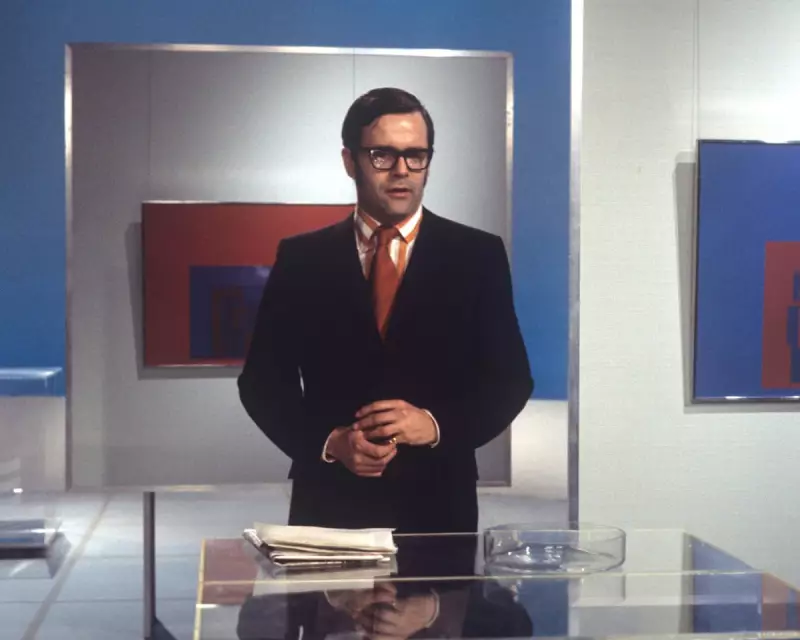
After a brief period of dissatisfaction with the BBC, Burton joined David Frost's bid for an ITV franchise, which became London Weekend Television. There, as head of drama, arts and music, he launched and presented the popular arts magazine show Aquarius, becoming a familiar face in his signature striped shirts and kipper ties.
A Lasting Legacy: Arena and Young Musician
Returning to the BBC in 1975, Burton resumed his role as head of music and arts and launched the enduring documentary series Arena. Perhaps his most enduring contribution to British cultural life came in the mid-1970s when he conceived the BBC Young Musician of the Year competition. First held in 1978 and won by trombonist Michael Hext, the contest has since launched the careers of stars like Nicola Benedetti, Jennifer Pike, and Sheku Kanneh-Mason. Burton fronted the competition until 1992.
His work extended to producing BBC Proms concerts, broadcasting operas from Glyndebourne and the Kirov, and creating acclaimed Omnibus documentaries. One memorable Omnibus programme captured Bernstein conducting West Side Story for the first time in a studio recording.
A Life in Music Beyond Broadcasting
Born in Trowbridge, Wiltshire in 1931, Burton studied music and history at Cambridge. In a fulfilling personal milestone, he conducted Verdi's Requiem at the Royal Albert Hall in 2001 for his 70th birthday, raising over £75,000 for prostate cancer research. He was also a respected author, publishing biographies of Leonard Bernstein and Yehudi Menuhin, and a co-written biography of William Walton.
Knighted in 2020, a honour his mother had prophetically anticipated, Burton remained active in his later years in Aldeburgh, Suffolk, serving as president of the Aldeburgh Music Club. He is survived by his second wife, Christina, his children, and his stepdaughter, broadcaster Clemency Burton-Hill. Through the programmes he created and the careers he nurtured, Sir Humphrey Burton's legacy as an architect of Britain's televised cultural landscape is assured.






