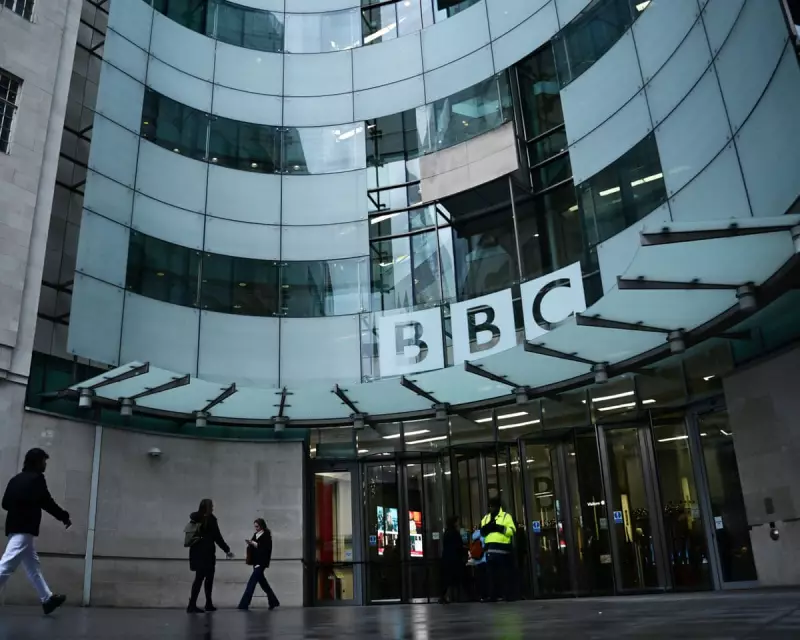
The BBC finds itself at the centre of a major international legal and political storm today, as former US President Donald Trump files a lawsuit demanding up to $10bn in damages. The claim relates to the editing of a clip from his 6 January 2021 speech in a BBC Panorama documentary.
A Legal Challenge Amidst Funding Uncertainty
The dramatic legal move coincides with a pivotal day for the corporation's future. Ministers are due to publish a green paper on BBC charter renewal, setting out plans for how it will be funded into the 2030s. The timing highlights the intense pressures on the broadcaster, with the traditional licence fee model under scrutiny as fewer people watch live TV.
Trump's lawsuit alleges that the Panorama programme distorted his speech given to supporters before the attack on the US Capitol. The president's legal team claims the edit was misleading and is seeking massive compensation. Within the BBC, there is likely a consensus that licence fee payers would not want their money spent on such a multimillion-pound settlement.

UK Political Figures Enter the Fray
The issue has drawn sharp reactions from British political leaders. Conservative leader Kemi Badenoch has been quoted directly in the lawsuit itself. Her previous criticisms of the BBC's editing, where she called it "absolutely shocking" and "fake news," are cited to support Trump's case. She had demanded that those responsible be sacked.
In contrast, Prime Minister Keir Starmer has so far tried to avoid direct involvement. He has emphasised the BBC's operational independence, suggesting the matter is for the corporation and Trump to resolve. However, with the lawsuit now filed and US-UK relations showing strain in other areas like trade, his position may become harder to maintain.
Liberal Democrat leader Ed Davey has been unequivocal, urging Starmer to publicly defend the BBC. "Keir Starmer needs to stand up for the BBC against Trump’s outrageous legal threat and protect licence fee payers from being hit in the pocket," Davey stated. He accused the Trump administration of seeking to "interfere in our democracy" by undermining the national broadcaster.
A Packed Political Agenda
Beyond the BBC controversy, Westminster has a full schedule. Keir Starmer chairs cabinet at 9.30am, while former Prime Minister Rishi Sunak resumes his evidence to the Covid inquiry at 10am. Defence Secretary John Healey will host a virtual Ukraine Defence Contact Group meeting with Germany's Boris Pistorius at 11am.
Later, Foreign Secretary Yvette Cooper gives evidence to the Commons foreign affairs committee at 2pm. In the Lords, peers will vote on the employment rights bill in the late afternoon. The government is also releasing 17 written ministerial statements today, covering topics from sentencing reform to the BBC charter review, in a pre-recess clear-out.
The confluence of Trump's lawsuit and the fundamental debate about the BBC's future funding presents a defining challenge for the broadcaster. It must defend its editorial integrity in a costly international court battle while its very financial model is being re-examined by its own government.