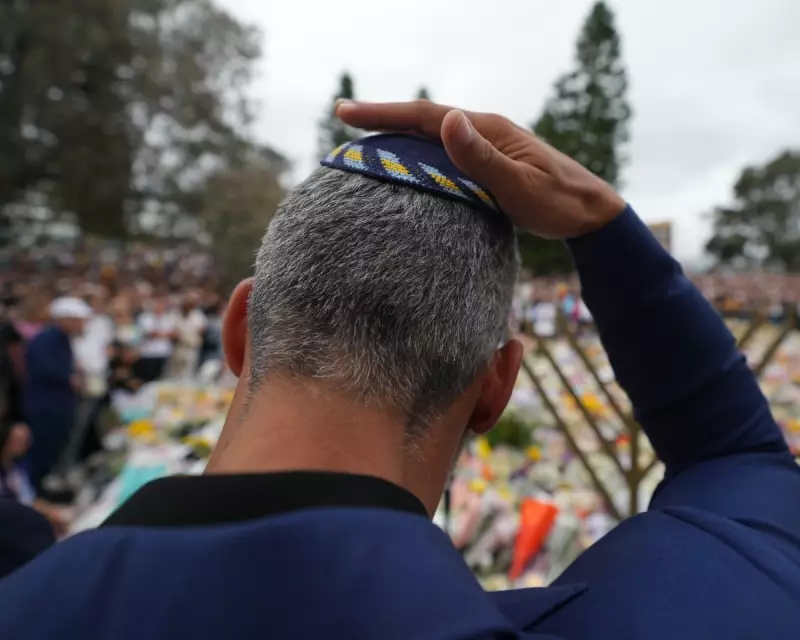
The horrific attack at Bondi Junction Westfield in Sydney on a Saturday in October 2024 has left deep scars far beyond the immediate tragedy. For one Jewish writer, the incident, where a man targeted women and later made antisemitic remarks to police, has provoked a profound and personal crisis of safety.
A Symbol of Faith Under Threat
The author, who has worn a kippah – the traditional Jewish head covering – daily for fifteen years, now finds this simple act fraught with anxiety. The Bondi attacker's reported question to police, "Are you Jewish?", transformed a symbol of religious pride into a potential marker for violence. This moment crystallised a growing fear within the Jewish community: that visible Jewish identity can make one a target.
This is not an abstract fear. The writer recounts a lifetime of low-level antisemitism, from verbal abuse to physical intimidation, experienced while wearing the kippah in public. These incidents, often dismissed as isolated, create a cumulative burden. The attack at Bondi, with its deadly misogyny and explicit antisemitism, acted as a terrible confirmation of worst-case scenarios, shifting the perception of risk from possible to probable.

The Chilling Effect on Public Life
The consequence is a painful dilemma. Does one hide a core part of their identity to feel secure? The writer describes the act of removing his kippah before entering certain public spaces, a tactical decision born of fear that feels like a betrayal of self. This self-censorship is a direct erosion of personal freedom and religious expression.
He powerfully articulates the loneliness of this position. While allies may offer support, the specific fear of antisemitic violence is a weight carried uniquely by Jewish individuals. The question "What would it take for me to feel safe?" echoes without a simple answer. Increased police presence or security cameras offer cold comfort, as they address the symptom, not the cause – the pervasive antisemitism that fuels such threats.
A Call for Collective Vigilance and Solidarity
The path forward, as outlined in the reflection, is not solely about physical security measures. True safety will come from a societal shift. It requires non-Jewish friends, colleagues, and communities to move beyond passive sympathy to active solidarity. This means calling out antisemitic rhetoric unequivocally, educating themselves on contemporary forms of hatred, and understanding that Jewish anxiety is not paranoia but a response to real and present danger.
The writer's ultimate hope is for a world where his children can wear their Jewish identity openly, without fear. Achieving this demands more than thoughts and prayers; it demands a consistent, vocal defence of Jewish life and dignity in the public square. The lesson from Bondi is stark: when hatred is allowed to fester, it eventually erupts, and no one is truly safe until everyone is.