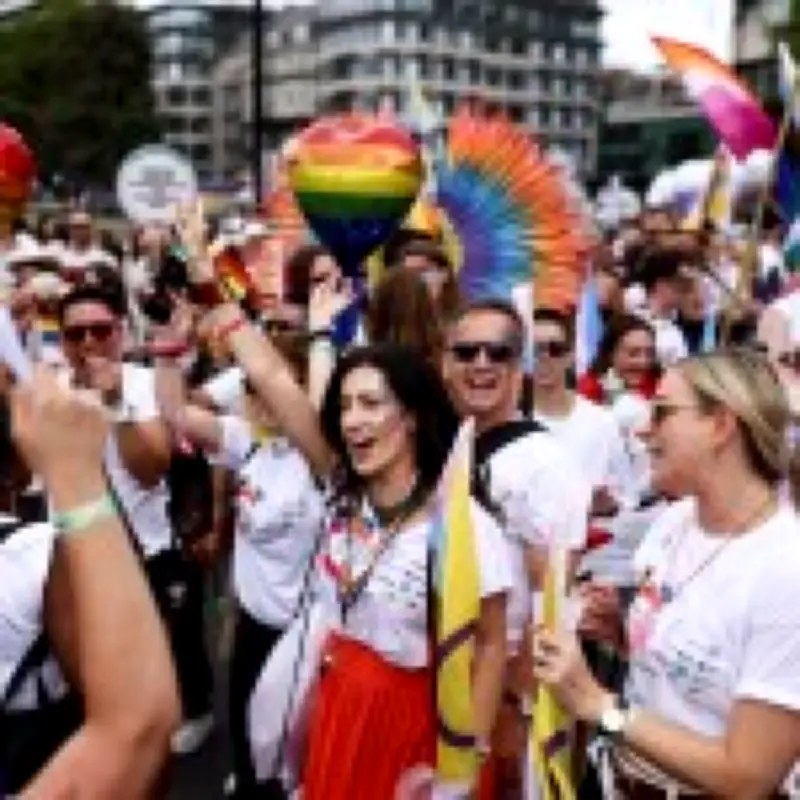
Thousands of activists marched through central London on Saturday for the annual Pride in London parade, with Mayor Sadiq Khan leading the procession and joining chants of 'Happy Pride'. Organisers said more than 35,000 marchers from over 600 groups took part, and more than a million people were expected to attend celebrations across the capital.
Mayor leads parade amid calls for equality
Mayor of London Sir Sadiq Khan was at the front of the march, which ran from Hyde Park Corner to Whitehall Place via Piccadilly. Spectators cheered as floats filled with dancers and music passed by on a hot, sunny day. Many in the crowd wore rainbow colours and carried Pride flags and fans.
The Metropolitan Police said before the event that there would be 'no tolerance of hate crime' during the weekend of Pride celebrations.

Football clubs and activist voices
London-based football teams including Arsenal, West Ham, and Crystal Palace had floats in the parade. Activist Peter Tatchell criticised FIFA for inaction on countries banning gay footballers. 'We're marching in London Pride today to highlight the fact that at the World Cup, which is ongoing right now, 11 countries ban gay footballers from their team – that's against Fifa rules, but Fifa is doing nothing,' he said.
Tatchell added: 'This year's Pride is as important as ever. Particularly now that Reform councils across the country are banning Pride flags … wanting to remove books from shelves. That is very dangerous, very threatening to all of us.'
Long-time activist stresses protest roots
Gay rights activist Julian Hows, 70, who was expelled from school for early gay rights activism in 1971, spoke at the front of the parade. 'Pride is important every year,' he said. 'I've been coming to Pride marches since 1972 when the policemen outnumbered the marchers.'
Hows stressed: 'Pride is also important because it needs to have an underlying level of protest, and you can see the freedoms that we have can so easily be taken away. We also always need to push further because there's always somewhere where our rights are being taken away.'
Urgent issues: healthcare, conversion therapy, venue closures
A spokesperson for Pride in London highlighted pressing concerns: 'The urgency is clear: NHS gender-affirming care waiting lists now exceed four years in some regions while a comprehensive trans-inclusive ban on conversion therapy remains uncodified into law despite a 2018 government pledge. At the same time, the community infrastructure LGBTQ+ people rely on is shrinking — since 2006, 58% of London's LGBTQ+ venues have closed.'
The spokesperson added: 'Together, these gaps in care, protection and safe spaces are unfolding amid continued hostility, with Home Office figures showing that more than 18,000 hate crimes motivated by sexual orientation were reported to police in 2025.'
Call for inclusion and collective action
Pride in London interim chief executive Rebecca Paisis said: 'We want 2026 to be the most inclusive Pride in London event yet. Our movement has always been built on many voices becoming one united front — from the people who marched in 1972 to those joining us for the first time this year. That's where our power lies. As LGBTQ+ people, we've never been strangers to adversity, but neither are we strangers to collective action.'