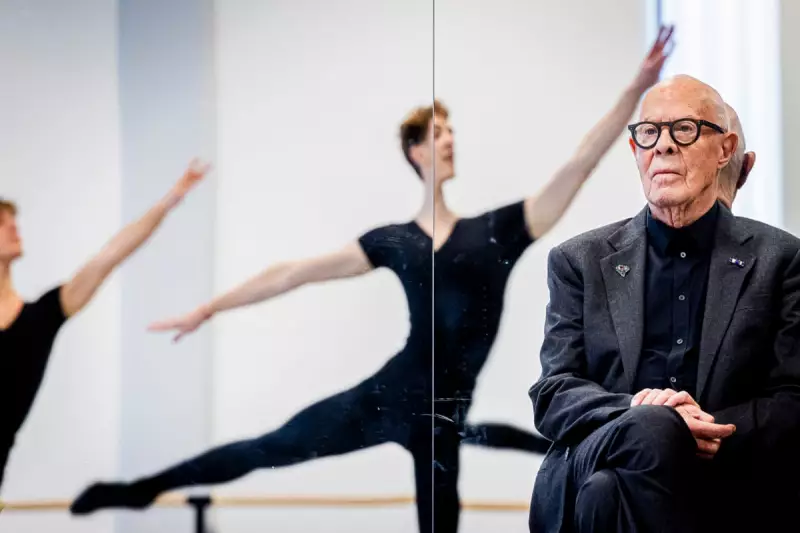
The dance world is mourning the loss of a true pioneer. Hans van Manen, the revolutionary Dutch choreographer who reshaped European ballet by masterfully blending classical and modern styles, has died at the age of 93.
The Architect of a New Ballet
Van Manen was a prolific force, creating more than 150 ballets over a remarkable seven-decade career. He came to formal dance training late, a fact he believed freed him from tradition and allowed him to forge a bold new path. As a founding member and choreographer for the Nederlands Dans Theater, he championed what he called "the third way" – the powerful marriage of classical and modern dance.
In a 1969 interview with the Guardian, he declared, "Pure classical and pure modern dance will shortly no longer exist. There's little hope for either style. But there is a third way ... and this is where the future of ballet lies." His work was stripped-back and precise, focusing laser-like on the form and movement of the body, often charged with intense, erotic relationships between dancers.

A Life in Movement and Music
Born in Nieuwer-Amstel (now Amstelveen) on 11 July 1932, van Manen's early life was marked by hardship after his father's death. He left school early and worked as a theatre makeup artist, but his love for dance persisted. He began lessons at 18 and was on stage within three months. His influences were wildly eclectic, ranging from George Balanchine and Martha Graham to Fred Astaire, jazz, and nightclub culture.
His ballets were profoundly musical, set to scores from Bach to Beethoven and David Byrne. Masterpieces like Adagio Hammerklavier (1973) saw movement fused perfectly with Beethoven's sonata, creating a glacial, emotionally charged atmosphere. He was also a fearless experimenter, creating works without music (Essay in Silence), without costumes (Mutations), and even a video ballet with live projection (Live in 1979).
Legacy and Lasting Influence
While British audiences saw less of his work than those in mainland Europe, he found an early champion in Sir Peter Wright of the Royal Ballet. Works like the powerful Grosse Fuge, Five Tangos, and Four Schumann Pieces (created for Anthony Dowell) entered the repertoire. He also broke ground by creating classical duets for two male dancers as early as 1965 with Metaforen.
Beyond dance, van Manen was an accomplished photographer, encouraged by friend Robert Mapplethorpe, focusing on portraits of dancers and male nudes. He received numerous state honours but refused the Grand Austrian State Prize in 2000 in protest against the far-right politician Jörg Haider.
He is survived by his partner, Henk van Dijk. The dance world remembers Hans van Manen not just for the steps he created, but for the entirely new architectural space he built for ballet itself – a space of clarity, emotion, and relentless modernity.