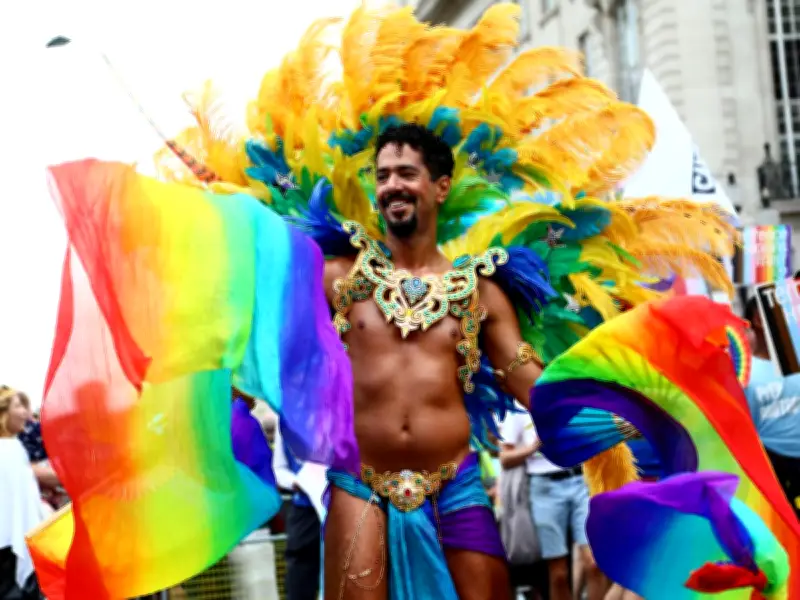
Thousands of LGBTQ people will take to London's streets this weekend for the 54th annual London Pride, a march of diversity, dazzling drag, and defiance. The parade kicks off at 12pm on Saturday, July 4, with around 35,000 participants expected to march from Hyde Park Corner, through Piccadilly Circus, down Haymarket, and along Cockspur Street to the main stage and rallying point at Trafalgar Square, culminating at Whitehall Place.
Parade Route and Road Closures
The route follows the same path as last year, starting at Hyde Park Corner and ending at 6pm. Dozens of roads will close as the parade passes through central London. Mayor Sadiq Khan will lead the procession in his civic role. The Trafalgar Square stage will feature speeches from LGBTQ+ activists and community leaders.
Travel into and around central London will be extremely busy, with the festival typically attracting 1.5 million spectators. Attendees are advised to plan ahead and allow extra time. For those marching, TfL recommends arriving at Marble Arch or Bond Street tube stations; spectators can use Bond Street, Tottenham Court Road, Waterloo, or Embankment. Some bus routes will be on diversion or stopping short. Check the TfL website or TfL Go app for updates. Mobile network reliability may be impacted due to crowds.

Performers at Pride in London
Headliner MNEK, a Grammy-nominated singer-songwriter and LGBTQ icon from Lewisham, will perform. He scored an international hit in 2020 with "Head 'n' Heart" alongside DJ Joel Corry, as well as solo hits "The Rhythm" and "At Night (I Think About You)". MNEK has collaborated with Dua Lipa on "IDGAF" and Zara Larsson's "Never Forget You".
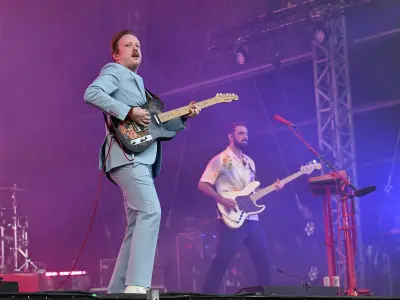
Special guest Beth Ditto, frontwoman of Gossip, known for hits "Standing In The Way of Control" and "Heavy Cross", will perform on the Trafalgar Square stage. Upcoming British female rapper Meek, whose tracks "Beautiful Freeks" and "Fabulous" have resonated with the LGBTQ community, will also appear. Five stages will host over 100 performers, including singers, drag queens, DJs, dancers, and political activists. Other performers include Danny Beard, drag outfit Boibox, singer and comedian Jordan Gray, Curvy Black Witch, and West London Queer Choir.
Pride After-Parties
Clapham Grand will host its Pride after-party from 10pm to 3am, with special guests Liberty X performing their 2000s hits "Just A Little" and "Thinking It Over". The event also features DJ Tete Bang, Silly B*tch Disco, and The Dream Team.
Fire nightclub in Vauxhall will host Beyond Pride on Saturday, July 4, from 11pm until midday Sunday, with exotic dancers, music, and a neon-lit experience across three indoor rooms.
Howl Pride at Hackney Wick will feature 85 performers and DJs across five LGBTQ+ owned businesses from 2pm Saturday to 6am Sunday, at venues including Colour Factory, All My Friends, Crate, Hackney Bridge, and HWK. Headliners include Juliana Huxtable, LYDO, Evissimax, and Chippy Nonstop.
History of London Pride
The first UK Gay Pride Rally was held in London on July 1, 1972, near the anniversary of the Stonewall riots. Only about 200 people attended, many from the recently-formed Gay Liberation Front. In 1981, the rally moved to Huddersfield in West Yorkshire to support a local gay club harassed by police. From 1983, the event was called Lesbian & Gay Pride. The Pride Trust became insolvent in 1998, and 'London Mardi Gras' filled the gap until 2004, when 'Pride London' was formed as a charity. Today, it is one of the world's biggest Pride festivals, attracting over 1.5 million spectators and over 30,000 parade participants.
Mayor Sadiq Khan held a pre-Pride event at City Hall on Tuesday, June 30, stating: "Here in London, you're free to be who you want to be, and love who you want to love. Thank you to everyone who joined us at tonight's City Hall Pride event! London is proud to stand with our LGBTQIA+ communities, today and every day."
Pride in London begins at 12pm on Saturday, July 4, at Hyde Park Corner, with a rally and main stage at Trafalgar Square.