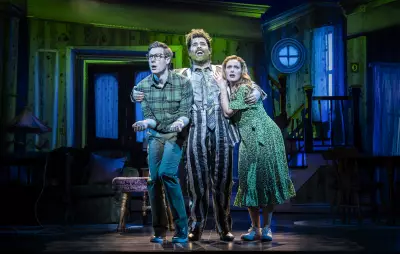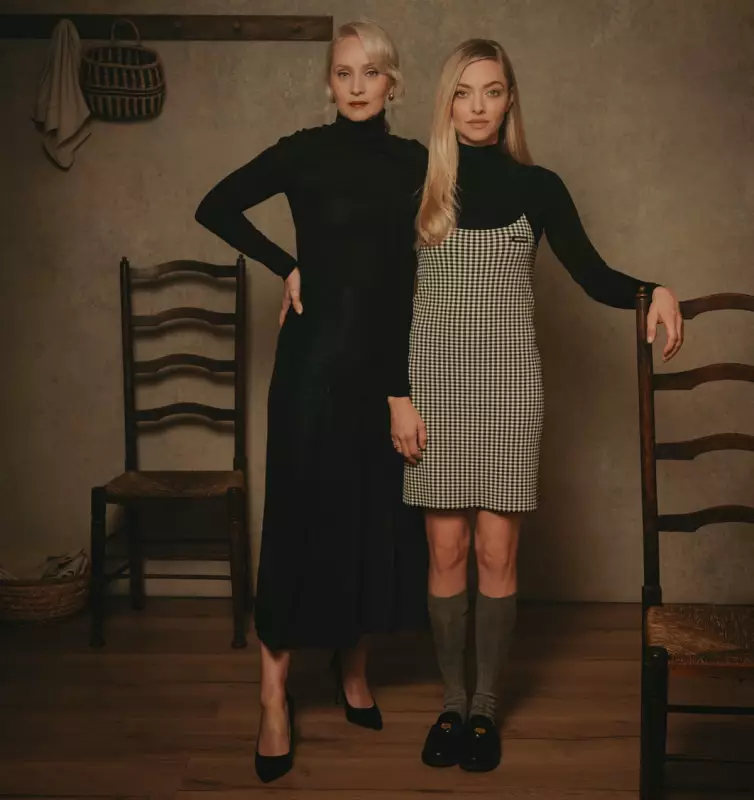
In a London hotel room, director Mona Fastvold and star Amanda Seyfried sit surrounded by Shaker chairs, reflecting on their audacious new film, The Testament of Ann Lee. This bonkers musical fantasia delves into the obscure world of the Shaking Quakers, blending feverish visions with soaring hymns to create a singular cinematic experience.
A Singular Cinematic Experience
Seyfried, known for her Oscar-nominated role in Mank, takes on the fearless portrayal of Ann Lee, an illiterate 18th-century religious leader. "Did you watch it with someone you could talk to?" she asks with genuine concern, highlighting the film's intense emotional impact. Fastvold, the Norwegian director, beams with delight at such reactions, describing it as her "favourite sort of feeling."
The Story of Ann Lee
The film follows Lee's journey from Manchester blacksmith's daughter to leader of the Shaker movement in America. Fastvold co-wrote the screenplay with her partner Brady Corbet, creating an immigrant story that explores themes of pacifism, gender equality, and celibacy. "She decided to mother the world," Fastvold explains of Lee's transformation after personal tragedy.

British composer Daniel Blumberg, who won an Oscar for his work on Corbet's The Brutalist, adapts authentic Shaker hymns and spirituals for the film's rousing musical sequences. The production combines historical accuracy with operatic flair, creating what Fastvold describes as a work that "sometimes doesn't take itself seriously at all."
Creative Partnership and Preparation
The collaboration between Seyfried and Fastvold began on the series The Crowded Room and deepened through their work on Long Bright River. When offered the Ann Lee role, Seyfried immediately identified her "way in" through the character's "unadulterated passion and devotion."
"I can understand how someone can be brought to their knees in that way," Seyfried reveals, though she admits to significant fear about the role's demands. Her preparation involved mastering a Manchester accent by studying Maxine Peake's performances and tackling Celia Rowlson-Hall's demanding choreography.
Physical and Emotional Demands
"There was a lot of repetitive movement, using my body in a way that I've never done before," Seyfried explains of the Shaker dancing sequences. "It becomes this full-bodied expression of your devotion. I was this vessel. It was exciting and scary and fucking great!"
To decompress after intense filming days in 18th-century costume, she would listen to Backstreet Boys, creating a stark contrast to the film's historical setting. Much of the production took place in Hungary, where Fastvold encouraged a family-friendly set atmosphere that eventually led to the two women becoming roommates.
Personal Connections and Motherhood
Their living arrangement revealed unexpected domestic dynamics. Fastvold recalls nearly crying when Seyfried folded her laundry, while Seyfried remembers waking to find Fastvold preparing coffee with beautiful music playing. "She's an angel from heaven!" Seyfried exclaims of her director.
Both women balance their film careers with motherhood. Fastvold has an 11-year-old daughter with Corbet, while Seyfried has two young children with husband Thomas Sadoski. They discuss openly sharing their vulnerabilities with their children, with Seyfried explaining, "She knows that what I'm doing right now is important for me."
Artistic Freedom and Recognition
Despite Seyfried's acclaimed performance, the film hasn't followed a conventional awards trajectory. An anonymous Academy voter told Variety they found Seyfried "astounding" while admitting they "didn't really like the movie." Seyfried remains philosophical: "I've gotten this far without an Oscar. Why would I need one now?"
Fastvold admires Seyfried's artistic freedom, describing her as "mad in a playful way" and "very free," while Seyfried praises Fastvold's bravery: "You don't care about the rules. You absolutely stay on your own path."

Contemporary Relevance
Fastvold discovered Ann Lee's story while researching her previous film The World to Come and felt compelled to tell it now. "We need to think about leadership in a different way," she argues. "Leaders around the world are leading from a place of fear and intimidation, which is the opposite of Ann Lee. She led from a place of nurturing, mothering and equality."
When asked if there's an autobiographical dimension to the film, Fastvold smiles bashfully: "Isn't there always?" The Testament of Ann Lee arrives in UK cinemas as a testament to artistic risk-taking and the power of unconventional storytelling.