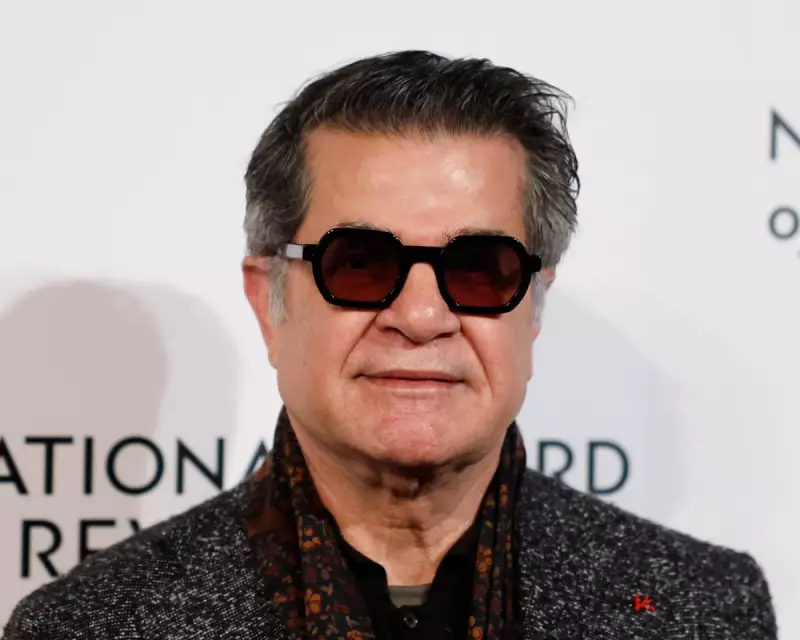
One of Iran's most celebrated film-makers has issued a stark warning that the country's ruling regime will be unable to maintain its grip on power following a violent crackdown on widespread protests.
A Sign of Impending Massacre
Jafar Panahi, the director of the Palme d'Or-winning film It Was Just An Accident, told the Guardian that a near-total internet blackout imposed last Friday was a clear signal of the government's brutal intentions. The blackout, which blocked between 95% and 99% of Iran's communication network, preceded a deadly weekend of suppression by security forces.
"It was a sign that there would be a very big massacre on the way," Panahi stated. "But we never predicted that the crackdown would have such dimensions and numbers." Reports indicate that more than 2,500 people have been killed since protests, fuelled by a dire economic situation, swept the nation from late December.

An Inevitable End for the Regime
Speaking from the United States where he is promoting his latest film, the 65-year-old director was unequivocal about the future of the government led by clerical leader Ayatollah Ali Khamenei. "It is impossible for this government to sustain itself in this situation," Panahi asserted. "They know it too. They know that it will be impossible to rule over people."
He suggested the leadership's only remaining goal might be to drive the country to the brink of ruin. Panahi, who has been jailed twice for his activism, believes the regime's collapse is certain, drawing parallels with historical dictatorships. "The regime will collapse, 100%," he said. "When it will collapse, no one knows. We want it to be as soon as possible."
Cycle of Violence and International Warnings
Panahi's Oscar-contending film, a French entry that blends revenge thriller with black comedy, explores former political prisoners contemplating revenge on a suspected torturer. He connects this narrative to the current crisis in Iran. "What I have been depicting in this film is when the cycle of violence continues, then it becomes very difficult to stop it," he explained. "Unfortunately, because of the savagery that is being carried out by the state, the fear is that this cycle of violence will continue."
The director also cautioned Western governments against dealing with Tehran's rulers as rational actors. He argued that unlike some other authoritarian regimes, Iran's leadership operates without rationality, focused solely on survival through crackdowns. "The last thing they're thinking about is the people," he said via his interpreter, Sheida Dayani.
On the subject of Iran's future, Panahi addressed calls from some protestors, both domestically and in the diaspora, for the return of Reza Pahlavi, the exiled son of Iran's last Shah. While acknowledging this as a prominent voice, he highlighted Pahlavi's own call for a post-transition referendum. "After the transition there must be a referendum in Iran, and that is when people will decide," Panahi stated, emphasising the need for unity. He concluded that regardless of individual opinions on Pahlavi, the overwhelming desire of Iran's population is for the current regime to fall.
Panahi himself faces a one-year prison sentence in absentia, convicted in December on charges of creating propaganda against Iran's political system, but has declared his intention to return to his homeland.