Josephine Review: A Haunting Exploration of Childhood Trauma
Beth de Araújo's stunning second feature, Josephine, has emerged as the standout drama of this year's Sundance Film Festival. This taut and emotionally intelligent film follows the devastating aftermath of an eight-year-old witnessing a horrifying sexual assault, anchored by phenomenal performances from newcomer Mason Reeves and a career-best Channing Tatum.
A Shattering Incident
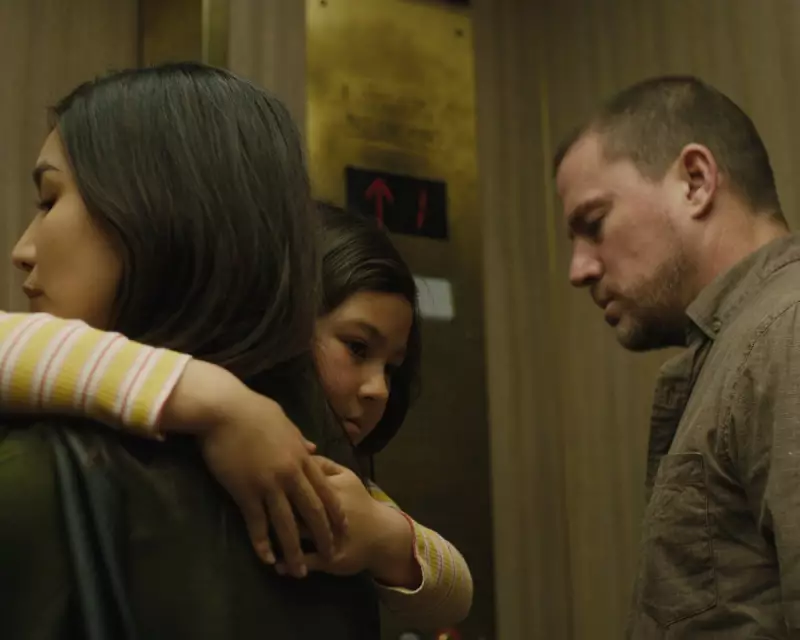
The film introduces us to Josephine, played with remarkable naturalism by Mason Reeves, who shares a tender, playful bond with her father Damien, portrayed by Channing Tatum. Their crisp, near-wordless opening sequences in San Francisco's Golden Gate Park swiftly establish their supportive relationship before the narrative takes its devastating turn.
Unlike much post-MeToo cinema that employs ellipsis when handling sexual assault, de Araújo makes the bold choice to show exactly what Josephine witnesses. We see the brutal rape of a female jogger from Josephine's perspective behind a tree, with cinematographer Greta Zozula capturing both the crime and the child's cherubic face in equally naturalistic light.

The Aftermath and Adult Inadequacy
The intensity of this sequence proves crucial, as it underscores the profound inadequacy of every adult response that follows. The police who respond to Damien's 911 call ignore Josephine, placing her in a cop car with the shattered victim and allowing her to see the arrested perpetrator. Her mother, played by Gemma Chan, attempts vague platitudes and distractions, while her father, a self-described "physical guy," takes her to self-defense classes.
Neither parent explains to Josephine what she witnessed, leaving the child to process this horrifying event without the necessary context or understanding of what sex actually is. De Araújo demonstrates a keen ear for the maxims and reflexes parents use to defend themselves, particularly in Damien's unhelpful response when Josephine asks if it will happen to her: "that will never, ever happen to you."
Performances That Resonate
The film's success rests heavily on its central performances. Mason Reeves proves to be a rare natural, able to both hold her own and disappear into herself as Josephine's inchoate anger boils over in increasingly erratic, alarming ways. Her inward retreat carries a chilling but thankfully restrained horror that feels authentic and devastating.
However, it's Channing Tatum who delivers what might be his finest performance to date. As a movie star who typically embodies a certain brand of familiar yet aspirational American masculinity, Tatum takes on one of the more fascinating paternal characters in recent memory. His Damien represents a father whose good and bad parenting instincts often coexist within the same sentence, whose confidence crumbles in inverse relation to his daughter's, and who must reckon with his own limitations and fear.
Narrative Challenges and Triumphs
De Araújo manages a tricky balance between sketching the stymied adults' triggered responses and hewing closely to Josephine's perspective. The film occasionally wobbles, particularly in its overstretched final third, and Gemma Chan isn't given many notes beyond varying degrees of concern. Some subtle moments that suggest her personal experience with the subject feel almost too understated.
Nevertheless, de Araújo believably steers the bruised family through near-horror into a bravura final courtroom scene. The disquiet lingers long after viewing, both for the characters and the audience. From another actor of Tatum's stature, a late-stage scene in which he finally erupts on Josephine could seem menacing and distancing, but Tatum grounds the viewer in his abject bewilderment and pain, creating a beguiling if flawed heart to his Damien.
A Lasting Impact
Josephine represents a remarkable achievement in sensitive filmmaking that refuses to look away from difficult truths. The film makes a necessary point about how events that are beyond appalling to adults can be absolutely baffling to the budding mind of a child - intuitively wrong, yes, but also fascinating and alien.

This haunting movie, with its instantly memorable performances and meticulous rendering of its subject matter, stays with viewers long after the credits roll. As it seeks distribution following its Sundance screening, Josephine establishes itself as essential viewing for those interested in cinema that tackles complex trauma with intelligence, sensitivity, and raw emotional power.