Leviticus Review: Queer Desire as Deadly Curse in Haunting Horror
Something deeply unsettling is brewing in the Sundance horror film Leviticus. If you were to ask the devout residents of the isolated Australian town at its heart, they would claim it's the curse of homosexuality, silently corrupting their youth. Yet, if you posed the same question to the gay teenagers themselves, they would describe something infinitely more terrifying.
A Supernatural Spin on Conversion Therapy
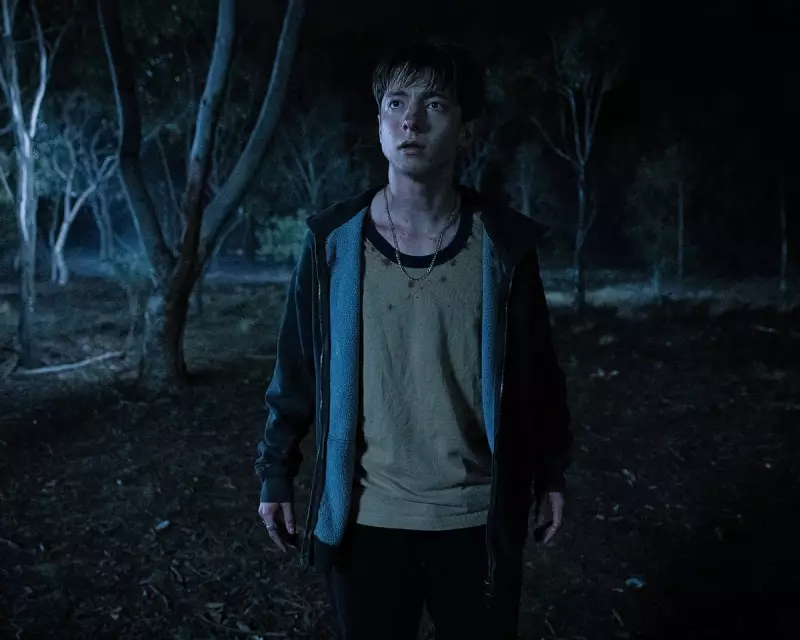
In writer-director Adrian Chiarella's remarkable debut feature, queer desire becomes more than just a social danger from the bigots one lives alongside—it transforms into a supernatural affliction. The film introduces us to teenagers Naim, portrayed by Joe Bird, and Ryan, played by Stacy Clausen, as they share a secret moment together. What begins as playful roughhousing gently evolves into a tentative kiss, opening a new world for Naim in an otherwise dreary town with his well-meaning but oblivious single mother, portrayed by Mia Wasikowska.
However, when Naim discovers Ryan engaging in a similar encounter with Hunter, the local preacher's son played by Jeremy Blewitt, jealousy and heartbreak lead him to make a decision he will profoundly regret. Once their secret is exposed, Ryan and Hunter are coerced into a conversion therapy ritual orchestrated by a mysterious outsider. Initially dismissive of the ceremony as mere nonsense, the boys soon find themselves gripped by an inexplicable force, realising they have been cursed.

The Horror of Desire Made Manifest
In the chilling universe of Leviticus, the curse manifests as the physical embodiment of one's deepest desire—your ultimate crush appearing with murderous intent. This entity remains invisible to others, striking only when you are alone, and it will relentlessly pursue you until death. This inventive twist on a frequently clichéd subgenre poses a provocative question: what if queer desire had a demonic form? It taps into a profound, ingrained fear, exploring not only the self-destruction such feelings might provoke but also the potential horrors inflicted upon others.
If the attraction is mutual, you become the last face your beloved sees before perishing, a cruel distortion of love into hatred. Much like the influential film It Follows, to which it owes a significant debt, Leviticus can also be interpreted as an allegory for HIV/AIDS and the devastation that can stem from desire. The central dilemma resonates powerfully: this feeling might destroy us both, yet how can we possibly resist it?
Romance Amidst the Terror
This premise infuses the film with a piercing melancholy while simultaneously fostering a giddy, against-all-odds romance. Chiarella skillfully avoids dwelling solely on the grim trauma of the narrative, instead embracing the epic, star-crossed allure of the story. Visually, he demonstrates equal prowess in capturing the icy horror of isolation and the soft, warm glow of connection.
Bird and Clausen share a sweet, authentic chemistry in their scenes together, their eyes constantly scanning for safety before melting into the relief of stolen moments. Even an intimate encounter on a bus carries as much tension as the film's more violent attacks, making audiences fervently root for their survival despite the looming dread.
Subverting Expectations and Stereotypes
While Chiarella employs familiar horror tropes, he consistently subverts them. A predictable scene where characters hunt down the conversion therapy "healer" takes an unexpected turn, avoiding cliché. Moreover, the film steers clear of simplistic religious caricatures, presenting the town's devout community with nuance. The true horror emerges from the homophobia of seemingly kind, well-intentioned individuals like Naim's mother, portrayed with subtle excellence by Mia Wasikowska, who transcends the archetype of a fanatical zealot.
At a concise 86 minutes, the final act occasionally loses momentum, with repetitive confrontations that may test some viewers' patience. Nevertheless, Chiarella delivers a near-perfect conclusion, underscored by a poignant Frank Ocean track that leaves a lasting impact. In an era where many filmmakers struggle with endings, this bold, bittersweet finale stands out, compelling audiences to recommend the film enthusiastically.

Amidst increasingly crowded genres—trauma horror, curse horror, gay horror, and Sundance horror—Leviticus distinguishes itself as a smart, emotionally resonant, and visually striking debut that masterfully blends terror with tender romance.