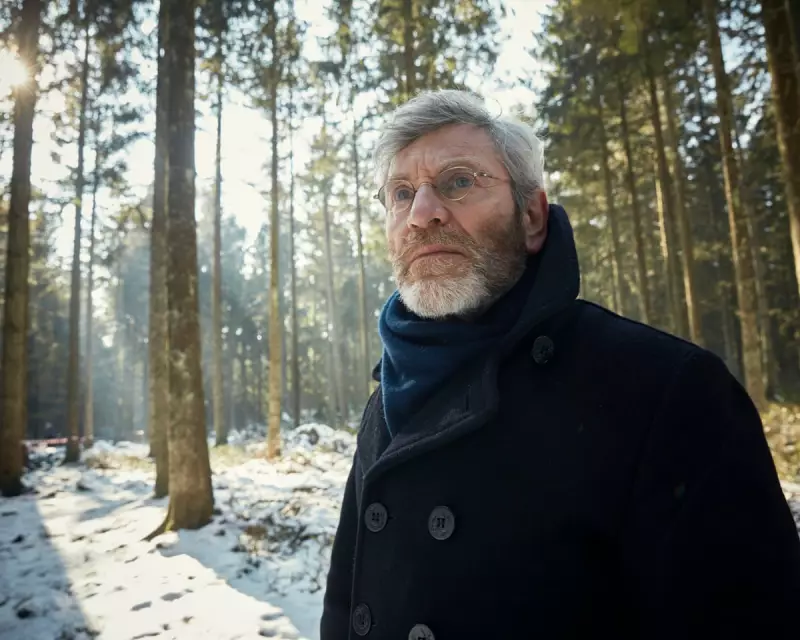
The world of cinema and television has lost one of its most distinctive character actors with the passing of Tcheky Karyo at the age of 70. The French performer, whose career spanned over four decades, died on 6th November 2025, leaving behind a formidable legacy of memorable roles in both European and Hollywood productions.
Born on 4th October 1954 in Istanbul to Turkish parents, Karyo's family moved to Paris when he was just two years old. He initially pursued music, studying at the prestigious Conservatoire de Paris, before discovering his true calling in acting at the Cours Florent drama school. This diverse artistic background would later inform the rhythmic, musical quality he brought to his screen performances.
Breakthrough Roles and International Acclaim
Karyo's breakthrough came in the 1990s with a series of high-profile international projects that showcased his remarkable range. He delivered an unforgettable performance as a tough-minded police chief in Luc Besson's 1994 thriller Léon: The Professional, starring alongside Natalie Portman and Jean Reno. This role introduced him to global audiences and demonstrated his ability to hold his own in major Hollywood productions.

Throughout the decade, he continued to build an impressive filmography that crossed cultural boundaries. He appeared in Bruce Beresford's La Vie en Rose precursor La Veuve de Saint-Pierre (2000) with Juliette Binoche, and took on the role of French emperor Napoleon Bonaparte in the 2001 miniseries Napoléon. His versatility allowed him to transition seamlessly between historical figures and contemporary characters.
Television Success and Later Career
In later years, Karyo became a familiar face to British television audiences through his compelling work in BBC dramas. He earned particular acclaim for his portrayal of Julien Baptiste, the tenacious French detective in the critically praised series The Missing and its sequel Baptiste. His performance as the dogged investigator searching for missing children showcased his ability to convey profound emotional depth and moral complexity.
Karyo brought a unique authenticity to these roles, often serving as the moral compass in complex narratives. His character in The Missing became so beloved that it spawned a spin-off series, a rare honour for a television actor. This success introduced him to a new generation of viewers and cemented his status as a respected international performer.
Beyond these notable projects, Karyo maintained a prolific output across French and international cinema. He appeared in Bad Boys (1995) alongside Will Smith and Martin Lawrence, showcased his dramatic chops in Michael Haneke's The Piano Teacher (2001), and lent his distinctive presence to epic productions including The Patriot (2000) and La Reine Margot (1994).
Legacy and Industry Impact
What set Karyo apart throughout his career was his remarkable ability to disappear into diverse roles while maintaining his unique screen presence. He could convincingly portray authority figures, vulnerable men, historical personalities, and everyday characters with equal conviction. His performances were characterised by a quiet intensity and emotional truth that resonated with audiences worldwide.
The actor's contribution to bridging European and Anglophone cinema cannot be overstated. He served as a cultural ambassador of sorts, bringing French acting sensibilities to international productions while introducing global audiences to the depth of European storytelling. His work demonstrated that compelling character acting transcends language barriers and cultural differences.
Karyo is survived by his wife and two children, who have requested privacy during this difficult time. Tributes have poured in from colleagues and admirers across the film industry, all noting his professionalism, generosity as a scene partner, and unwavering commitment to his craft.

Though he may be gone, Tcheky Karyo's extensive body of work ensures his legacy will continue to inspire actors and delight audiences for generations to come. From the streets of Paris to Hollywood soundstages and BBC studios, his unique talent left an indelible mark on the landscape of contemporary cinema and television.