From Manchester Megabus to Hollywood Stardom: Wunmi Mosaku's Remarkable Journey
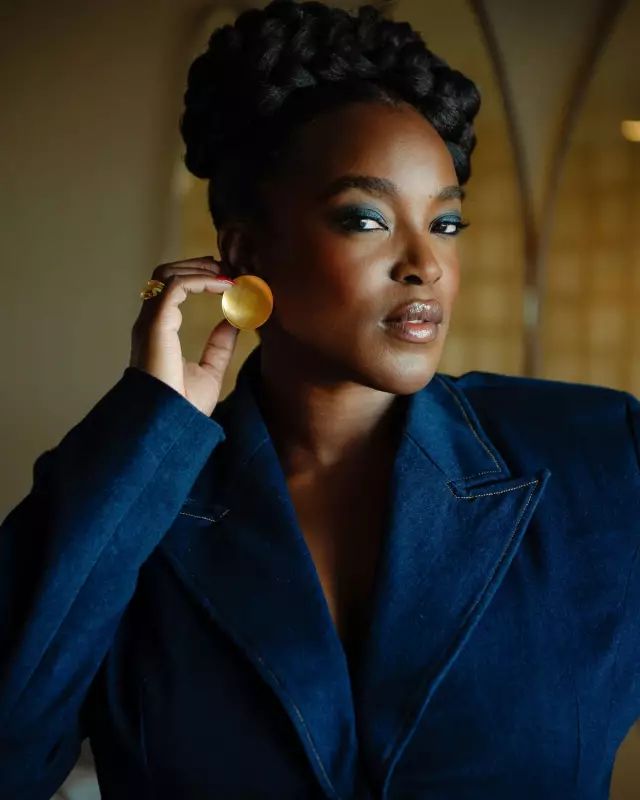
Wunmi Mosaku settles into a London hotel sofa with a characteristic Manchester twang, enthusiastically discussing Greggs' regional specialties despite having lived in Los Angeles for nearly a decade. The 39-year-old actress finds herself in the midst of an intense awards season campaign, propelled by her critically acclaimed performance in Ryan Coogler's vampire thriller Sinners, which has positioned her as a serious contender for Best Supporting Actress at the upcoming Oscars.
A Transformative Role and Cultural Reconnection
Mosaku's portrayal of Annie, a Hoodoo priestess in the 1930s American deep south, represents what she describes as a transformative professional experience. To prepare for the role, she immersed herself in studying Hoodoo traditions, which trace their origins to the Yoruba religion brought to America by enslaved Africans. This research sparked a profound personal revelation about her own cultural heritage.
"This is where I'm from. This is who I am," Mosaku reflects about discovering her Yoruba roots through the role. "It's like an archaeologist slowly unearthing a long-lost civilisation." The experience highlighted how detached she had become from her Nigerian heritage, partly due to her Manchester upbringing where her parents were discouraged from teaching their children Yoruba to avoid giving them "funny accents."

The £30 Bus Trip That Changed Everything
Mosaku's path to acting began with a pivotal decision that defied expectations. After securing a university place to study mathematics, she instead auditioned for the Royal Academy of Dramatic Art (Rada) with her mother's support. Her father was less enthusiastic about the career change, but her mother provided £30 for the journey - enough for a Megabus ticket to London and back with some food money.
"No one thought I'd get in," Mosaku recalls of her Rada audition, where she impressed the panel with performances ranging from Shakespeare's Helena to August Wilson's characters. She made a pact with her mother: if Rada didn't work out, she would attend Durham University to study mathematics and economics instead.
Navigating Institutional Challenges and Breaking Barriers
Moving from her Manchester council estate to Rada presented significant challenges. Mosaku was the only black girl in her class at an institution that would later admit to institutional racism in 2020. She remembers an environment where some teachers struggled to see her as anything beyond supporting roles, never casting her as an ingénue but rather as characters like a 50-year-old ship captain.
"Why restrict how I imagined my career?" she questions. "Teachers make you either bloom or shrivel away. I was really lucky that I had teachers who made me believe I could bloom, but I had so many people along the way that made me feel like, 'Oh, this isn't for you.'"
Hollywood Success and UK Considerations
Since her breakthrough Bafta win for portraying Gloria Taylor in a 2017 BBC drama, Mosaku's career has accelerated dramatically. She has moved between Marvel's Loki universe and grittier projects like David Simon's We Own This City, before landing her career-defining role in Sinners. Her collaboration with director Ryan Coogler proved particularly meaningful, with their initial 30-minute Zoom call expanding into a 90-minute conversation about the teachers who shape creative paths.
When asked about potentially returning to work in the UK, Mosaku expresses mixed feelings. "I never take my eye off the UK for work," she says, highlighting exciting British creatives like director Akinola Davies Jr and Joan Iyiola's Apatan Productions. However, she adds cautiously: "Artistically, I do feel like the work in America has been more satiating. I just want to make sure that in the UK I'm not always playing a police officer, you know?"

Balancing Fame and Personal Boundaries
The increased attention from Sinners' success has brought unwelcome scrutiny to Mosaku's personal life. She recently announced her second pregnancy in Vogue, explaining that this public disclosure went against her Nigerian cultural traditions of keeping such news private. "Everything in me resists sharing it publicly," she wrote, "not because I'm not grateful or joyful, but because this feels like one of the few things that truly belongs to me."
Despite the pressures of Hollywood fame and an exhausting awards season schedule that has her zigzagging across the Atlantic, Mosaku maintains her connection to her roots - whether through Greggs' regional baked goods or her ongoing exploration of Yoruba language and culture. With upcoming roles in Apple's This Is How It Goes alongside Idris Elba and Aaron Sorkin's The Social Reckoning, her career continues its remarkable ascent while she contemplates what future British projects might offer beyond stereotypical policing roles.