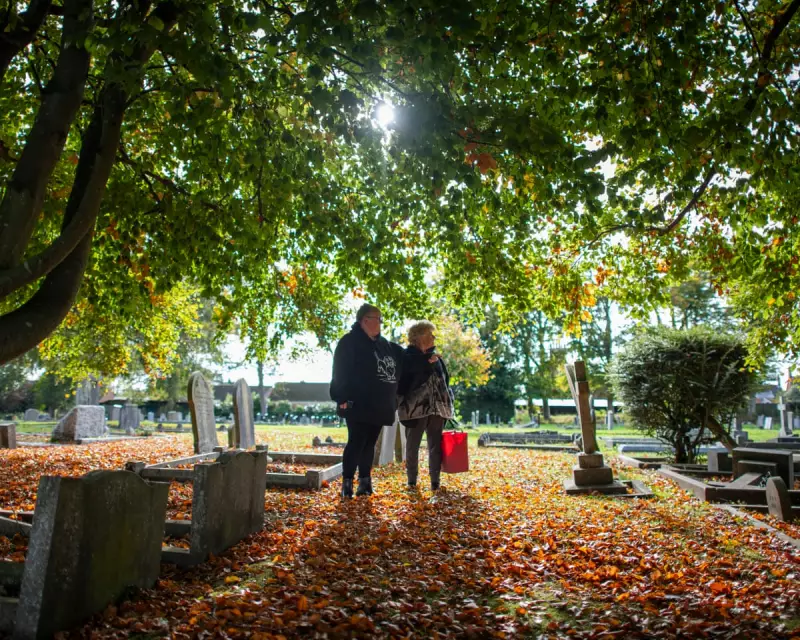
In the quiet autumn light of a North Walsham cemetery, Louise Cocker takes a photograph of a simple gravestone. It marks the resting place of James Henry Payne, who died in October 1917, alongside his wife Eleanor and son James Edward, killed at the Battle of Vimy Ridge. The inscription reads: "Not lost, but gone before." This moment is one of hundreds of thousands for Cocker, whose extraordinary personal mission is creating one of England's most comprehensive memorial records.
The Monumental Undertaking of a Lidl Employee
Over the past 24 years, 53-year-old Louise Cocker has photographed almost half a million gravestones across Norfolk. She dedicates her weekends and days off from her job at a local Lidl supermarket to driving around the county's burial grounds. Her work has resulted in a remarkable dataset containing 615,000 names, as many graves commemorate multiple individuals. Experts regard this collection as one of the most thorough photographic archives of gravestones and memorials in the country.
"I'm just passionate about it, I really am," Cocker admits. "I know it sounds crazy." She finds peace in the tranquillity of cemeteries, often gently clearing overgrown memorials while accompanied by her mother, Angela Parke, or her husband, Neil. Her motivation, however, extends beyond personal solace. "I just like helping people," she explains. "You can make somebody's day when you help them find their ancestor that they're looking for. It's a really nice feeling."

The Hidden Engine Room of British Genealogy
While Cocker's hobby may seem unique, she represents a vital cohort of amateur historians described as "the hidden engine room" behind Britain's booming interest in genealogical research. According to Mary McKee, UK archives manager for the family history website Findmypast, "the foundation of our entire industry is independent genealogists."
McKee notes that while beginners often start with official state records like births, marriages, deaths, and censuses, the fuller story of an ancestor's life frequently emerges from the specialised work of dedicated individuals. Findmypast licenses datasets from about 40 such amateur historians, including Cocker, whose private passions have created invaluable public resources.
Private Passions Creating Public Goldmines
One such individual is Cliff Webb, a former insurance broker from Hampshire. He has spent decades compiling niche historical datasets, including an index of hundreds of thousands of apprentices and their employers dating back to 1442 and a detailed directory of Surrey court cases from the 14th to the 19th centuries. He is currently focused on indexing up to 300,000 wills from London church courts during the Elizabethan period.
"I think wills are the closest we can get to how the ordinary people felt at the time," Webb reflects. "It's real humanity – people falling out and reconciling. All human life is there."
Another contributor is retired academic Mark Peel, who was driven by a desire to record "the stories of people who would otherwise be silent." In his free time, he compiled a new, detailed dataset of British civilian casualties from the Second World War. By cross-referencing Commonwealth War Graves Commission records with contemporary maps, burial registers, and other sources, he added rich texture to the names of the lost.
"People did the most amazing things in the most harrowing circumstances to make sure that people weren't forgotten," says Peel, who now lives in Leicestershire. "I want these people to be there in the record, with something very tangible. Here are their names, here are their relationships. Here is where they died."
Together, these volunteers, powered by nothing more than personal obsession and a commitment to preservation, are ensuring that the memories etched in stone and archived in documents are not lost to time, but gone before into a digital future, accessible to all.