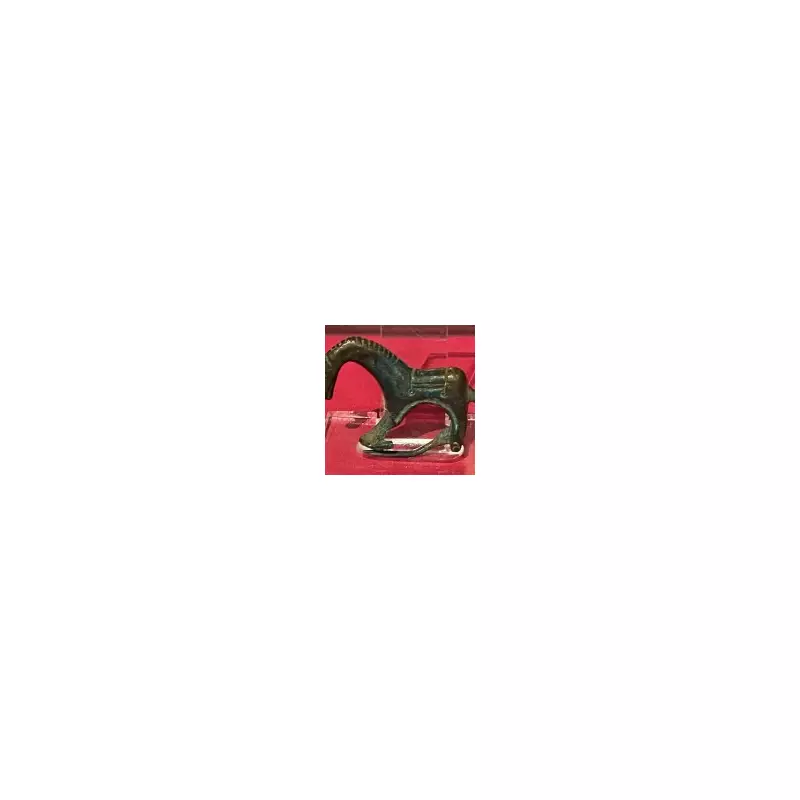
A metal detectorist from Lincolnshire has been handed a suspended prison sentence after admitting he passed off modern reproductions, including a Roman horse brooch bought on eBay, as genuine historical finds.
The elaborate deception uncovered
Jason Price, 54, from Grantham, was paid £5,000 to display what he claimed was a significant 1,800-year-old Roman brooch at a local museum. Lincolnshire Police revealed the truth: the copper-alloy 'Leasingham horse brooch' was not unearthed in a field but ordered online.
Price initially told authorities he discovered the artefact in 2019 under eight inches of soil near Leasingham during a charity event named Detecting for Veterans. The brooch was considered a major find, displayed at The Collection Museum in Lincoln and even featured on Channel 4’s Great British History Hunters.

However, suspicions were raised after Price submitted several other items to Lincolnshire County Council under the Portable Antiquities Scheme. Further expert testing revealed his submissions were modern reproductions, with faux patina paint applied to mimic age.
A pattern of fraudulent claims
Investigators found this was not an isolated incident. Price had reported a series of fake discoveries over several years:
- In October 2020, he claimed to find a Roman Knee Brooch in Long Bennington, an area rich in Roman history. This was wrongly recorded as treasure.
- He also reported discovering two Roman hoards, including a Bronze Age axe and figurines, which were later traced to online purchases.
- Previously submitted Roman coins were also confirmed to be unauthentic.
His actions exploited a system designed to protect the nation's heritage. The Portable Antiquities Scheme allows finders to report potential treasures for assessment, which can lead to them being designated as artefacts of historical importance.
Sentencing and consequences
At Lincoln Crown Court, Price admitted four counts of fraud by false representation. On January 8, 2026, he was sentenced to 12 months imprisonment, suspended for two years.
The court also ordered him to:
- Pay £3,250 in compensation to Lincolnshire County Council.
- Complete a rehabilitation activity requirement of up to 10 days.
- Undertake 150 hours of unpaid work.
Police emphasised that his fraudulent activities risked damaging the reputation of the treasure process and the heritage of the Roxholm, Haconby and Long Bennington areas.
Official reaction and a rare breach of trust
Will Mason, head of culture at Lincolnshire County Council, expressed profound disappointment. "It’s incredibly sad and disappointing that anyone would choose to exploit Lincolnshire’s rich heritage in this way," he stated.
Mason offered some reassurance, noting: "Thankfully, incidents like this remain rare due to the rigorous examinations carried out on objects before they are added to a museum’s collection." This case highlights the vital role of expert verification in protecting historical records from deliberate falsification.