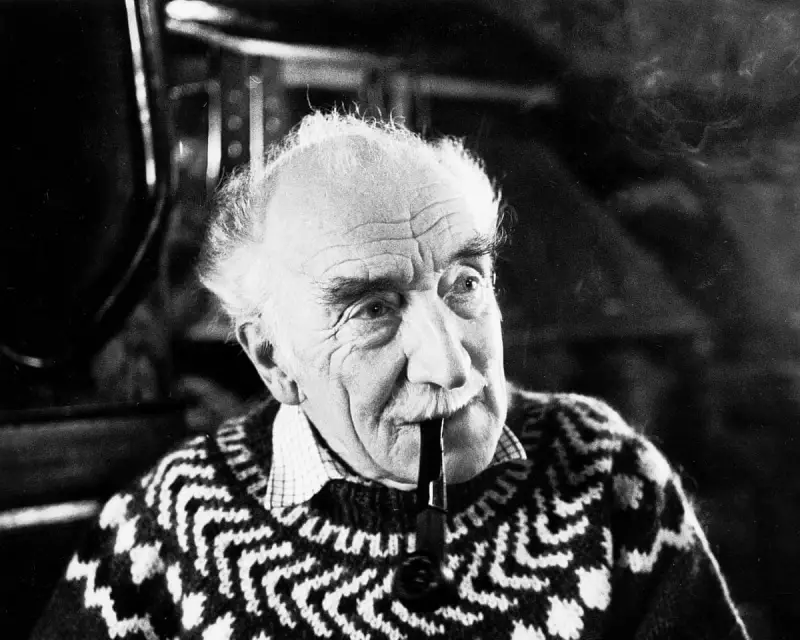
Seventy-five years have passed since the first Country Diary entry by Arthur Harry Griffin graced the pages of the Manchester Guardian. This marked the beginning of an extraordinary journalistic journey that would see him become the publication's most enduring diarist, capturing the essence of the English Lake District every other Monday for more than five decades.
The Birth of a Lakeland Voice
The story began in late 1950. Following the death of the previous diarist, George W Muller, Guardian editor AP Wadsworth wrote to the then little-known Kendal-based journalist with a simple proposition. His instructions were famously direct: "Write about anything you like, but for God's sake, keep off birds. We get all we want about them from the others."
Griffin's inaugural column appeared on 8 January 1951. It opened with a vivid scene of him skiing silently down a fellside, observing hardy Rough Fell sheep surviving the winter in dug-out snow caves. He would faithfully adhere to his brief, steering clear of ornithological cliché to explore a richer tapestry of Lakeland life.

A Life Shaped by the Fells
Born in Liverpool in 1911, Harry Griffin's love for the mountains was ignited by a childhood school trip to Stickle Pike. He became a passionate rock climber, co-founding the Coniston Tigers climbing club. His journalism career started at 17 on the Barrow Guardian, leading to roles at the Lancashire Evening Post and the Daily Mail.
His life took a dramatic turn with the Second World War, where he served in intelligence in India and Burma, rising to the rank of lieutenant-colonel. Post-war, he chose the Lakes over a London transfer, becoming northern news editor for the Lancashire Evening Post in Kendal. It was his weekly feature, Leaves From a Lakeland Notebook, that likely caught the Guardian's eye.
He embraced the discipline of the Country Diary, a column running since 1904, mastering the art of condensing a day's adventure into roughly 300 words. He would even adjust the paper in his typewriter to ensure a perfect fit.
Chronicling a Changing Landscape
For over 50 years, Griffin's diaries offered a unique window into the Lake District. His subjects were wonderfully diverse:
- Mountaineering and adventure: Describing ski descents of Helvellyn and challenging rock climbs.
- Rural life and craft: Documenting the work of shepherds and the region's characters.
- Environmental concerns: Early warnings about litter, erosion, and the impact of mass tourism, famously lamenting the "near indestructibility of orange peel".
- Cultural shifts: Observing the taming of ancient routes like Dunmail Raise for modern traffic.
- Simple joys: Championing the revitalising power of cold-water swimming in mountain pools long before it was a trend.
He wrote for the general reader, with his pieces providing "a breath of fresh air" alongside weightier editorial content. He introduced readers to local legends like smuggler Lanty Slee and forged a friendship with fellow writer and illustrator Alfred Wainwright, who illustrated Griffin's first book.
A Legacy in Print and Memory
Harry Griffin was a diarist of experience, only stopping rock climbing at 78 and skiing at 80. He continued fell walking, drawing inspiration directly from the landscape he loved. He passed away on 9 July 2004, with his final diary—a poignant reflection on Black Combe, a fell he first climbed in 1924—published three days later.
His work, spanning from January 1951 to July 2004, remains a vital chronicle of the Lake District's social and environmental history. For those wishing to explore his writing, a recommended starting point is the anthology A Lifetime of Mountains: The Best of A. Harry Griffin's Country Diary, edited by Martin Wainwright.
The Guardian's GNM Archive holds a rich collection of his records, including an oral history and photographs, preserving the voice of the man who, for half a century, was the definitive scribe of the Lakeland fells.