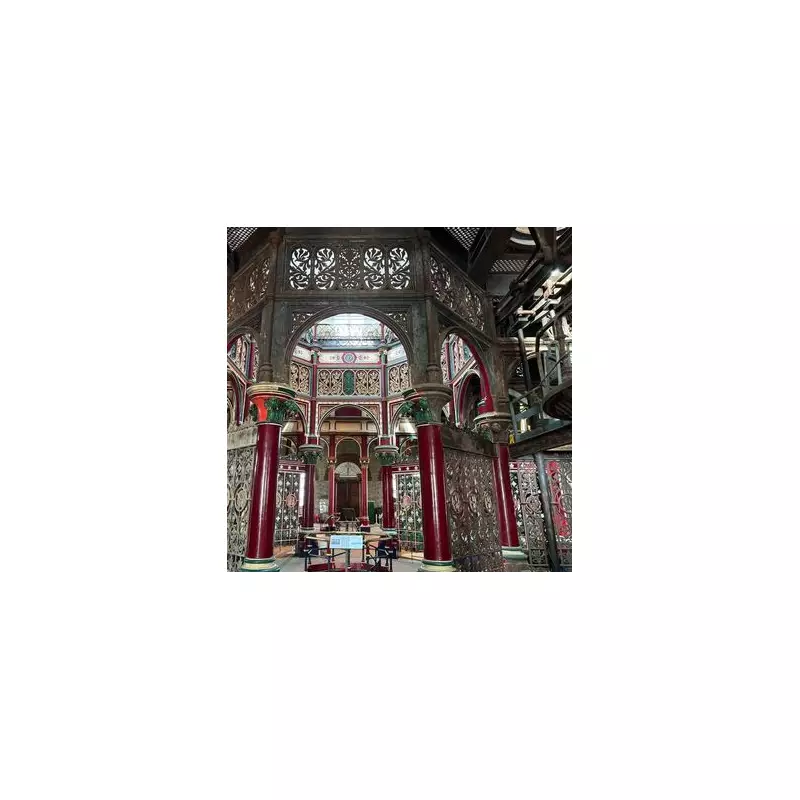
Nestled beside the River Thames in Abbey Wood, a breathtaking Grade I listed building stands as a monument to Victorian ingenuity. From its exterior, Crossness Pumping Station could be mistaken for a palace or cathedral, but its original purpose was far more utilitarian – and vital to the health of London.
A Masterpiece Born from the Great Stink
This architectural gem was conceived in direct response to the infamous 'Great Stink' of 1858. During an unusually hot summer, the Thames, choked with raw sewage, emitted a stench so overpowering it brought parliamentary business to a halt. The crisis forced authorities to act, leading to the creation of Sir Joseph Bazalgette's revolutionary sewerage network.
Crossness served as a crucial pumping station within this system from 1865 until 1956, diverting waste away from the city centre. Its historic opening was attended by royalty, with Albert Edward, the Prince of Wales, presiding over the ceremony. "All the great and the good descended on Crossness because this is the beginning of London's modern sewage network," explained Rob Harris of the Crossness Engines Trust. "That was an incredibly momentous achievement."

Ornate Ironwork and Colossal Engines
Behind the grand facade lies an interior that truly astonishes. The heart of the building is an octagonal space adorned with spectacular decorative cast ironwork, featuring intricate botanical motifs. This has rightly earned it the nickname 'a Victorian cathedral of ironwork'.
At its core sit four original pumping engines, among the largest rotative beam engines ever constructed. For decades after decommissioning, these colossal machines were left to decay, suffering from vandalism and the elements, as dismantling them proved too costly.
A Phoenix Rising from the Decay
Thanks to over fifteen years of dedicated restoration work by volunteers, one of these magnificent engines has been brought back to full, operational glory. The painstaking effort has reversed decades of decline, allowing visitors on the Trust's open days to witness the giant machine in motion once more.
Today, Crossness stands not as a relic of a disgusting past, but as a resplendent tribute to the engineering that saved a city. It is a place where stunning architecture meets profound historical significance, telling the story of how London conquered its own filth and created a legacy of public health that endures.