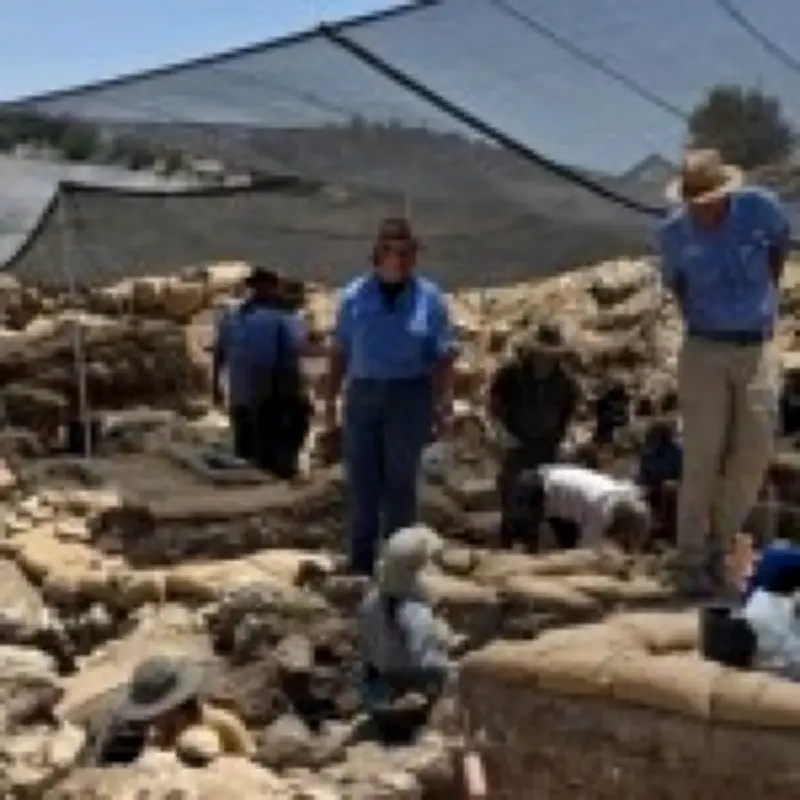
Archaeologists excavating at the ancient site of Shiloh in the West Bank have uncovered a new clue that could help solve the mystery of the Ark of the Covenant. The discovery of the building's southern wall allows researchers to reconstruct its full size and better understand its purpose, according to Dr. Scott Stripling, director of the Tel Shiloh excavation for the Associates for Biblical Research.
Monumental Building Matches Biblical Proportions
The structure runs east to west and has dimensions that resemble those described for the biblical Tabernacle, the portable sanctuary that housed the gold-covered Ark after the Israelites' Exodus from Egypt. Researchers first announced last year that they had uncovered a monumental building with matching proportions. The latest discoveries strengthen the case, though they do not prove the building is the Tabernacle.
Excavations have also produced objects linked to worship, including altar horns, ceramic pomegranates, and murex shells. Earlier work at Shiloh uncovered more than 100,000 animal bones, mostly from sheep, goats, and cattle. Many bones came from the animals' right side, matching the description in Leviticus that portions from the right side were reserved for priestly offerings.

Shiloh's Historical Significance
Shiloh, located about 20 miles north of Jerusalem, is described in the Bible as the place where the Israelites established the Tabernacle after entering the Promised Land. According to scripture, Joshua divided the land among the tribes of Israel there. The city was also home to the high priest Eli and where the prophet Samuel was raised. The Bible presents Shiloh as Israel's first religious and political capital.
The Ark of the Covenant, said to hold the Ten Commandments, vanished from the biblical record before the Babylonian sack of Jerusalem in 586 BC. Researchers caution that they have not found the Ark itself, nor have they proven beyond doubt that the building is the Tabernacle. Instead, they are building a stronger picture of where the Ark may have been kept.
Fortifications and Biblical Connections
Elsewhere on the site, archaeologists uncovered more of Shiloh's northern fortifications, including a bent-axis gate complex with several rooms. These discoveries support earlier suggestions that the team may have identified the gate mentioned in the biblical account of Eli's death. According to the story, Eli learned that the Ark had been captured by the Philistines, fell backwards from his seat near the gate, broke his neck, and died.
The contents of the excavation will undergo radiocarbon testing to establish a more precise date for the destruction layer in which they were found. The discoveries provide a window into Shiloh's earliest history before Israelite settlement, according to researchers.
Despite the excitement, Stripling emphasized that the team has not uncovered the Ark of the Covenant itself. The latest season has produced more evidence that appears to fit the biblical narrative, making the mystery more intriguing even if the missing chest remains elusive.