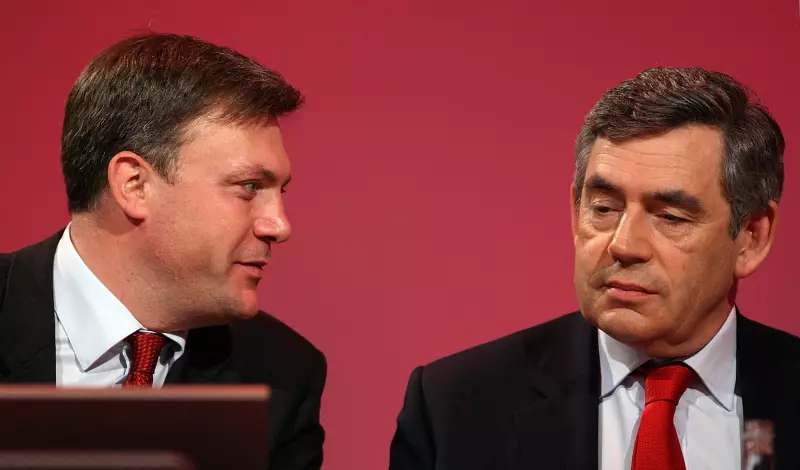
On 29 December 2006, the British government quietly closed a chapter of financial history that had stretched back six decades. The Economic Secretary to the Treasury, Ed Balls, announced the final payment of $83 million to the United States, settling the last instalment of a loan first agreed in the aftermath of the Second World War.
The Crippling Cost of Victory
By 1945, Britain was victorious but financially exhausted. The war effort had consumed the nation's wealth, leaving the new Labour government under Clement Attlee facing a dire situation. The National Debt stood at a staggering 270% of GDP, and the country's infrastructure and housing stock lay in ruins from bombing raids. Rationing, introduced in 1939, remained in force.
With ambitions to build a new welfare state, the government realised it needed urgent financial aid simply to keep the nation functioning. The only potential source was the United States, Britain's powerful wartime ally. In September 1945, a delegation led by the ailing economist Lord John Maynard Keynes travelled to Washington. Keynes warned of a "financial Dunkirk" and hoped to secure a grant or an interest-free loan in recognition of Britain's early stand against fascism.

A Transactional Agreement and a Blow to Pride
The American negotiator, Assistant Secretary of State William L. Clayton, had other ideas. Suspicious of Attlee's socialist government, Clayton offered not a gift but a strict commercial loan. The final terms, signed on 5 December 1945, were a shock to the British establishment.
The US provided a loan of $3.75 billion with a 2% annual interest rate, repayable over 50 years starting in 1950. The conditions were tough: sterling had to be made convertible, and the system of "Imperial Preference" tariffs was to be dismantled. In Britain, the reaction was one of bitter disappointment. Some compared the US to Shakespeare's moneylender, Shylock, while peers in the House of Lords saw it as the beginning of the end for the British Empire.
Keynes, who died in April 1946, had argued there was no alternative. Rejecting the loan would have forced Britain to abandon its global military commitments, as even more severe austerity at home was politically impossible.
A Long Road to Repayment and a Shift in Power
The loan's impact was immediate and painful. When sterling became convertible in July 1947, a run on the currency forced a swift suspension of the policy. The struggling British economy was later bolstered by funds from the US Marshall Plan.
The Anglo-American Loan of 1945 did more than provide stop-gap financing; it formalised a new world order. The United States emerged as the undisputed global superpower, while Britain's era of pre-eminence was over. The loan repayment, completed six years behind schedule in 2006, was a small financial transaction but a potent symbol. As Ed Balls stated, the payment honoured a historic commitment, marking the end of a debt that had witnessed the profound transformation of both nations and the world.