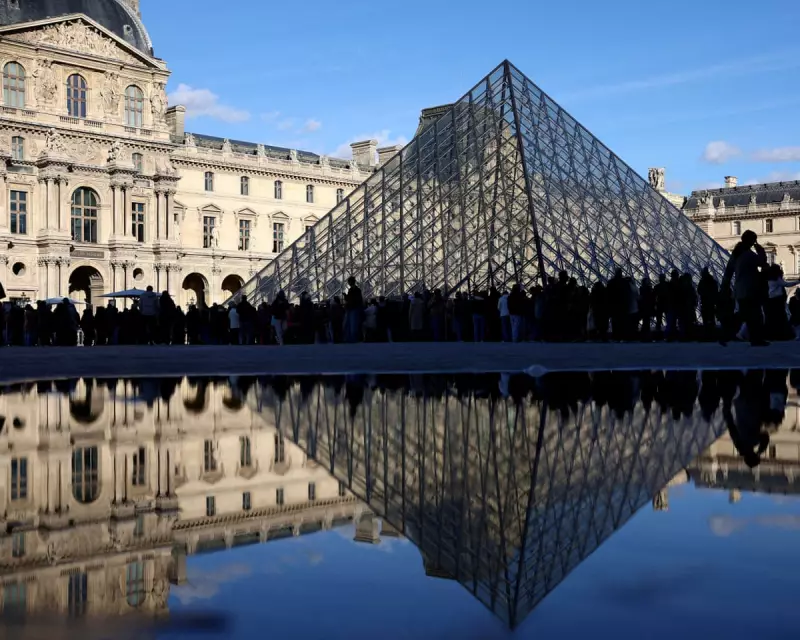
The Louvre Museum, an enduring symbol of French culture and the world's most visited art gallery, is facing an existential crisis. A dire year marked by audacious thefts, crumbling infrastructure, and systemic failures has forced a national reckoning over the future of this iconic institution.
A Palace of History, A Museum in Crisis
Long before the opulence of Versailles, the Louvre stood as a royal residence on the banks of the Seine. It evolved through centuries, from housing the libraries of Charles V to the artist workshops of Henri IV. Its transformation into a public museum on 8 November 1793 was a revolutionary act, opening masterpieces to ordinary citizens. It has survived revolutions, fire, and Nazi occupation, weaving a rich tapestry of mystery and heroism into its very walls.
Yet, in 2024, this legacy is under severe threat. The museum is, quite literally, falling apart. The Campana gallery, home to ancient Greek ceramics, has been closed due to fears of a ceiling collapse. Burst water pipes have damaged the Egyptian antiquities library and around 400 historic documents, including records of early 19th-century archaeological digs in Egypt.

From Daring Heists to Systemic Neglect
The Louvre's problems are both dramatic and deeply systemic. The October 2023 jewel heist is merely the latest in a long line of scandals, echoing the infamous 1911 theft of the Mona Lisa by Vincenzo Peruggia. A recent parliamentary investigation into the crown jewels theft delivered damning conclusions, revealing years of ignored warnings about woefully inadequate IT and security. Shockingly, one highly secure password was found to be simply "Louvre".
Internal reports over the past decade had consistently flagged these issues, but they were left unread. Questions are now being asked about the priorities of the museum's last two directors. Between 2018 and 2023, €105m was spent on new acquisitions while only €27m was allocated for essential maintenance—a disparity that many see as a critical error.
Staff frustration has boiled over, with trade unions organising rolling strikes since 15 December to pressure management and the government into urgent action.
The Grand Redesign: A €1.15bn Lifeline
Finally, the scale of the emergency appears to have been recognised at the highest level. President Emmanuel Macron has announced a grand "renaissance" for the Louvre, a €1.15bn redesign slated to begin by 2027 and finish in 2031. The ambitious plan, to be partly funded by taxpayers, includes:
- A dedicated room for the Mona Lisa with a separate entrance.
- New galleries and updated visitor facilities.
- A spectacular new eastern entrance to complement I.M. Pei's pyramid.
- Overhauled, state-of-the-art security, water, heating, and electronic systems.
Funding will also come from visitors themselves. From January 2025, entry fees will rise to €32 for non-EU nationals and €22 for EU residents, though free admission for under-18s and EU students remains. The logic is clear: mass tourism has contributed to the strain, and it must now contribute to the solution.
The winning architect for this colossal project is due to be announced in the coming weeks. The Louvre, in its current state, cannot wait. It embodies the contradictions of modern France: globally revered yet locally vulnerable, a monument to eternity in urgent need of repair. With sufficient will, investment, and a measure of luck, this chapter of chaos can be closed, preserving not just a museum, but a cornerstone of France's pride and the world's shared imagination.