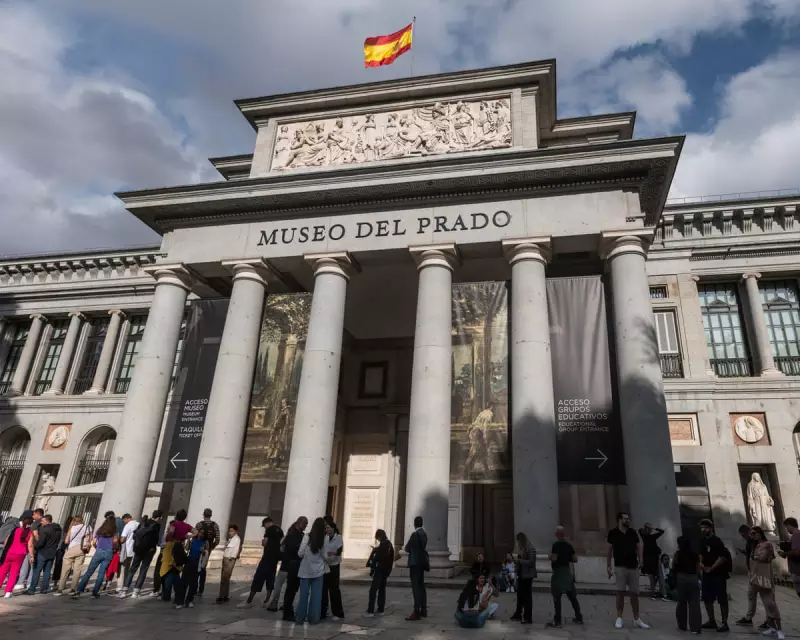
The world-renowned Prado Museum in Madrid has declared that it has reached its optimal visitor capacity, with its director stating the institution does not need a single additional guest. This announcement comes after the gallery welcomed a record 3.5 million visitors in the last year, a figure officials believe represents a critical threshold for maintaining quality.
A Delicate Balance: Success Versus Saturation
Speaking at a press conference earlier this week, the Prado's director, Miguel Falomir, made the museum's position clear. "The Prado doesn't need a single visitor more," he stated. "We feel comfortable with 3.5 million. A museum's success can collapse it, like the Louvre, with some rooms becoming oversaturated. The important thing is not to collapse."
Falomir emphasised that the primary focus is now on preserving and enhancing the experience for those who do visit, ensuring a trip to see masterpieces by Goya and Velázquez does not feel like "catching the Metro at rush-hour." This echoes concerns raised by the Louvre in Paris, where visiting has been described as a "physical ordeal."

Strategies for a Sustainable Future
To manage the flow of people and safeguard the artistic encounter, the Prado is exploring several initiatives. Key strategies include optimising entrance procedures, reconsidering the size of guided tour groups, and more rigorously enforcing the ban on photography inside the galleries to prevent bottlenecks around iconic works.
A recent Friday morning visit revealed the current state of play. While queues were minimal in mid-January, the interior told a more nuanced story. Hieronymus Bosch's 'The Garden of Earthly Delights' attracted a crowd of around 50 people, momentarily obscuring parts of the famous triptych. However, the Goya rooms offered more space for contemplation.
Visitors like Alexander Jute from Stockholm found the conditions "perfect," noting that summer crowds are typically far heavier. Others, such as Laura Moya from Murcia, planned their visit strategically, arriving early to avoid queues and quickly using the cloakroom.
Finding Solace in the Lesser-Known
The experience varies greatly depending on where visitors go within the vast museum. While Room 12, home to Diego Velázquez's seminal 'Las Meninas', grew busy and noisy by late morning, other galleries offered serene solitude. The Alonso Cano gallery, for instance, was completely deserted, allowing undisturbed appreciation of its 17th-century treasures.
Enrique, a Madrid local and museum member, expressed a commonly held view among cultural enthusiasts. "Visitor numbers keep going up and up and I'm glad that they do," he said. "It's really good that people want to come and see culture." The challenge for the Prado's management is to honour this public enthusiasm while ensuring the art itself remains accessible and enjoyable, not just a backdrop for a crowded spectacle.
As the museum refines its approach, the goal is clear: to prevent the fate of overcrowding that has plagued other major institutions and to ensure that Velázquez's gaze, and the dozing mastiff in his masterpiece, can be met with something closer to wonder than weariness.