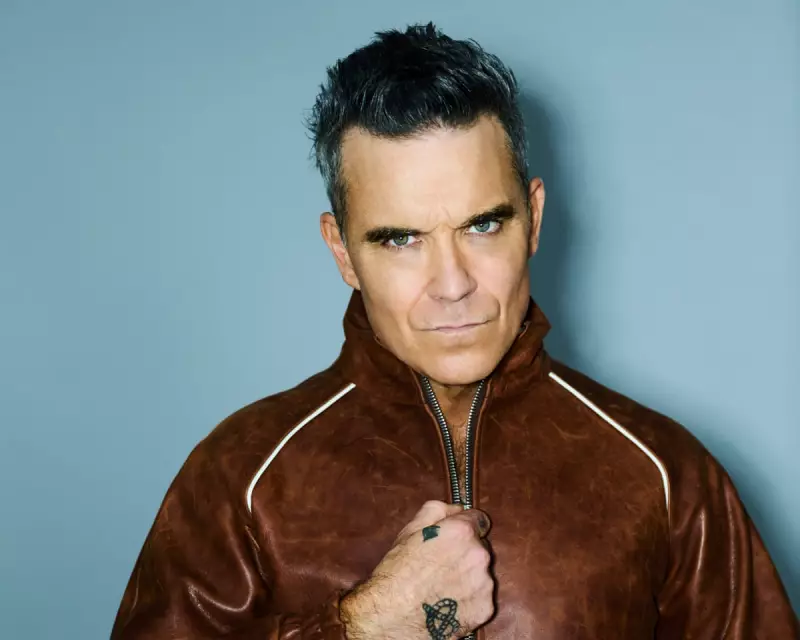
Robbie Williams has finally released his long-awaited 13th studio album, 'Britpop', following a release schedule as unpredictable as the record itself. Announced in May 2025 for an October launch to coincide with 90s nostalgia, it was delayed to avoid Taylor Swift, before appearing unannounced in mid-January 2026, seemingly to maximise its chart potential.
A Nostalgic Mission with Chart Ambitions
Williams has framed Britpop as the album he wished to make after initially leaving Take That, celebrating a "golden age for British music". The promotional campaign was pure 90s theatre, featuring fake blue plaques and a launch gig at Camden's legendary Dingwalls venue. There, he performed the new album alongside his 1997 solo debut, Life Thru a Lens.
The delayed release appears strategically calculated. By dropping the album in a quieter January week, Williams increases his chance of scoring a UK Number One. Achieving this would break his current joint record with The Beatles for the most chart-topping albums by a British solo artist.

Revisiting the Past with Present-Day Confidence
The album's concept is intriguing, given the mid-90s were a personally tumultuous time for Williams, marked by addiction and public ridicule. Yet, he returns to the era with the swagger of an artist who has sold over 75 million records.
Tracks like Spies and All My Life wear their 90s influences proudly, with walls of distorted guitar and Liam Gallagher-esque vocal drawls. Spies offers a rueful look back at hedonism, but the songwriting sparkle elevates it beyond mere pastiche. However, not every gamble pays off; Cocky channels the lesser, later period of Oasis rather than their iconic peak.
Unexpected Twists and Genre Detours
Just as the album's Britpop premise seems settled, it delightfully unravels. The standout curveball is Morrissey, a synth-pop, faintly homoerotic tribute to The Smiths' frontman, co-written with former bandmate Gary Barlow.
Further defying expectation is It's OK Until the Drugs Stop Working, which channels late-60s British bubblegum pop, and the beautiful electronic ballad Human. Featuring Mexican duo Jesse & Joy and Coldplay's Chris Martin, Human is a lambent meditation on AI—a theme conspicuously absent from the 90s guitar scene.
A Triumph Without a New 'Angels'
Ultimately, Britpop is a consistently engaging, if conceptually wayward, success. It lacks a single with the seismic impact of Angels or Let Me Entertain You, the very songs that rescued his solo career from its initial Britpop-adjacent confusion.
The album proves Williams can master the sound that once confounded him. As the review concludes, it may well be the record he wanted to make in 1995, but he must be profoundly grateful he didn't. His path to becoming the defining British pop star of his era required a different, more anthemic blueprint.