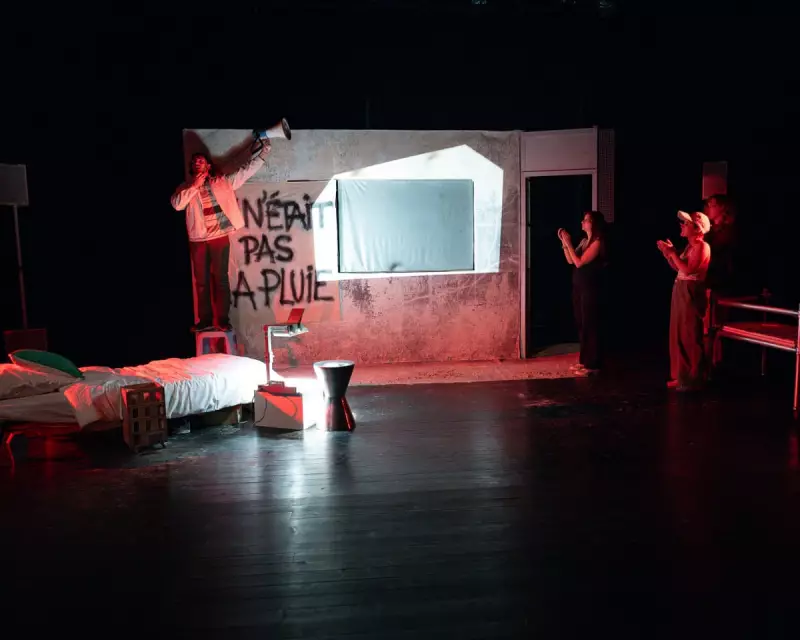
A powerful new theatrical production is forcing France to confront one of its darkest modern urban tragedies. Playwright and director Mathilde Aurier has created 65 Rue d’Aubagne, a hard-hitting play that delves into the catastrophic collapse of two dilapidated houses in Marseille on 5 November 2018—an event that has been starkly labelled the nation's 'Grenfell moment'.
A City Shattered: The Tragedy on Rue d'Aubagne
The disaster unfolded in the Noailles neighbourhood, mere hundreds of metres from Marseille's picturesque Old Port. The sudden collapse of the two buildings on Rue d'Aubagne claimed eight lives, sending shockwaves across France and triggering a fierce national debate about urban decay, social inequality, and failed housing policies.
"It was a turning point for Marseille," explains 29-year-old Aurier, speaking from her home in the city. "It spotlighted the politics of France’s second city. There are still a lot of things left unsaid, things that aren't pretty. But it set things into motion." In the immediate aftermath, authorities evacuated over 4,000 people from other dangerously substandard lodgings across the city, exposing a widespread crisis.

Art from Ashes: Crafting a 'Theatre of Catastrophe'
Aurier's play is her contribution to the civic response that followed the tragedy. She anchors the narrative in the experiences of Nina, a fictional resident of the collapsed building who, by chance, was not home that fateful night. Through Nina's survivor guilt, the play explores the profound psychological trauma inflicted on the community.
"All catastrophes are ambivalent," Aurier reflects. "They're an opportunity for strength in a moment that is completely fractured and difficult. What struck me was the solidarity and love." This community response was embodied by groups like the 5 November Collective, which mobilised 8,000 protesters just two days after the collapse.
The playwright, who grew up in Marseille and whose grandfather still lives near the disaster site, conducted eight months of intensive research. She wove together testimonies from a network of survivors and affected citizens. Her approach is "documented" rather than purely documentary, blending harsh reality with lyrical and surreal elements—such as using an inflatable crocodile to symbolise the then-mayor, Jean-Claude Gaudin, whose political clientelism allegedly stifled necessary systemic reform.
Form Mirroring Collapse: A Chaotic Dramaturgy
The play's structure intentionally mirrors the chaos of the event itself. It is fragmented, hopping between perspectives and timelines, and is divided into five sections named for the phases of a breaking wave. "It's the most chaotic thing I've written," Aurier admits. "I thought it would be interesting if the dramaturgy mirrored the housing collapses—that the form and narration of the play also seem to collapse."
Aurier cites British playwright Howard Barker and his 'theatre of catastrophe' as a key influence, particularly his exploration of power, violence, and strong female figures. This inspiration helps frame her examination of a city in limbo, grappling with indifferent bureaucracy and struggling to find meaning after catastrophe.
An Unfinished Reckoning: Trials and Failing Promises
The play's relevance continues beyond the stage. A related TV series is in development, aiming to cover the 2024 trials that occurred after Aurier finished the script. The legal outcomes have been a source of deep frustration for many. Aurier criticises the light prison terms—often under house arrest—and weak fines handed to the landlords and building inspectors held responsible.
Despite national and regional schemes announced post-disaster to assess Marseille's housing stock, progress is widely seen as too slow. In a city undergoing rapid gentrification, the social divide widens. "We're about to elect our new mayor in March," Aurier notes with concern. "And I don't feel housing is such a fundamental thing now. It was, but other issues are taking its place."

While admitting she is no urban policy expert, Aurier confirms that the psychic reverberations in a "city of failed promises" remain her creative ground zero. 65 Rue d’Aubagne is more than a memorial; it is a living, breathing demand for accountability and a poignant testament to the resilience and love that emerged from the rubble of Rue d'Aubagne.