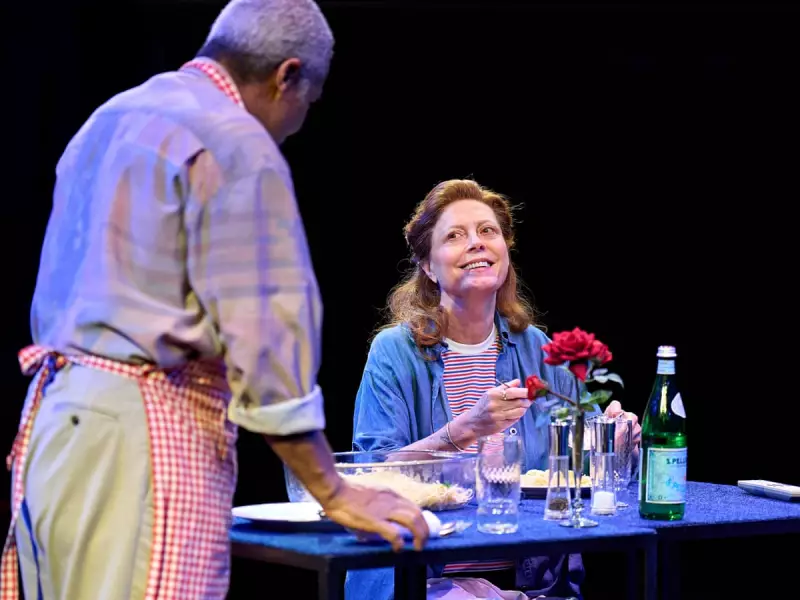
The incoming leader of the Bristol Old Vic has stated that casting major celebrities in stage productions is sometimes a necessary strategy, as the theatre sector faces an "undeniably challenging" period. Rebecca Dawson emphasised that venues must compete fiercely with streaming services for both audience time and money.
A New Era for the Oldest Theatre
Rebecca Dawson will commence her role as Executive Director and Joint Chief Executive on 6 January. She will steer the Bristol Old Vic, recognised as the oldest continuously operating theatre in the English-speaking world, into its landmark 260th anniversary year. Dawson will work in partnership with the venue's Artistic Director, Nancy Medina.
In an exclusive discussion, Dawson outlined the perfect storm confronting theatres: the lingering effects of the Covid-19 pandemic, years of austerity, and the current severe cost-of-living pressures. She noted that audience behaviour has become less predictable, prompting larger commercial theatres to use star names to help forecast demand for a show.

The Celebrity Casting Debate
The debate around casting film and television stars on stage was reignited in October. Nadine Rennie, a co-chair of the Casting Directors' Guild, warned that the trend was "killing" the industry and that mid-scale theatres would be the first casualties.
Despite this, starry casts remain prevalent. Current West End productions feature Ncuti Gatwa in 'Born With Teeth', Alicia Vikander in 'The Lady From the Sea', Susan Sarandon in 'Mary Page Marlowe', and Bryan Cranston in 'All My Sons'. At the Bristol Old Vic this year, productions have featured well-known figures like Mel Giedroyc and local star Jayde Adams.
Dawson, formerly of Punchdrunk Enrichment and Arts Council England, supports the use of big names, provided they are the right fit. "They have to be the right people, and you’ve got to go through a proper process," she asserted. She described it as part of a "mixed economy" for survival, citing pantomime's traditional reliance on star casting to draw crowds.
"It’s making people think ‘that’s interesting, I want to go and see that’," Dawson explained. "Maybe next time they’ll go to a different show. For some audiences, that’s quite an interesting gateway."
Competing in a Digital Age and Fighting for Funding
Dawson confirmed that streaming platforms like Netflix are direct competitors for leisure time and spending. "There’s a competition for people’s time and people’s money," she said. Theatres must constantly evaluate whether their offerings are engaging for their community, she added.
An added advantage is that many stars themselves seek the credibility of stage work, which again helps theatre compete with "digital competitors." However, Dawson stressed that quality is paramount: "The important thing is that they’re good productions, it’s about talent rather than getting to a point where it’s just a celebrity badge."
Beyond competition, Dawson highlighted a critical funding crisis. She argued for increased public subsidy, revealing that Arts Council England grants have been effectively frozen since around 2012, amounting to a real-terms cut of nearly 50%. While acknowledging the government's difficult fiscal choices, she championed the arts as a vital part of society that delivers immense value when properly resourced.
She also reflected on theatre's role, stating that while venues are not political organisations, there is an expectation for them to reflect core values through universal stories on stage that challenge and provoke thought.
Despite the significant challenges from Covid-19, Brexit, austerity, and inflation, Dawson remains optimistic about the sector's resilience. "The arts in general and theatre is incredibly resilient," she said. "They are creative for a living, and they respond very well to challenging circumstances, and sometimes it generates really interesting new ideas. There’s room for creative risk that establishes Bristol Old Vic for the future."