

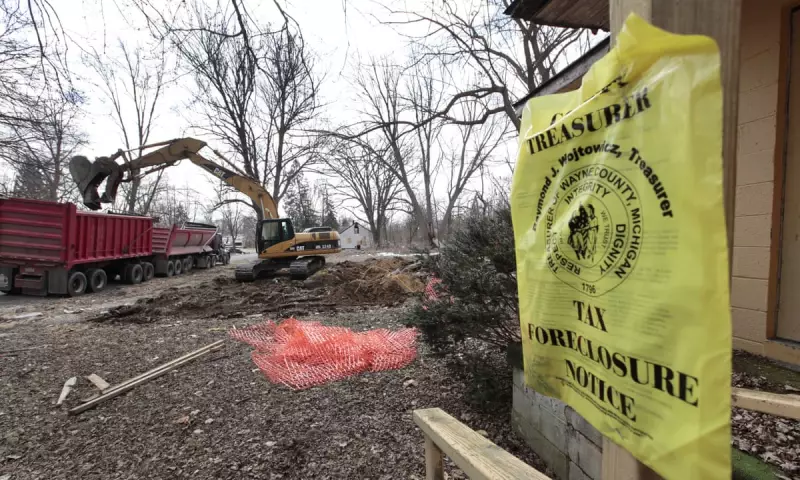
A major public health threat is unfolding across Detroit's neighbourhoods, where hundreds of sites where homes were demolished may have been backfilled with toxic dirt containing dangerous chemicals like lead and asbestos.
A Legacy of Blight and a Massive Clean-Up
Detroit, the lowest-income major city in the United States, has been grappling with vast urban decay for decades. Its population plummeted from nearly 2 million in the 1950s to under 700,000 today, leaving behind tens of thousands of abandoned structures. In response, the city launched what is widely considered the largest demolition programme in US history.
Over his 12 years in office, Mayor Mike Duggan oversaw the tearing down of tens of thousands of homes at a cost of hundreds of millions of dollars, touting blight elimination as a key achievement. However, this massive effort is now under intense scrutiny.

Contaminated Fill and a Pattern of Problems
The crisis came to light earlier this year when an investigation by Detroit's Office of Inspector General found a city-hired contractor had used dirt contaminated with construction debris from the demolished Northland Shopping Mall to backfill residential sites. Subsequent testing in early November revealed that 42 out of 47 sites examined exceeded pollution thresholds, with much of the material deemed "unsafe for direct human contact."
At a press conference on 22 December, Mayor Duggan announced that 424 sites had been identified as potentially contaminated. He stated that 32% of 50 sites tested so far showed pollutant levels above "regional background levels," a threshold that triggers mandatory environmental cleanup. Despite repeated requests, the administration and state regulators have not publicly disclosed the specific toxins detected.
Independent experts, including former state regulator Steve Hoin, say the contaminated fill likely contains lead, mercury, cadmium, PAHs, and asbestos—chemicals toxic even at very low exposure levels and linked to cancer and reduced cognitive ability in children.
Protocols Ignored and a "Gargantuan" Clean-Up
This is not the first time the demolition programme has faced contamination issues. Similar problems emerged three times previously, leading to federal scrutiny in 2018. In response, protocols were developed with state and federal regulators to increase scrutiny of dirt sources and require testing of material from commercial land.
However, Steve Hoin, a former geologist with Michigan's Department of Environment, Great Lakes and Energy (EGLE), questioned whether the city followed these protocols. "Regardless, it’s mismanagement because clearly they had knowledge in 2017, and before that, that contaminated fill was coming in, and they haven’t fixed the problem," Hoin said.
RJ Koscielniak, a geology professor and scholar of urban decline, argued the city never implemented "legitimate controls," partly due to contractor opposition and a desire to maintain demolition speed. "There’s an insistence that [the demolitions] get done with a velocity that compromises any regulations," he stated.
The potential health implications are severe. Allen Burton, an ecosystems management researcher at the University of Michigan, called the situation a "gargantuan problem," effectively leaving small toxic waste dumps scattered throughout neighbourhoods. He and Hoin warned that residents risk exposure to contaminated dust, while children playing on the sites face more immediate danger.
Mayor Duggan downplayed the immediate risk, suggesting harm would only occur if someone spent "a lot of time digging in the dirt." Burton strongly contested this, noting proper hazardous waste sites are capped with specialised liners or thick clay barriers, which are not present here. "I think the mayor is just trying to get people off his back," Burton concluded.
The financial and logistical burden of remediation now falls to Duggan's successor, Detroit City Council Mayor Pro Tem Mary Sheffield. While Duggan estimated a clean-up cost of around $18,000 per property, some experts believe it could be significantly higher.

In a statement, Duggan administration spokesperson John Roach defended the city's actions, calling claims of bad management "false" and stating Detroit had been proactive in investigating and holding contractors accountable. A spokesperson for EGLE said the agency would continue working with the city to determine appropriate actions, including possible remediation or enforcement.





