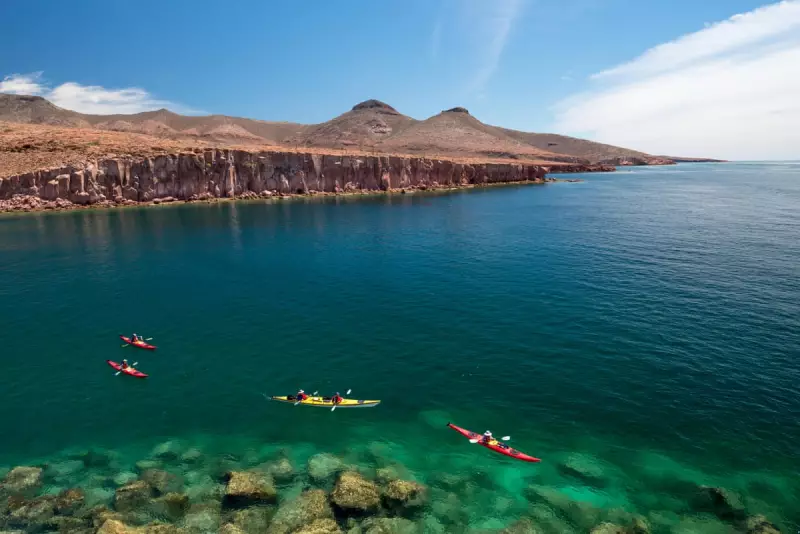
On a clear day in the Gulf of California, the uninhabited island of Espíritu Santo appears as a pristine sanctuary. Its rocky coves, turquoise waters, and abundant marine life have earned it the nickname "Mexico's Galápagos." Yet, this Unesco World Heritage site, once rescued from the brink of development, now confronts a formidable new challenge: the relentless pressure of mass tourism.
The 1990s Battle: A Novel Fight for Conservation
In the 1990s, Espíritu Santo's future looked very different. The island, roughly the size of Manhattan and located off the north-west coast of Mexico near the Baja California peninsula, became a target for developers. Reports suggested plans for a casino, capitalising on its secluded beaches. The island's legal status made it uniquely vulnerable; it was ejido land – communal agricultural property controlled by about 30 landowners.
This created a "legal grey zone," according to Exequiel Ezcurra, former president of the Mexican Institute of Ecology. He warned that the threat was real, given Mexico's historically lax conservation laws. The alarm was raised by American conservationist Tim Means, who had spent years guiding ecotourists in the area. He reached out to influential Mexican philanthropists, most notably billionaire Manuel Arango, a prominent businessman and ardent environmentalist.

Fears were realised when a landowner built illegal bungalows around the year 2000. In response, the coalition devised an unprecedented plan: an "agreed expropriation." They would buy the island's 10,000 hectares directly from the ejidatarios and transfer it to the government. Negotiations took years, culminating in a deal worth an estimated $3 million.
Arango launched a unique fundraising campaign. About a third of the funds came from local citizens contributing as little as 100 pesos each, while philanthropic foundations and Arango himself covered the rest. "We wanted it to come from many people. We wanted the island to feel like theirs," Arango recalled. In January 2003, their efforts succeeded, and Isla Espíritu Santo was declared federal land, prohibiting development.
A Fragile Legacy and a Rising New Threat
The victory set a powerful precedent. In 2005, Unesco designated Espíritu Santo and 243 other islands in the Gulf a World Heritage site. In 2007, Mexico declared the Espíritu Santo archipelago a national park. The campaign inspired other communities in Baja California Sur to oppose mega-developments and served as an early model for private conservation in Mexico, a practice that has grown significantly since.
However, the island's guardians now report growing unease. The very beauty that was saved is attracting unsustainable numbers of visitors. Mike Lever, owner of Baja Expeditions, states bluntly: "This beautiful island is now under threat by mass tourism." He describes day boats ferrying large groups from Cabo, accompanied by loud music, heavy drinking, and litter.
Scientific studies corroborate the concern. Octavio Aburto, a professor at Scripps Institution of Oceanography, notes a visible degradation over 30 years. "They forgot about the marine life," he argues, suggesting terrestrial protection has taken priority. Human activity, the climate crisis, overfishing, and illegal fishing are contributing to a decline in endangered species throughout the region.
The Community as Future Guardians
Authorities are attempting to respond. The National Commission of Natural Protected Areas (Conanp) has been revoking permits for permanent tourist camps on the island and is considering tighter visitor controls. Dilia Rebeca Meza of Conanp acknowledges the challenge is long-term, stating the mission is to preserve the "crown jewel" for future generations.
Yet, for the original saviours, the ultimate protection lies not just in law but in people. Enrique Hambleton, an environmental educator from La Paz, says local activists continue to meet and pressure authorities. Arango, now in his 80s, holds a similar view. "The legal locks we put in place are fragile," he admits. "What really protects the island in future is the people who defend it. We need the community to be the guardians."

The story of Espíritu Santo remains a powerful testament to community action, but its next chapter hinges on balancing preservation with the pressures of the modern world.