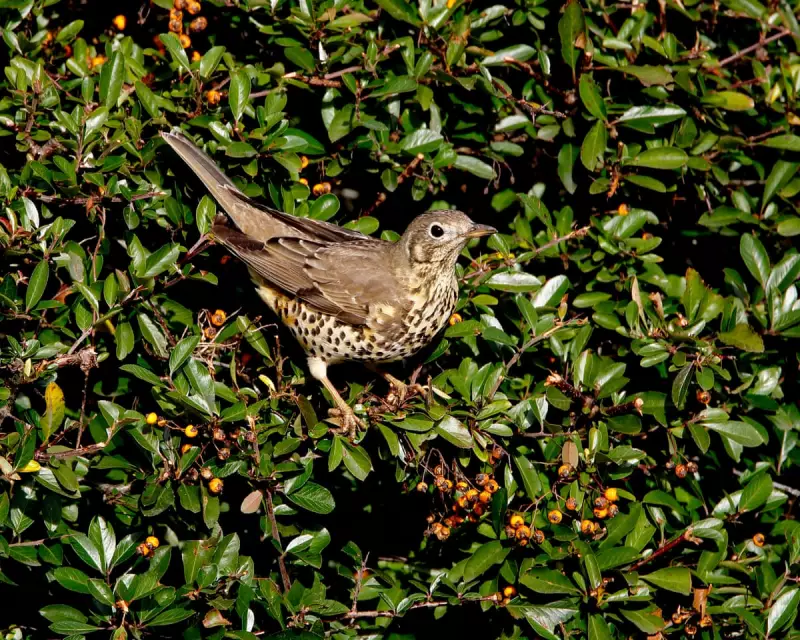
In a quiet corner of an industrial estate in Deeside, North Wales, a Mistle Thrush perches in a Pyracantha bush, its song one among thousands now being decoded by enthusiasts across the UK. The key to this newfound understanding? A revolutionary piece of technology held in the palm of the hand.
The App Teaching Britain the Language of Birds
For many, the dawn chorus was once a beautiful but indecipherable symphony. Now, more than 1.5 million people in Britain are using the Merlin Bird ID app to put names to those melodies. Developed by the Cornell Lab of Ornithology in New York, the free app has become a global phenomenon, with 33 million downloads across 240 countries and territories. The UK stands as its second-largest user base, witnessing an 88% increase in users from 2023 to 2024.
Writer and human rights activist Natasha Walter recalls her early, clumsy attempts at identification. "I recorded their songs on my phone and arduously tried to match each song with online recordings," she says. After a friend's recommendation, she tried Merlin in her London garden and made a delightful correction: birds she thought were female blackbirds were actually song thrushes and mistle thrushes. "I'm obsessed with Merlin – it's wonderful," Walter admits. "This is what AI and machine-learning have been invented for."

How AI Listens to Nature and What It (Sometimes) Misses
The app's sound identification feature, launched in 2021, uses machine learning trained on the songs of more than 1,300 bird species worldwide, with updates twice a year. It analyses the distinct patterns, or spectrograms, created by different birdsongs. For latecomers to birding like Angela Townsend from Bedfordshire, it has acted as a patient teacher, transforming anonymous "little brown jobbies" into recognisable Cetti's warblers and willow warblers.
However, Merlin is not infallible. Young birder Kasper Wall, 12, from Norfolk, found it initially detected North American species in his garden. Naturalist Nick Acheson, while welcoming the app's engagement power, notes a risk. "There's certainly a risk that people don't learn and just abdicate responsibility for learning to Merlin," he cautions, citing a glitch where a chaffinch call can be misidentified as a redstart. Wildlife guide John Williamson points out that Merlin can't assess habitat context, sometimes suggesting species unlikely for the location.
More Than Identification: A Gateway to Wellbeing
Beyond simple identification, users report profound benefits. Mary Novakovich, an author, uses it in Croatia and finds it connects her deeply to the landscape. "It really brings you closer to the natural world... It's part of what makes life a joy," she says. This sentiment is backed by research linking birdsong encounters to improved mental health.
For John Williamson, this is the app's true power. He knows one individual suffering from acute anxiety for whom Merlin provided a focus, enabling calming trips back into nature. "I find it impressive that an app can empower people to go out into nature," Williamson states.
As Natasha Walter summarises, the app reveals a hidden world. "It reminds you that there are birds knitted into your daily life... these birds are singing away all the time, even in London." For millions, the Merlin Bird ID app has turned the background noise of nature into a conversation, fostering joy, knowledge, and a much-needed sense of connection.