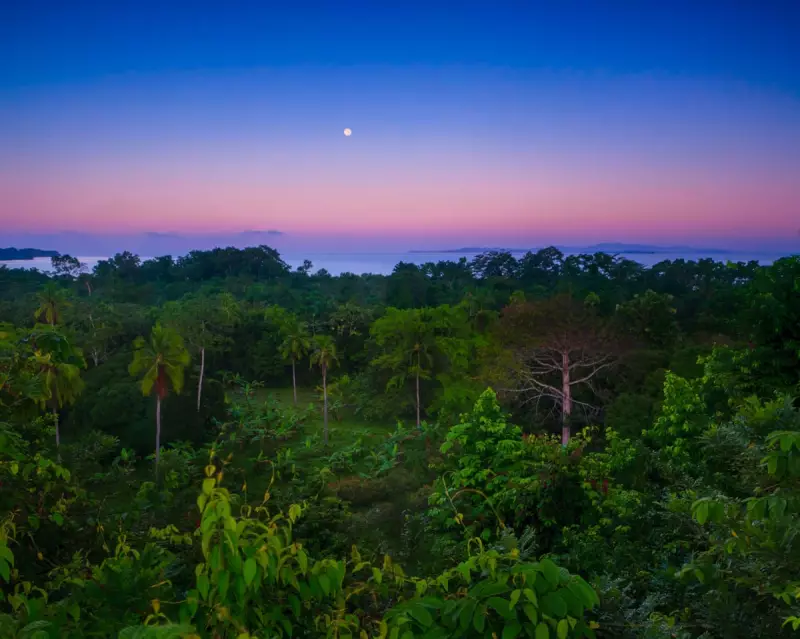
In a remarkable environmental turnaround, Panama has successfully stemmed the rampant destruction of one of the world's most vital and treacherous rainforests. The Darién Gap, a vast and roadless wilderness bridging Central and South America, has seen illegal logging, mining, and poaching plummet following a concerted, tech-savvy conservation push.
A Hostile Haven Under Threat
For millennia, the Darién Gap's formidable size and hostile terrain shielded its immense biodiversity from development. This sanctuary is home to species like jaguars, harpy eagles, and red-crested tamarins. However, these same characteristics made it incredibly difficult to protect. Segundo Sugasti, director of Darién National Park, described the near-impossible task of safeguarding 575,000 hectares of beach, mangrove, and rainforest with just 20 rangers.
Like tropical forests globally, it was shrinking. Over two decades, at least 15% was lost to illegal logging, mining, and cattle ranching. Rangers, often lacking basic supplies and communication, were chasing ghosts in a landscape where alerts arrived too late.

The Fightback: Policy, Purges, and Practical Support
The tide began to turn in 2022 when the Panamanian government took a harder line on deforestation and partnered with the NGO Global Conservation. The momentum accelerated dramatically after President José Raúl Mulino took office in July 2024.
Mulino's administration purged the environment ministry of corrupt officials and introduced a blanket moratorium on logging to stop the exploitation of indigenous permits. Critically, resources flowed to the front lines. The ranger force expanded from a skeletal six to over 40, with new recruits and forestry officers. Patrols skyrocketed from almost zero in 2022 to 55 in 2024, with over 150 planned for 2025.
Global Conservation provided essential practical support: new trucks, boats, food, and fuel. "Now if we have to go by boat, by truck or by foot, we will go there – no matter how far it is," said park ranger Esquivel Ramires.
Low-Cost, High-Impact Technology
A game-changer was the strategic use of accessible technology. Rangers, once isolated, are now in constant contact using Starlink satellite internet. They employ a free, cloud-based park management system called EarthRanger to share photos, GPS locations, and incident reports in real-time.
Trail cameras automatically detect intruders, and links to Global Forest Watch's free real-time fire-detection satellites allow immediate response. "Before, sending a park ranger to remote zones meant risking their life. Now I can send them to the most far-flung corners quickly, knowing they are safe," explained Sugasti. This coordinated approach means teams of five can be rapidly dispatched instead of one or two arriving late and alone.
Staggering Results and a Global Blueprint
The results are undeniable. According to Global Forest Watch, forest loss inside the national park plummeted by 88% between 2022 and 2025, reaching a 20-year low. Logging in 2025 has fallen to nearly zero.
Jeff Morgan, director of Global Conservation, calls it a "miracle," especially amidst global cuts to environmental budgets. He highlights the model of co-investment—where NGOs partner with governments that also commit their own resources—as key. This makes rangers more accountable and yields faster results than slow-moving international grants.
"This is just one park. Imagine the difference we could make with just $200,000 a year, times 1,000 parks," Morgan said. As tropical forest loss hits record highs elsewhere in Central America, Panama's pragmatic blend of political will, basic funding, and smart tech offers a replicable blueprint for saving the world's remaining rainforests.