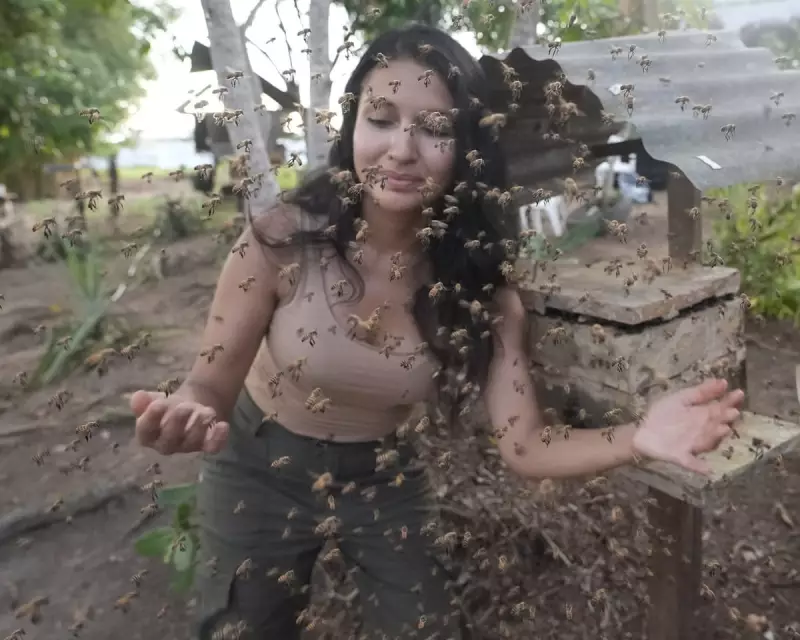
In a landmark decision for global conservation, two municipalities in Peru have become the first in the world to grant legal rights to native stingless bees. The pioneering ordinances, passed in Satipo and Nauta, recognise these vital Amazonian pollinators as subjects with the right to exist, flourish, and have a healthy habitat.
A Turning Point for Nature's Unsung Heroes
Constanza Prieto, Latin American director at the Earth Law Centre, hailed the move as a fundamental shift. "This ordinance marks a turning point in our relationship with nature," she stated. "It makes stingless bees visible, recognises them as rights-bearing subjects, and affirms their essential role in preserving ecosystems."
The campaign was spearheaded by chemical biologist Rosa Vásquez Espinoza, founder of Amazon Research Internacional. Her journey began in 2020, analysing the bees' honey used by Indigenous communities during the Covid-19 pandemic. "I was seeing hundreds of medicinal molecules," Espinoza recalled, noting anti-inflammatory, antiviral, and even anti-cancer properties.

Ancient Pollinators Under Threat
Stingless bees, the planet's oldest bee species, are crucial to the Amazon. With about 250 of the world's 500 known species residing there, they pollinate over 80% of the region's flora, including key crops like cacao, coffee, and avocados. For Indigenous Asháninka and Kukama-Kukamiria peoples, they hold deep cultural and spiritual significance.
However, these primary pollinators face a deadly confluence of threats: climate change, deforestation, pesticides, and aggressive competition from 'Africanised killer bees'. The latter resulted from a 1950s Brazilian experiment and now outcompete native bees in their own habitats.
Espinoza's fieldwork revealed alarming declines. Indigenous community members reported that finding bees now took hours instead of minutes. Disturbingly, pesticide traces were found in honey from areas far from industrial agriculture.
The Path to Legal Recognition
For years, only European honeybees had official recognition in Peru. A lack of data and funding created a vicious cycle for stingless bee research. In 2023, Espinoza's team began a critical mapping project, revealing clear links between deforestation and bee decline.
This research contributed to a 2024 national law recognising stingless bees as Peru's native bees, a prerequisite for their protection under Peruvian law. The municipal ordinances followed swiftly. Satipo passed the first in October 2024, with Nauta approving a matching ordinance on Monday 22 December 2024.
The laws grant bees across the Avireri Vraem reserve rights to exist, thrive, maintain healthy populations, and enjoy a pollution-free habitat. Crucially, they can be legally represented in cases of threat or harm.
Dr César Delgado of the Institute of Investigation of the Peruvian Amazon emphasised their role as "primary pollinators" vital for biodiversity, forest conservation, and global food security.
Global Implications and Future Steps
The ordinances establish a mandate for concrete protective policies. These include habitat reforestation, strict pesticide regulation, climate change mitigation, and advancing scientific research.
The move has sparked international interest. A global petition by Avaaz calling for nationwide Peruvian law has garnered over 386,000 signatures. Groups in Bolivia, the Netherlands, and the US are looking to follow this precedent to advocate for their own wild bees.
For Indigenous leaders like Apu Cesar Ramos, president of EcoAshaninka, the law validates ancestral knowledge. "The stingless bee provides us with food and medicine... This law represents a major step forward because it gives value to the lived experience of our Indigenous peoples and the rainforest."
This world-first legal protection offers a revolutionary model for conserving often-overlooked species, placing intrinsic value on nature and the communities that have safeguarded it for millennia.