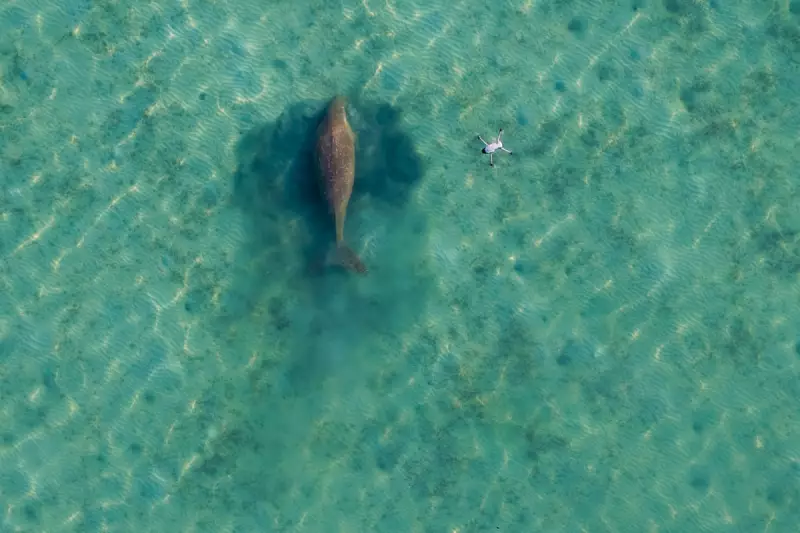
On the shores of Thailand's Tang Khen Bay, a man named Theerasak 'Pop' Saksritawee stares intently at a drone controller. His focus is fixed on a screen, not the rising tide. About 600 metres offshore, his drone hovers over a murky patch of the Andaman Sea, tracking a solitary grey shape: a dugong named Miracle.
For the past 15 months, Pop has visited this bay near Phuket almost daily to monitor these gentle marine mammals, which are close relatives of manatees. Once, there were 13 dugongs living here. Now, Miracle is the last one left in Tang Khen Bay, having chased the others away to keep the dwindling seagrass for himself.
A Population in Peril
This lonely dugong is a stark symbol of a catastrophic decline. The dugongs (Dugong dugon) living along Thailand's Andaman Coast are now considered critical to the global survival of the species. The region is one of only six locations worldwide, outside of Australia, with a population exceeding 100 individuals. In 2022, Thai government estimates put the number at at least 273 dugongs.

However, a devastating trend began a few years ago. Dead and emaciated dugongs started washing up on Thailand's shores in alarming numbers. From 2019 to 2022, an average of 20 strandings were reported annually along the Andaman Coast. Then, from 2023 to 2024, that figure more than doubled to 42 per year.
"We have probably easily lost half the population," states Petch Manopawitr, an ecologist and adviser on dugongs to Thailand's marine and coastal resources department.
The Mystery of the Vanishing Seagrass
In January 2025, an international team of 13 scientists, including global dugong authority Professor Helene Marsh from Australia's James Cook University, embarked on a fact-finding mission. Their conclusion was clear: the dugongs were starving due to a massive, unexplained seagrass die-off.
Dugongs are seagrass specialists, with an adult consuming up to 60kg of the plant daily. The most severe losses were found in the coastal waters of Trang province, once a dugong stronghold. This die-back led to more dead dugongs, starving strandings, fewer births, and a migration of animals to areas like Phuket and Krabi in search of food.
The root cause remains elusive. The scientists' report suggested an accumulation of factors, including:
- Silt and pollution reducing light penetration.
- Nutrient runoff and the effects of dredging.
- Warmer sea temperatures and shifting tidal cycles.
"The Thai situation is quite puzzling," says Professor Marsh. "It doesn't seem to have been associated with an extreme weather event, and it could be a chronic condition." Petch Manopawitr suggests climate change may be pushing an already stressed ecosystem past its breaking point.
Local Threats and a Glimmer of Hope
At Tang Khen Bay, Pop witnesses localised threats firsthand. He points to construction runoff from a new hotel, which washes sediments into the bay, smothering seagrass and fuelling algae blooms. Manee Sanae, who runs a roti stall on the shore, recalls a time when dugongs were a common sight and seagrass grew abundantly near the shore. "But not any more," she laments.
While government efforts to replant seagrass and provide supplemental food are underway, experts warn these cannot match the scale of the loss. "This critical ecosystem is much more fragile than we have believed before," Manopawitr admits.
Despite the grim outlook, there are small signs of resilience. The dugongs that migrated to Krabi have begun to have calves. Furthermore, local conservation efforts are growing. Pop and Sanae are part of an online group dedicated to protecting the bay's last dugong, alerting each other to fishing boats that might pose a threat to Miracle.
The fate of Thailand's dugongs now hangs in the balance, dependent on unravelling the mystery of the seagrass collapse and implementing effective, large-scale conservation measures before it is too late.