The Hidden Crisis in Britain's Net Zero Transition
The United Kingdom is racing toward electrification at a pace that far outstrips its ability to build the supporting infrastructure. According to energy expert Emma Parkinson, the transition to net zero will not fail because of insufficient power generation, but rather because the national grid lacks the stability required to deliver electricity reliably where and when it's needed.
The EV Charging Mirage
The electric vehicle charging narrative has been misleadingly framed as a consumer inconvenience issue - focusing on queueing problems, pricing concerns, and reliability complaints. In reality, these are secondary symptoms of a much deeper infrastructure and grid stability crisis masquerading as a charging debate.
Current figures reveal the UK has approximately 88,000 public charge points, while government estimates suggest we may require between 250,000 to 550,000 by 2030. Even the lower estimate demands a sustained construction rate far exceeding what has been normalised as "progress" in recent years.

The challenge extends beyond mere numbers. A rapid-charging network represents clusters of high-power loads that arrive simultaneously, often peaking in precisely those locations where the electricity network is weakest. When the grid cannot handle these concentrated demands, charging points become little more than tokenistic displays rather than functional infrastructure.
From Slogan to Reality
Grid stability represents the crucial difference between "renewables are cheap" as a political slogan and "renewables can run an economy" as an operational fact. This is where Britain's abundant wind and tidal resources become a potentially dangerous distraction.
While the natural resources exist in abundance, accessible resource does not equate to deliverable power at the right time, in the right place, and at the required quality. The transition fails not when annual electricity generation falls short, but when the system cannot maintain frequency and voltage within tolerance during specific moments - such as a wet Tuesday evening when demand spikes, wind generation drops, and transmission constraints prevent power movement between regions.
The Political Cost of Stability
Grid stability is already costing billions, and these expenses carry significant political implications. The UK passed a symbolic threshold in 2024 when renewables generated just over half of the nation's electricity, with wind power achieving a record share. This milestone should represent a victory celebration, yet the bill for maintaining system stability is quietly becoming a scandal.
NESO's reporting reveals overall balancing costs reached £2.7 billion in 2024/25, marking a 10 percent year-on-year increase. Thermal constraint costs surged by 64 percent to £1.7 billion. The underlying reasons tell the true story: network congestion, planned outages for transfer capacity upgrades, and high wind output colliding with infrastructure unable to move that power to where it's needed.
Ofgem has been unusually direct about consumer implications, noting that balancing costs contributed approximately 3.5 percent to electricity bills in 2024-25, equating to around £30 annually for the average household. While not catastrophic in isolation, this figure proves politically dangerous because it lands precisely where net zero cannot afford to be associated: household energy bills. When people begin linking renewables with higher costs and unreliable systems, the argument isn't merely lost - the public mandate for building essential infrastructure evaporates.
The Arctic Warning
There exists another compelling reason why the "just build more wind turbines" narrative has become insufficient: geopolitics has fundamentally changed.
NATO is increasing its Arctic preparedness as strategic threats escalate, with the region assuming renewed military significance. Finland is pushing for an Arctic security initiative ahead of NATO's July summit, explicitly framed around intensifying competition and the strategic value of the High North.

It's tempting to treat this as purely a defence story separate from energy concerns, but this separation no longer exists. Climate change is opening new routes and exposing resources, including the critical minerals essential for batteries, power electronics, grid technologies, and renewable energy systems. The equipment enabling decarbonisation simultaneously enables industrial power projection.
The West seeks supply chains avoiding Beijing's influence, China aims to maintain its leverage, and Russia wants the Arctic to remain a strategic fortress. One need not be paranoid to recognise the direction of travel: the energy transition is evolving into a contest of industrial capacity and secured inputs, extending far beyond mere emissions targets.
The Persistent Role of Oil and Gas
There exists a moral impulse to declare: "We must stop relying on oil and gas." However, electricity systems operate on physics, not moral impulses.
Even in 2024, gas remained the single largest fuel in UK generation by output, producing 86.7TWh. As long as the system manages constraint volumes, variable renewables, and the electrification ramp, dispatchable generation remains essential for keeping lights on. The honest transition narrative isn't about wind replacing oil and gas overnight, but rather wind expanding rapidly while oil and gas provides stabilising support until grid infrastructure, storage solutions, and stability services catch up.
For at least the next decade, many nations will pursue three simultaneous objectives: building renewable capacity, operating legacy hydrocarbons for system security, and investing heavily in grid infrastructure to enable electrification. Any narrative ignoring one of these three elements represents marketing rather than genuine strategy.
The Steel Bottleneck
An uncomfortable truth confronts policymakers: the transition isn't constrained by ambition, but rather by build capacity - and build capacity represents, in large part, a supply chain problem.
World Steel Association figures present the material intensity in blunt terms: onshore wind turbines require approximately 180 tonnes of steel per megawatt, while offshore wind demands around 450 tonnes per megawatt. This excludes the even larger steel footprint in substations, converter stations, offshore platforms, reinforcements, foundations, and physical grid upgrades preventing wind from becoming "constrained" power that operators pay to switch off.
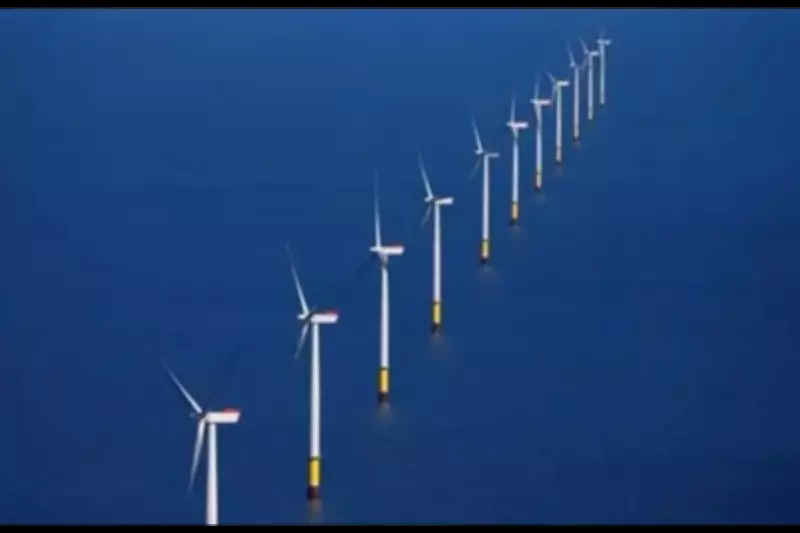
Consider the North Sea build-out currently discussed across Europe. Ten countries have committed to cooperating on developing 100GW of offshore wind by 2040 alongside interconnected grid infrastructure - an explicit attempt to transform the North Sea into a clean energy reservoir. A UK-Germany grid operator partnership has been proposed to develop a link sharing up to 2GW of offshore wind power.
While this represents the right direction, it's an intensely steel-heavy direction. High-voltage links, offshore substations, cable protection systems, onshore conversion, and reinforcement cannot be constructed from good intentions alone.
Toward an Industrial Programme
This is where the conversation must become more honest about what Britain truly requires: not merely more generation capacity, but a stability and security-led industrial programme. This means accelerated network construction, faster consenting processes, and procurement strategies recognising materials and manufacturing as strategic constraints. It also involves treating specialist steel and advanced alloys as enabling technologies rather than background commodities.
Practically speaking, building out grid and offshore energy capabilities increasingly depends on certified materials, traceability, corrosion performance, fatigue resistance, and the ability to deliver complex, high-integrity components without schedule slippage.
If we're serious about grid stability, we must be equally serious about the supply chains that build it. This encompasses steel stockholding, specialist alloys, precision machining, quality assurance regimes, and non-destructive testing and inspection disciplines. It's the unglamorous industrial work that transforms policy targets into functioning infrastructure.
The Integrated Challenge
The EV charger rollout isn't a side quest. The Arctic security story isn't unrelated. The offshore wind pact isn't merely a climate headline. These represent different facets of the same fundamental problem: the UK is entering an era where energy, security, and industrial capacity have become inseparably fused.
Grid stability has evolved into a competitiveness issue. Getting it wrong means paying more to balance the system, frustrating electrification efforts, and maintaining household scepticism. Getting it right enables not just greater wind integration, but unlocks EV charging at scale, reduces system costs, and builds resilience in a world where supply chains are increasingly weaponised.
The next decade of transition will be won by countries that stop focusing exclusively on megawatts and start building the industrial backbone that makes those megawatts usable. Britain can be among those nations - but only if it finally treats grid stability as the main event rather than a secondary consideration.