

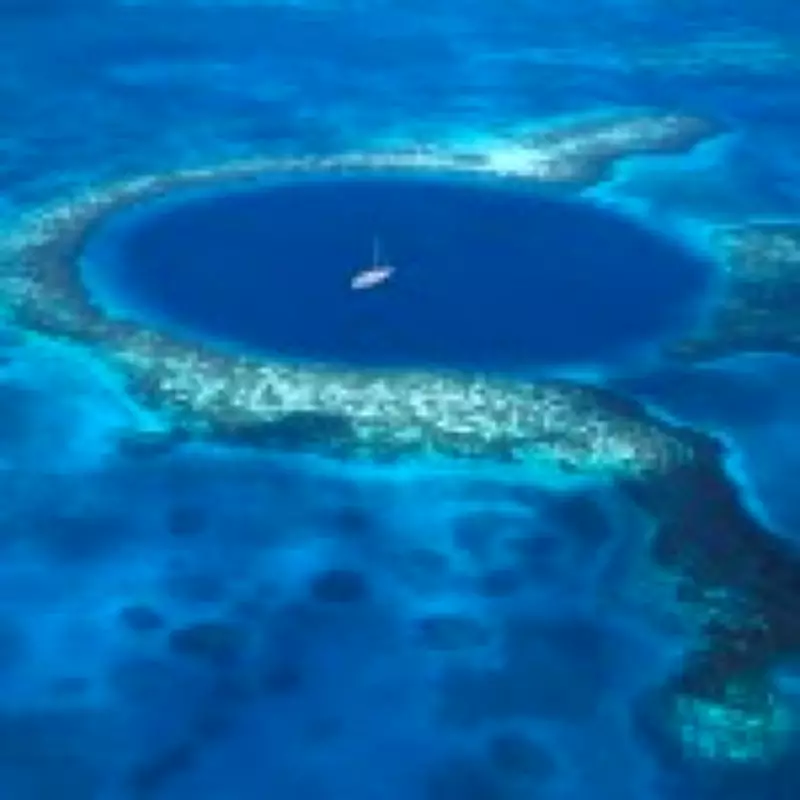
The Unmeasurable Depths of Belize's Taam ja' Blue Hole
Marine scientists have encountered an extraordinary challenge in the Caribbean waters off Belize, where a massive underwater sinkhole known as Taam ja' continues to defy all attempts to measure its true depth. Located in Chetumal Bay, this remarkable blue hole has proven so deep that researchers cannot determine where its bottom lies, despite deploying sophisticated equipment and conducting multiple expeditions.
Failed Measurement Attempts Reveal Extraordinary Depth
Initial sonar mapping suggested Taam ja' extends approximately 900 feet beneath the ocean surface, but these measurements have been called into question due to complex water conditions. Temperature variations and salinity changes at different water layers can distort sonar readings, creating uncertainty about the hole's actual dimensions. When divers descended about 30 meters into the opening, they discovered the walls transitioned from soft, squishy material to firmer rock formations, hinting at the complex geological structure below.
The most dramatic measurement attempt involved anchoring a research vessel directly above the blue hole's opening and lowering a massive 1,640-foot cable into the abyss. Remarkably, this extensive cable failed to reach the bottom, leaving scientists to speculate that ocean currents might have pushed the instrument sideways, potentially affecting the measurements. This failure has only deepened the mystery surrounding Taam ja's true dimensions.

Potential World Record Holder
For years, the Sansha Yongle Blue Hole in the South China Sea has held the title as the deepest known blue hole in the world's oceans. If researchers can eventually measure Taam ja's complete depth, this Belizean formation could potentially surpass the Chinese blue hole to become the deepest measured underwater sinkhole on Earth. The possibility of a network of interconnected underwater caves and tunnels within Taam ja' adds another layer of complexity to measurement efforts, as these features could extend the hole's reach in multiple directions.
Scientific Discoveries Within the Blue Hole
Despite the depth measurement challenges, scientists have made significant discoveries within Taam ja'. Earlier this year, researchers successfully extracted a sediment core from the marine sinkhole that revealed a remarkable 5,700-year storm archive. The sediment layers showed that over the past six millennia, between four and sixteen tropical storms have passed over the blue hole every century, providing valuable climate data about historical weather patterns in the region.
Geological History and Marine Life
The Great Blue Hole, located approximately 60 miles off the coast of Belize City, forms part of the Belize Barrier Reef system, which UNESCO has designated as a World Heritage Site. This geological wonder formed at the conclusion of the last Ice Age when rising sea levels flooded enormous caverns that had developed about 153,000 years earlier. Complete submersion occurred approximately 15,000 years ago, creating the distinctive circular formation visible today.
The blue hole supports a diverse marine ecosystem populated by multiple shark species, including Caribbean reef sharks, nurse sharks, hammerheads, bull sharks, and black-tip sharks. These predators thrive in the unique environment created by the sinkhole's structure and depth variations.
As research continues, scientists remain determined to solve the mystery of Taam ja's true depth, recognizing that this geological feature could provide unprecedented insights into underwater cave systems, marine ecosystems, and historical climate patterns. The ongoing investigation represents a significant frontier in marine geology and oceanographic research.






