Democratic Senators Launch Formal Inquiry Into EPA's Reversal of Key Air Pollution Enforcement
More than three dozen Democratic senators have initiated an independent investigation into the United States Environmental Protection Agency (EPA) following a significant regulatory change that alters how the agency measures the health benefits of reducing air pollution. This development is widely perceived as a major setback to national efforts to combat the escalating climate crisis.
Revocation of the 2009 Endangerment Finding
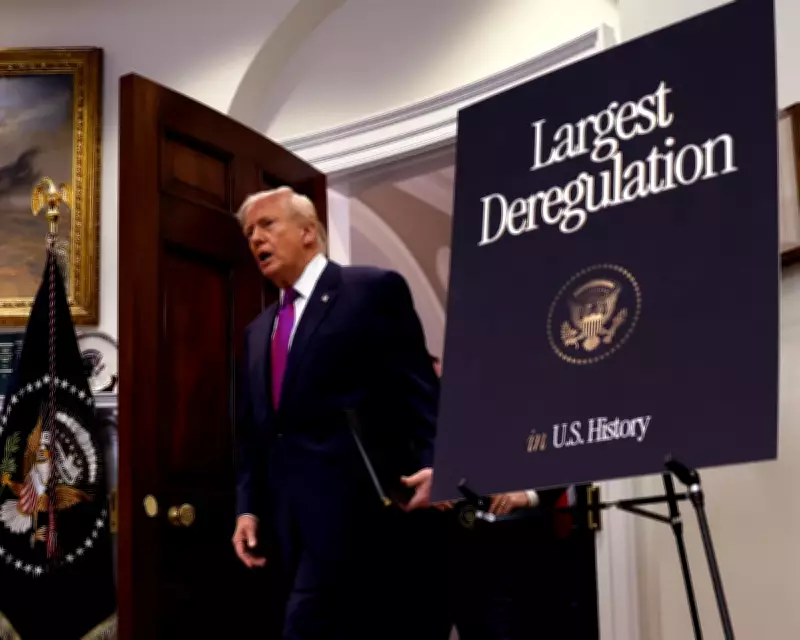
On February 12, 2026, former President Donald Trump arrived at a press conference at the White House to announce the revocation of the EPA's 2009 endangerment finding. This foundational determination had previously established that greenhouse gases pose a threat to public health and welfare, thereby authorizing the EPA to regulate planet-heating pollution under the Clean Air Act. By eliminating this legal framework, the Trump administration has effectively removed the government's authority to control emissions that contribute to global warming.
Senators Express Grave Concerns Over Policy Shift
In a strongly worded letter sent to the EPA on Thursday, the Democratic senators criticized the updated policy as "particularly troubling." They argued that the repeal "destroys that framework and results in a failure to faithfully execute EPA's statutory mandate to protect human health." The lawmakers emphasized that this move contradicts the agency's core mission of safeguarding public welfare from environmental hazards.

The inquiry is being spearheaded by Senator Sheldon Whitehouse, the ranking member of the Senate Committee on Environment and Public Works. The senators have formally requested that the EPA provide comprehensive documents and detailed explanations regarding the decision-making process behind this regulatory change. The deadline for submission is set for February 26, 2026.
Key Questions in the Senate Investigation
The Senate Democrats are seeking clarity on several critical aspects of the EPA's decision. Their investigation aims to uncover:
- The specific reasoning and scientific justification behind the EPA's move to revoke the endangerment finding.
- What factors the agency will now consider when implementing rule-making under the Clean Air Act.
- Whether the EPA plans to extend this policy by no longer quantifying health effects for other pollutants beyond fine particulate matter and ozone.
- Whether the agency consulted with external parties, including the Secretary of Health and Human Services, the U.S. Surgeon General, or independent public health specialists, before making this determination.
Trump Administration's Broader Anti-Environmental Agenda
This regulatory reversal forms part of President Trump's sweeping attacks on U.S. climate policy. During the press conference, Trump dismissed the endangerment finding as "the basis for the green new scam," asserting that it has "nothing to do with public health" and labeling it "a giant scam." When pressed to address environmental concerns, Trump simply responded, "Don't worry about it."
Since returning to office in January 2025, the Trump administration has taken aggressive steps to roll back pollution regulations and actively promote fossil fuel production. Critics argue that this anti-environmental agenda primarily benefits the president's donors from the fossil fuel industry, rather than serving public health or environmental interests.
Widespread Condemnation from Scientific and Advocacy Communities
The decision has drawn broad condemnation from climate scientists, environmental advocates, public health experts, and economic justice organizations. Senator Whitehouse commented on social media, stating, "It is literally zero surprise that they knew their hand-picked climate deniers weren't putting out real science. Their nonsense has never been real, but part of a fraudulent propaganda campaign, designed by fossil fuel to protect its 'free-to-pollute' business model."

The EPA's new regulatory impact analysis reveals that the agency will cease assigning a monetary value to the health benefits associated with regulations on fine particulate matter and ozone. Previously, the EPA quantified these benefits in dollar terms, accounting for outcomes such as reduced premature deaths, fewer asthma attacks, and decreased illness rates. The agency now contends that these estimates contain excessive uncertainty, justifying the policy shift.
This Senate inquiry underscores the deepening political and scientific divide over environmental regulation in the United States, highlighting the ongoing battle between climate action proponents and those advocating for deregulation in the energy sector.