

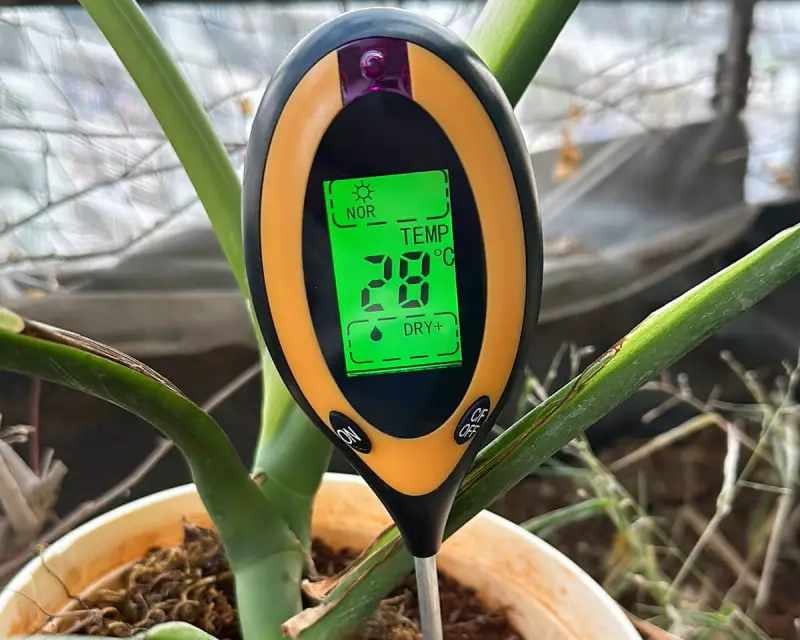
For many indoor gardeners, the fear of overwatering is a constant battle. It's a leading cause of houseplant demise, often stemming from a desire to care for them too much rather than from neglect. Could a simple gadget, like a soil moisture meter, be the solution to this common problem?
How Does a Moisture Meter Work?
Available for around £10, these devices feature a probe that you insert into your plant's soil. They function by measuring the electrical conductivity in the compost, which provides a rough indication of moisture levels. The idea is straightforward: push the probe into the pot near the root ball, check the reading on the dial, and only water if the needle falls into the 'dry' zone.
Experts and seasoned plant owners advise against relying on the meter alone. It's crucial to use it as part of a broader toolkit. The recommended method is to cross-check the device's reading with traditional techniques. This means still feeling the soil with your finger, lifting the pot to gauge its weight, and observing the plant's leaves for signs of thirst.

Putting the Meter to the Test
We conducted a practical comparison, pitting a standard moisture meter against the trusted finger test on a variety of common houseplants, including a cheese plant, a snake plant, and several spider plants.
The results were mixed. In larger pots with more established root systems, the meter's readings were broadly accurate and aligned well with the perceived dampness of the soil. However, in smaller nursery pots, the device proved far less reliable. The needle often swung erratically, and on one notable occasion, it suggested the compost was bone dry when it was visibly and tactilely still moist.
The Final Verdict: Gadget or Instinct?
So, is a moisture meter a must-have for plant parents? The conclusion is nuanced. A moisture meter can be a handy confidence-booster for those who chronically over-love their plants with water. It serves as a useful guide, especially for beginners learning to interpret their plant's needs.
However, it is not an infallible oracle. When the meter's reading conflicts with the evidence from your own senses—if it says 'dry' but the soil feels cool and damp—you should trust your judgement. Ultimately, there is no true substitute for learning to read your plant and its soil yourself. The meter is a helpful assistant, but the best tool remains an observant and informed gardener.






