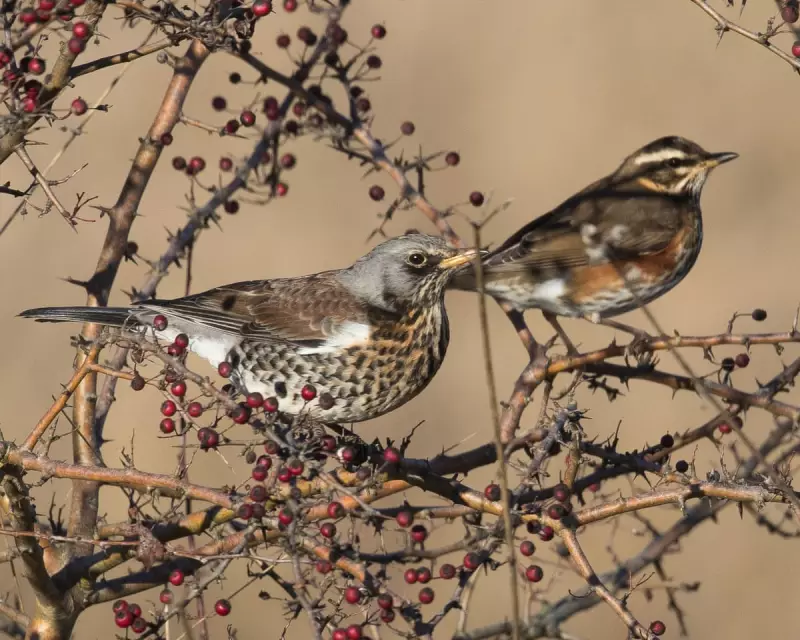
A sudden cold spell around the New Year has finally brought Britain's iconic winter thrushes, the fieldfare and redwing, to the fore after an unusually absent autumn. These birds, as characteristic of the colder months as swallows are of summer, are now a welcome sight across frosty landscapes.
A Frosty Welcome for Winter Visitors
For many birdwatchers, the autumn and winter seasons had felt strangely quiet. In areas like Somerset, hedgerows laden with uneaten hawthorn berries stood as silent testament to the missing flocks. This all changed dramatically with the recent sharp drop in temperatures. As the frost settled, the skies and fields came alive with the movement and calls of these seasonal migrants.
Observers report large flocks taking to the crisp air during early mornings. The distinctive chacking call of the fieldfare now echoes across hardened fields. On closer inspection, the two species reveal their striking plumage: the redwing sports rusty-red flanks and a bold creamy stripe above its eye, while the larger fieldfare shows off a grey head, chestnut back, and a yellowish breast heavily marked with black spots.

The Numbers Behind the Migration
The scale of this annual migration is significant. It is estimated that more than 600,000 fieldfares and 700,000 redwings spend half of each year in the United Kingdom. They utilise the British countryside as a vital wintering ground before embarking on their spring journeys to breeding sites.
These journeys take them north and east, with fieldfares heading to Eastern Europe and redwings travelling as far as Iceland, their ranges overlapping in Scandinavia. A tiny number of pairs, perhaps a dozen redwings and even fewer fieldfares, attempt to breed in northern Britain. However, this fragile foothold is diminishing.
An Uncertain Future in a Warming World
The long-term future of these winter visitors in the UK is increasingly uncertain due to climate breakdown. The declining trend of resident breeding pairs is a clear warning sign. Experts are concerned that progressively warmer winters may eventually disrupt their migratory patterns, potentially reducing their numbers or even stopping their visits altogether.
For now, however, their dramatic and belated arrival has been met with enthusiasm by nature enthusiasts. Their presence enlivens the winter scenery and serves as a powerful reminder of the intricate connections within our natural world and the profound impact of a changing climate on wildlife behaviour.