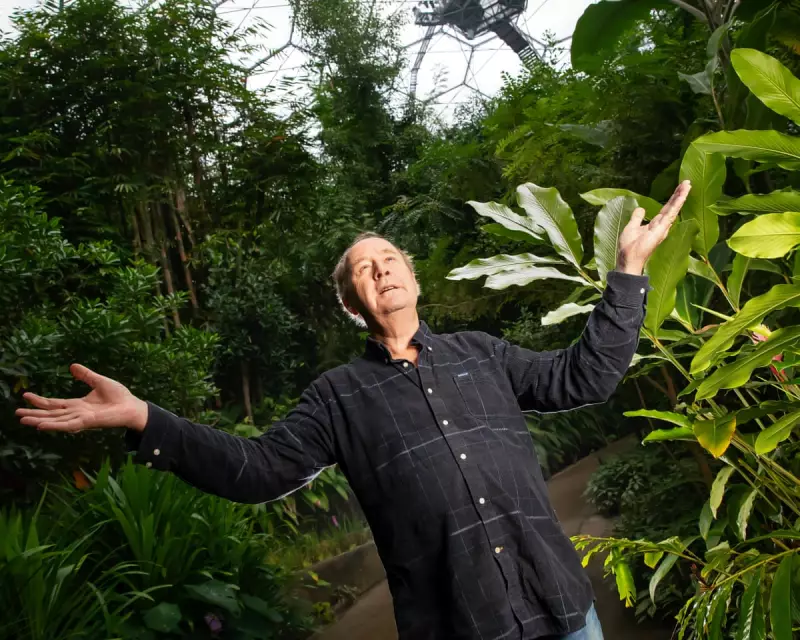
Sir Tim Smit, the co-founder of the Eden Project, has declared that the world is in a better position now than when the iconic environmental attraction in Cornwall was conceived a quarter of a century ago.
Speaking as the world-renowned site celebrates its 25th anniversary, Smit expressed a profound optimism. He believes people are now more connected to the natural world than they were in the late 1990s, despite the escalating climate crisis.
A Shift from Fear to Hope
Smit addressed the rise of extreme political views, characterising them as a fearful "roar" from people who feel they cannot control the future. He predicted this sentiment would diminish as society begins to recognise the positive possibilities ahead.

"When people see that some of that future is going to be amazing, they'll cease to want to control it in quite the same way," he stated. He drew a colourful analogy, comparing support for parties like Reform UK to a regrettable stag night, suggesting it was a phase from which people would move on towards a "more moral period".
"Humans are very weird in the way they think the past was always some better place. In fact, today is pretty good and tomorrow is going to be even better," Smit asserted, emphasising his faith in fundamental human goodness and cooperation.
A Monument to Plants and a Call to Action
The Eden Project opened its doors to the public in 2001, with its iconic biomes rising from a reclaimed clay pit. Its core mission was to explore humanity's place within nature. While the climate emergency was discussed at its inception, Smit noted it was not the central focus.
"The main inspiration was that most people didn't realise that without plants there's no life on earth," he explained. "Effectively, the Eden Project is a monument to the importance of plants." He described the site's "holy grail" as creating a narrative that makes visitors understand they are part of the natural world, so damaging it equates to damaging themselves.
He did not shy away from current perils, criticising the UK's consumer culture and the privatisation of water, which he called a "complete mistake". Yet, he pointed to hope found in nature itself, such as advances in using fungal mycelium for sustainable building materials and environmental clean-up.
Legacy, Expansion, and a Vision for Britain
To date, approximately 25 million people have visited the Eden Project, drawn not only to its rainforest biome but also to concerts and community events. Smit believes in the power of gathering people for a shared, hopeful experience.
The project has injected an estimated £2.2 billion into the Cornish economy, a figure set to be updated soon. Its success is spawning new ventures, with plans for Eden sites in Morecambe, Dundee, and an existing "Oriental Eden" in Qingdao, China.
Smit also issued a clarion call for UK energy independence, stating it was "utterly crazy" there was no national vision for it. He argued that securing food and energy independence would provide unshakeable foundations for the nation's future.
Reflecting on the journey, Smit admitted he initially resented the public invading "our baby." Now, he feels pure happiness. "The absolute joy of the Eden Project," he concluded, "is that young people who come here feel it gives them permission to dream."