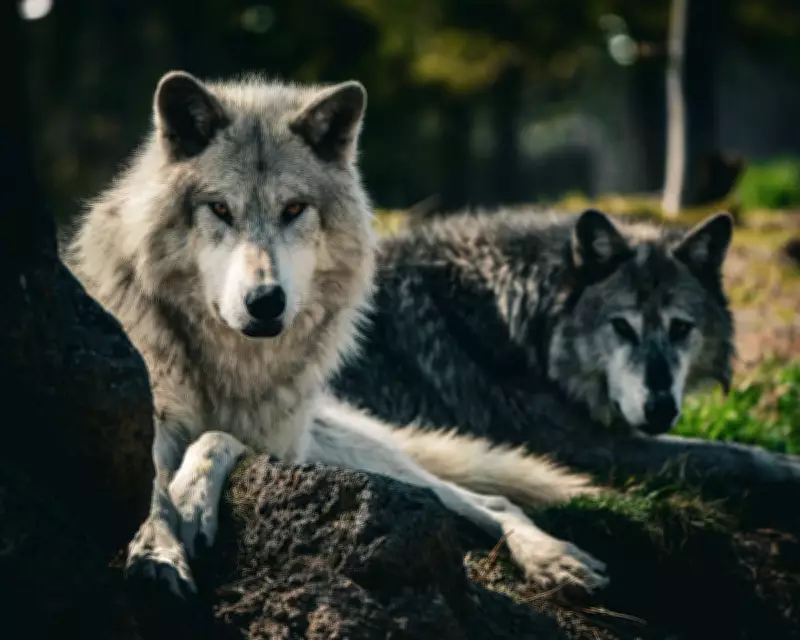
In a landmark event for North American wildlife, a gray wolf has been documented in Los Angeles County for the first time in more than 100 years. The three-year-old female, identified as BEY03F, crossed into the county around 6am on 7 February, representing what officials describe as the most southern verified record of this species in modern times.
A Remarkable Journey Across California
Born in 2023 in Plumas County as part of the Beyem Seyo pack, BEY03F has undertaken an extraordinary journey across the Sierra Nevada mountains. According to Axel Hunnicutt, gray wolf coordinator for the California Department of Fish and Wildlife, this dispersal movement likely represents the animal's search for a mate. Wildlife authorities have been able to track her precise movements thanks to a GPS collar fitted in May 2025 during her passage through Tulare County.
"This represents the most southern verified record of a gray wolf in modern times," Hunnicutt emphasized, highlighting the historical significance of this occurrence. The California Department of Fish and Wildlife confirmed they have received no public reports or sightings from Los Angeles County residents regarding the wolf's presence.

Navigating Urban Challenges
By Tuesday following her arrival, BEY03F had begun traveling northward again, with Hunnicutt noting she was "likely deterred by the Interstate 5" highway. This observation underscores the significant challenges wolves face in navigating human-dominated landscapes, where vehicle collisions represent a leading cause of mortality for the species.
The coordinator further explained that "it's possible she may continue to travel hundreds of miles in search of a mate or she may come across a male tomorrow," highlighting the unpredictable nature of these dispersal movements that drive wolf population expansion.
Historical Context and Recovery Efforts
The continental United States was historically home to thousands of gray wolves before hunters and trappers nearly eradicated the species. The last wild wolf in California was shot in 1924, marking the beginning of a long absence. The population received federal protection through the Endangered Species Act in 1973, followed by successful reintroduction programs in Yellowstone National Park during the 1990s.
These reintroduced wolves eventually dispersed across the lower 48 states, with the first wolf crossing into California occurring in 2011. By 2024, the California Department of Fish and Wildlife estimated the state hosted at least 70 gray wolves, a significant increase from 44 documented the previous year.
"Just over 30 years ago, gray wolves were reintroduced into Yellowstone National Park and central Idaho," Hunnicutt explained. "The wolves in California are descendants of these animals and made their way to California because of wolves doing what BEY03F is doing now: being an explorer."
Conservation Controversies Continue
While conservationists have celebrated BEY03F's arrival as a victory for wildlife recovery, significant debates continue regarding federal protections for gray wolves nationwide. On 10 February, the Center for Biological Diversity filed a lawsuit challenging what they describe as the Trump administration's refusal to develop a comprehensive national gray wolf recovery plan.
The Biden administration's Fish and Wildlife Service initially announced in 2024 that it would develop such a plan, but in 2025 published findings indicating they would no longer prepare an updated recovery strategy. The service declared that listing gray wolves under the Endangered Species Act was "no longer appropriate," creating ongoing tension between conservation advocates and federal wildlife management authorities.
Hunnicutt emphasized the broader significance of dispersal events like BEY03F's journey: "Each year, we see continued successful reproduction and expansion of packs into new areas. This is driven by this dispersal movement." This natural exploration behavior continues to reshape the distribution of gray wolves across the American West, bringing them into territories they haven't inhabited for generations.