Village Ways: A Pioneering Tourism Model Breathing New Life into India's Mountain Communities
For the past 21 years, Village Ways has been at the forefront of low-impact tourism in the remote foothills of the Himalayas. This innovative project supports traditional ways of life while offering travelers a rare glimpse into pristine landscapes and vibrant wildlife. The initiative, which began with just five villages in 2005, now encompasses over 30 villages across India, from Madhya Pradesh to Kerala.
The Heart of the Initiative: Kathdhara Village
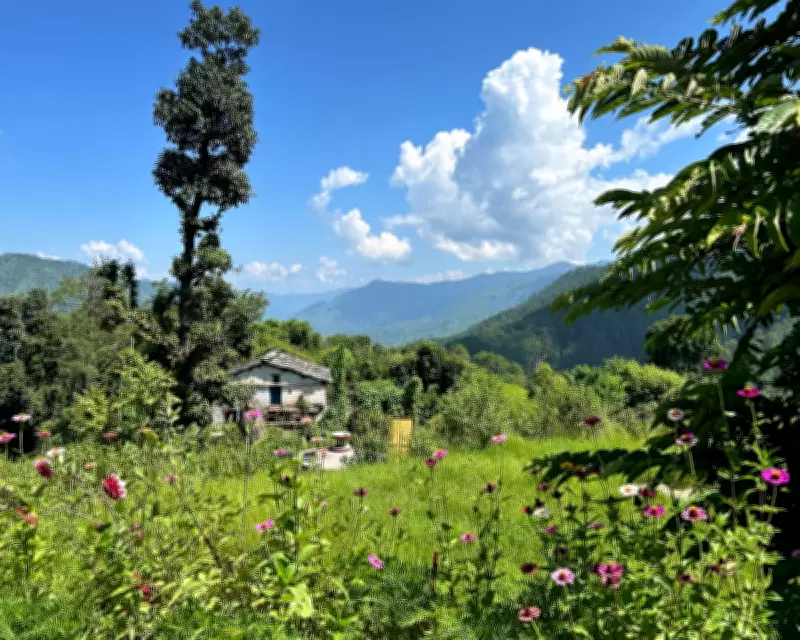
Kathdhara village, nestled within the Binsar Wildlife Sanctuary in Uttarakhand's Kumaon region, is a testament to the project's success. Home to only 22 families, this remote hamlet bursts with color—bright red chillies drying in front of cornflower blue doorways, pink saris, and orange marigolds set against verdant terraced fields. Visitors stroll with guides like Deepak, taking in views of layered hills and the snow-capped Panchachuli peaks, while villagers welcome them with warmth and Diwali fairy lights adding sparkle to the scene.
Founded by Manisha and Himanshu Pande, who run the Khali Estate hotel in the reserve, Village Ways aims to address urban migration by supporting rural life through tourism. "The idea was to bring the community together to run something collectively, training people in all aspects of business. Everyone has a role to play," says Manisha. The model has even caught the government's attention, leading to collaborations on projects in other states.

Community Involvement and Economic Benefits
Accommodation is primarily in small, village-built guesthouses sleeping up to eight people, rather than homestays. Revenue is evenly distributed among all participants, from cleaners to porters, with committees making joint decisions. In Kathdhara, guests join Diwali celebrations, sharing sweets, lighting lamps, and feasting on delicious thalis featuring spicy yams, dal, hemp chutney, and warm roti.
The next day, gentle walks lead to neighboring villages like Gonap, home to just seven families. Binsar Wildlife Sanctuary, established in 1988 to protect broadleaf oak forests and wildlife, altered local relationships with the forest by ending tree felling and hunting. Village Ways provided an alternative, turning former hunters into guides who share knowledge of the land and wildlife, renewing pride in local customs.
Exploring Pristine Landscapes and Wildlife
Hikes through pine, oak, and rhododendron forests reveal Himalayan oaks, crucial for water storage and land stabilization. The area is rich in medicinal plants, such as wild turmeric and Indian tobacco, and wildlife including leopards, porcupines, and over 200 bird species like crested serpent eagles and black-headed jays. At Gonap, guests are welcomed with chai and pakora while enjoying views of Eurasian griffon vultures soaring on thermals.
No roads connect the five villages in the Binsar circuit, but paths offer easy walking. For more challenging hikes, higher-altitude routes in the Saryu and Pindar valleys near the Tibetan border are available. Visitors often stop at Zero Point lookout, the reserve's highest vantage at 2,500 meters, for a 360-degree Himalayan panorama dominated by Nanda Devi, India's second-highest mountain.
Historical Context and Future Prospects
The Khali Estate, built 150 years ago by British commissioner Gen Sir Henry Ramsay, serves as a picturesque base with stone rondavel cabins and a roaring fire. Ramsay developed local infrastructure, founded a leper colony in Almora, and regulated tree felling. The estate also served as a retreat for the Nehru family and an ashram for Mahatma Gandhi.
Village Ways has launched a new itinerary, Khali in Kumaon, exploring the region's history through sites like Nainital, Almora, and the Gandhi trail. The project's charitable trust supports healthcare in remote villages, training women to run mobile clinics. Since its inception, Village Ways has hosted 7,000 guests, benefiting about 5,000 people, with 470 villagers directly involved in decision-making across six states.

Impact and Challenges
Young villagers like 23-year-old Ashirwad Joshi from Dalar village highlight the positive impact: "Since I joined as a guide three years ago, I've learned lots about Binsar and our birds—and my English has really improved. I'm very happy to be part of it and share my knowledge with visitors—it makes me proud." Despite challenges such as ageing populations and post-Covid declines in international visitors, Village Ways continues to expand its ethos to other parts of India.
This collaborative tourism model, which treats communities as partners rather than subjects, benefits both locals and travelers. In an era of division, it stands as a beacon of mutual respect and warmth, celebrated more than ever for its sustainable and inclusive approach.