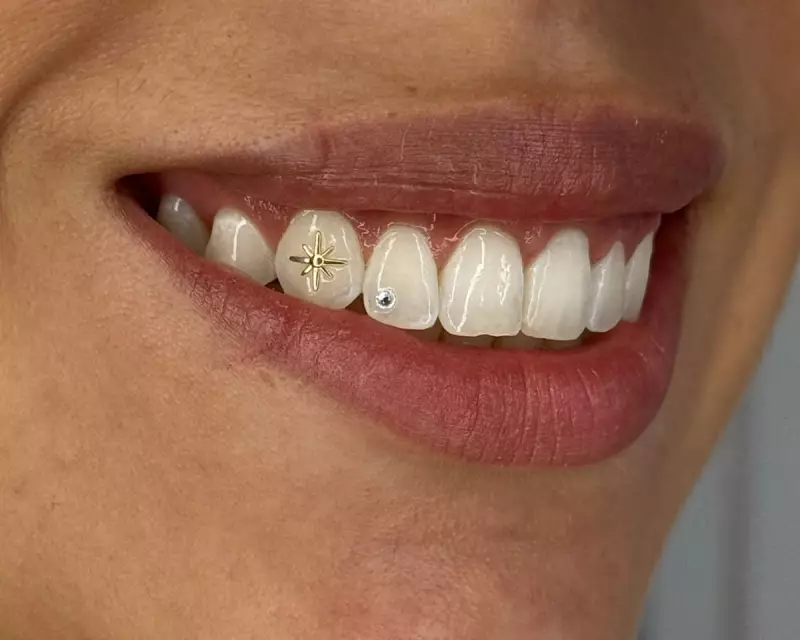
Across Australia, a glittering trend is captivating a generation, with young people lining up at music festivals and markets to adorn their smiles with tiny jewels. Known as tooth gems, these sparkling accessories are experiencing a major revival, but dental professionals are urging caution, warning that the pursuit of a 'blinged' grin could lead to permanent damage.
The Festival Phenomenon Driving Demand
The scene at Canberra's Spilt Milk music festival in December was typical of this growing craze. Attendees like 23-year-old Jas waited for up to three hours at a pop-up stall run by technician Ana Mihov for a chance to get a gem applied. Jas, who had never heard of the trend before, left with a silver diamond on her left canine, a spot she found particularly "trendy." Mihov's business, Wicked Grins, served around 55 customers that day, with each application taking five to ten minutes, until supplies ran out by 9pm.
This surge isn't isolated. Several Australian technicians report a significant increase in demand over the past 12 to 18 months. Mihov, who discovered tooth gems while living in London two years ago, credits social media platforms like TikTok and Instagram for the revival, where the hashtag #toothgems has amassed over 905,000 posts. Videos featuring the gems have been viewed tens of millions of times, pushing the trend from a niche pop-star accessory of the late 90s and early 2000s into the mainstream.

Dental Warnings Behind the Sparkle
While the trend shines brightly, dentists are highlighting the potential risks lurking behind an improperly applied gem. Dr Evram Narouz, a dentist at enDental Studio in Sydney, states that tooth gems are "not necessarily harmful" if applied correctly by someone who understands dental bonding protocols. When done safely, a dental-grade adhesive—the same type used for braces—is employed.
However, the Australian Dental Association (ADA) President, Dr Christopher Sanzaro, warns that the risks escalate when non-dental professionals perform the procedure. "The risk of tooth gems being placed by non-dental professionals is that the gem or adhesive may cause gum irritation which could lead to gum recession or gum infections," he explains.
Dr Narouz adds that unsterile equipment or excess adhesive can lead to plaque buildup and demineralisation of the tooth. A further danger arises if a gem comes loose. "Gems that aren't adhered properly... may come off and result in chipping or cracking of other teeth if chewed on," Dr Sanzaro cautions. Removal also poses a threat; it should only be done by a dentist, as DIY attempts can be dangerous and more costly than the original application.
A Landscape of Limited Regulation
A key concern for both technicians and dentists is the current lack of regulation in Australia. Ana Mihov finds this "incredibly frustrating," fearing that poor practices could tarnish the industry. She trained through a one-day session in Melbourne, supplemented by online courses. Similarly, Sydney-based technician Ashlin Carlisle of Pearlyygems received half a day of in-person training in the UK and an online course.
This contrasts with many beauty treatments that have formal Tafe certifications. The procedure is commonly offered in beauty parlours, tattoo studios, and at pop-up events, making it difficult for consumers to assess a technician's skill. Carlisle has seen "shocking" work and is particularly alarmed by the rise of "DIY tooth gems" promoted online, where people dangerously attempt to use nail glue.
"The ADA's position is that DIY dentistry should not be happening," Dr Sanzaro states firmly, encouraging anyone with gems to visit their dentist for a check-up without embarrassment.
The Allure of Semi-Permanent Sparkle
For enthusiasts, part of the appeal is the accessory's temporary nature. Technicians say gems typically last between three months and a year before falling off naturally, offering a "better alternative" to tattoos as they aren't a lifetime commitment. Mihov's clients, mostly women in their early to mid-20s, see it as good value compared to regular beauty maintenance like lash extensions.

In Australia, the cost for a round Swarovski crystal starts at about $70, while solid 18-karat gold jewels can cost between $140 and $150. The designs have evolved beyond single stones to include patterns like stars, hearts, and flowers, allowing for a look that is either "cute and dainty" or "bold and edgy."
As the trend continues to sparkle across social media feeds and festival grounds, the message from dental professionals is clear: that dazzling smile should be achieved with care, proper hygiene, and professional oversight to ensure it doesn't lead to a long-term dental disaster.