Sky's Political Editor Reveals Personal Battle With Digital Parenting
Beth Rigby, Sky News's renowned political editor, has opened up about what she describes as her most challenging role: navigating parenthood in what she calls the "digital Wild West." As mother to two teenagers aged 13 and 16, Rigby's experience mirrors that of millions of parents across the United Kingdom who are grappling with raising children in an era dominated by social media, gaming platforms, and artificial intelligence.
The Constant Balancing Act of Modern Parenting
From iPads during early childhood to smartphones in secondary school, Rigby describes a parenting journey without any established playbook. "It has been a constant battle," she explains, "to balance the benefits of technology—whether creative play on Minecraft or Roblox—while trying to keep children safe in spaces where chatrooms are rife and protect their developing minds."
Rigby has engaged in countless conversations with fellow parents who share concerns about eroding attention spans and screen obsessions. While online platforms provide valuable spaces for teenagers to socialize with friends during gaming sessions or collaborate on school revisions, they also present significant challenges regarding screen time management and social media restrictions.

"There is an almost intoxicating draw for this stuff for teens," Rigby observes, noting that adolescents naturally seek to break boundaries, follow peers, and make impressions. Social media impacts young people during a critical period of both exploration and vulnerability, with research showing it can drive poor body image in girls, potentially leading to self-harm, while exposing boys to toxic masculinity and misogyny.
The global conversation sparked by the television series "Adolescence" reflects a widespread zeitgeist about how children are growing up in the digital age and how parents can protect them. Rigby describes her experience as "anxiety-inducing, time-consuming, and, at times, conflict-inducing"—sentiments she believes will resonate with many readers.
Government Considers Social Media Ban for Under-16s
Like the 19th-century Wild West frontier, Rigby characterizes today's technological landscape as rapidly expanding, lawless, and lacking institutional regulation. This environment, populated by both good and bad actors, has led to growing parental demands for government intervention, including potential social media bans for children under 16.
The conversation has gained momentum following Australia's December decision to implement a social media ban for under-16s and landmark trials in the United States where parents are holding major social media companies accountable for harms to children. Spain and Greece are also considering similar bans as pressure mounts on governments worldwide to take action.
UK Political Response and ConsultationIn the House of Lords, peers have tabled an amendment to the schools bill proposing an under-16s social media ban. The Conservative Party is pushing hard on this issue, with polling indicating that two-thirds of UK adults support such restrictions. In response, the government launched a three-month consultation last month examining various protective measures.
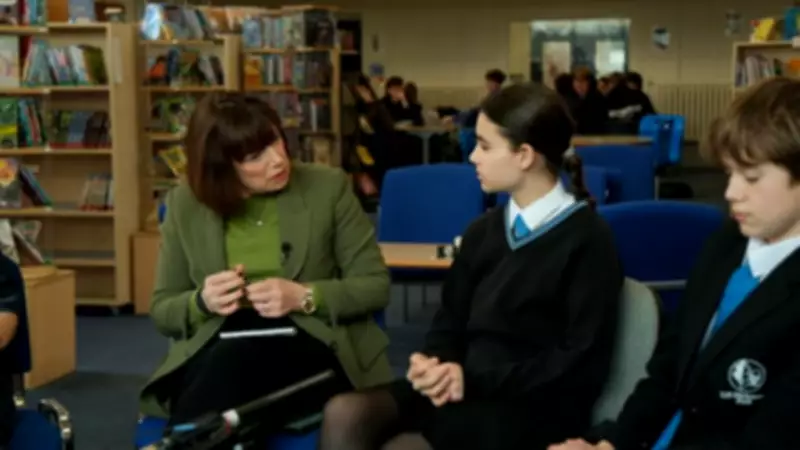
Liz Kendall, cabinet minister for science, innovation, and technology leading the consultation, recently met with Rigby at a London school to discuss teenagers' online experiences. Kendall reports receiving "hundreds and hundreds of letters from parents saying they want a ban" but remains undecided while weighing evidence from various perspectives.
"Organizations like the NSPCC, the Molly Rose Foundation, and the Internet Watch Foundation warn about the risks of a ban," Kendall explains. "They argue that if you implement a ban, it will simply push activity underground—that young people will find ways around restrictions."
Criticism of Government Inaction
Despite the consultation, the government faces criticism for not utilizing existing powers to clamp down on technology companies. Andy Burrows, chief executive of the Molly Rose Foundation established in memory of 14-year-old Molly Russell who took her own life after viewing harmful content online, expresses frustration with prolonged inaction.

"For far too many years, tech firms have been able to sit on their hands when it comes to children's safety," Burrows states. "Successive governments have chosen to either do nothing or to make triangulated responses. Parents are right to look at the services and products their children are using and say, 'this is outrageous, we need to see action.'"
Potential Regulatory Shifts and Deepfake InitiativesSome government insiders suggest that tech regulation had been deprioritized due to concerns about angering major US technology companies and, by extension, the Trump administration. However, recent developments indicate potential shifts in approach.
Last week, Kendall and safeguarding minister Jess Phillips announced plans to collaborate with technology giants including Microsoft on a "world first" deepfake detection initiative. This announcement followed the UK regulator's formal investigation into Elon Musk's xAI and X over compliance with British law after claims that the chatbot Grok generated sexual deepfake images without consent.
When questioned about potential government hesitation due to fear of tech backlash, Kendall suggests that a clampdown on big technology is forthcoming. She points to the government's robust approach to Musk's platforms regarding fake sexualized images as evidence of changing attitudes.
The Complex Reality of Social Media Bans
While acknowledging parental frustrations, Burrows cautions that bans may not provide the comprehensive solutions many hope for. "The reality is that a ban does not necessarily stop children from using these services," he explains. "But it would make it harder for them to disclose problems. You force the issue underground and onto platforms outside the ban's scope, including gaming sites."
Despite these complexities, Burrows believes "we have reached a watershed moment" in online safety discussions. "I think it is clear that the patience of parents has snapped," he states. "I am confident that we will see action now because it feels like we've reached an inflection point."
A Call for Urgent ChangeFor a government struggling to deliver promised changes following the 2024 election, transforming the digital Wild West into a safer environment for young people represents a significant opportunity. As Rigby concludes, creating more orderly digital spaces where children can explore safely would mark substantial progress in addressing one of modern parenting's greatest challenges.
The national debate continues as parents, policymakers, and technology companies navigate the complex intersection of digital innovation, child protection, and personal freedom in an increasingly connected world.