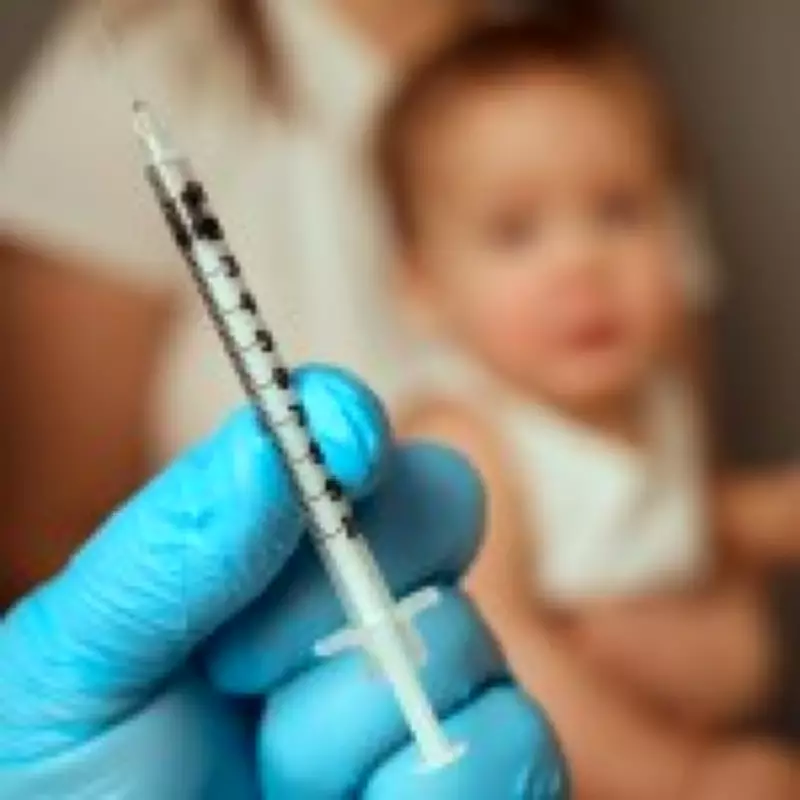
Mother's Vaccine Decision Ignites Controversy Over Health and Safety
Following her son's third round of baby vaccinations, Zoe Nichols, a 39-year-old beauty therapist from Dorset, felt overwhelmed as she listened to his persistent cries. Despite administering the recommended doses of Calpol, her little boy remained unsettled, leading to a distressing series of events that would shape her views on immunization.
'He was just crying and crying,' Zoe recalls. With compulsory work training the next day, she bundled her baby into the car for a two-hour drive to his grandparents. The journey was calm, with the child sleeping peacefully, but upon returning home, a worrying phone call awaited her.
His grandparents reported that the baby had a fever that wouldn't subside with medicine and was crying uncontrollably, prompting a hospital visit. Doctors initially suggested a common virus, but Zoe was consumed by 'mum guilt' as her son spent the night on a drip. Thankfully, by morning, he had recovered, but the experience left a lasting impact.

Questioning Vaccine Efficacy Based on Personal History
Zoe's skepticism towards vaccinations stems from her own childhood. She received all her vaccines yet contracted measles at age 15. Later, at beauty college, she witnessed half her class, including both vaccinated and unvaccinated peers, fall ill with mumps. These events made her question the effectiveness of immunizations.
When Zoe became pregnant at 31, she began researching vaccine options. At her NCT class, a midwife urged adherence to NHS guidelines, but Zoe felt that only the benefits were emphasized. 'You take all the information that you're given as gospel,' she explains. 'But all pros and cons should be made available.'
Despite hearing warnings about side effects from acquaintances, Zoe initially followed NHS recommendations, booking MMR vaccinations for her son. The eight and 12-week jabs passed without incident, but the 16-week shots, she believes, led to the hospital visit. 'I thought that it came and went too quickly to be a virus,' she says.
The Final Straw: A BCG Vaccine Reaction
Before her son turned one, doctors recommended a Bacillus Calmette-Guérin (BCG) vaccine due to frequent visits from his father's family in India, where tuberculosis is more common. Zoe complied, but the injection site became scabby and pus-filled, taking ages to heal and leaving a permanent scar. 'It was the last straw for me,' she states. 'I wasn't going to put him through that anymore.'
Since then, Zoe's son has not received any NHS-offered vaccines, including those at one year, 18 months, three years, flu, or Covid vaccines. 'I'm not a scientist, but I know what happened for me and mine,' she asserts. 'I don't want to look at stats and figures, because those can be easily manipulated by pharmaceutical companies.'
Facing Judgment and Defending Her Choice
Zoe's decision has drawn criticism from healthcare professionals and acquaintances, who warn her to 'protect' her child through vaccination. She recalls an incident in early spring 2023 when her son was rushed to A&E with breathing difficulties at nursery. Upon revealing he hadn't received all his jabs, a nurse reacted with disdain, making Zoe feel accused of neglect. The toddler was diagnosed with enterovirus and rhinovirus and recovered quickly.
Zoe insists she is cautious about all decisions, not just vaccinations, and urges critics to consider the 'primary experience' behind anti-vaxxer views. 'Why are they so for vaccines?' she asks. 'My child was in the hospital overnight directly after having had a vaccine. That's why I'm against it.'
Measles Outbreaks and Alternative Precautions
News of measles cases in the UK doesn't alarm Zoe; instead, she fears what vaccines might contain. 'I think there are pros and cons to everything,' she says, believing her child would recover from measles as she did at 15. However, recent statistics show measles is resurging in Europe, with nearly 130,000 cases last year, double the 2023 rate and the highest since 1997. A child from Liverpool died from the disease, and London is experiencing a fast-spreading outbreak among schoolchildren.

While acknowledging the pain of families who have lost children to measles, Zoe remains steadfast. 'Why in 30 years has nobody managed to find a cure for when you actually have measles?' she questions. Instead, she focuses on hygiene measures like handwashing, using sanitiser, and wearing masks during treatments. 'In my opinion, there are better ways to stop disease spreading than vaccinating people,' she explains.
Guiding Her Son Towards Informed Decisions
Zoe aims to guide her son away from injections until he can make an educated choice. 'I'm not a radical conspiracy theorist,' she insists. 'I'm just being mindful and conscious. It's my choice and I don't want myself or my child to be an experiment.'
Medical Perspective on Vaccination Importance
Dr. Hana Patel, a GP consultant for Superdrug's Online Doctor, emphasizes the critical role of vaccines. 'When vaccines are missed, children lose a vital layer of protection against diseases that can spread quickly in schools,' she says. Measles is highly contagious, with one infected child potentially spreading it to nine out of ten unvaccinated classmates, leading to serious complications like pneumonia or neurological issues.
Vaccines use safe virus fragments to train the immune system, preventing serious illness upon exposure. High vaccination rates create herd immunity, protecting vulnerable groups. 'When vaccine uptake drops, we see outbreaks,' Dr. Patel notes, highlighting the resurgence of measles in the UK and Europe due to missed jabs, resulting in avoidable hospitalizations.