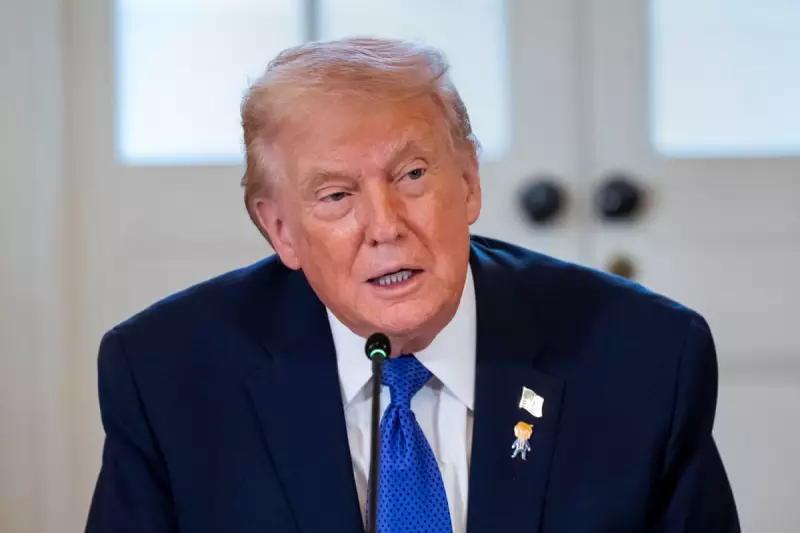
Former US President Donald Trump has finally published the framework for his promised healthcare reform, a document titled the Great Healthcare Plan. The release comes almost eighteen months after he first claimed to have the "concepts of a plan" during a pre-election debate.
A Framework with Few Specifics
The short policy document outlines four headline goals but provides minimal detail on how they would be achieved. The stated objectives include lowering prescription drug prices and healthcare premiums, demanding greater price transparency from insurance companies and medical providers, and holding large insurers accountable by forcing them to publish data on claims, overheads, and profits.
In a video released by the White House, Trump stated, "Instead of putting the needs of big corporations and special interests first, our plan finally puts you first and puts more money in your pocket." He urged Congress to pass the framework into law "without delay" to provide immediate relief.

Controversial Proposals and Potential Consequences
The framework includes several contentious elements that would require Congressional approval, a prospect uncertain even with a Republican majority. One proposal calls for sending billions in taxpayer subsidies directly to Americans' personal health savings accounts, rather than to insurance companies, to let individuals buy their own coverage.
Another demands pharmaceutical companies match "the same low prices for prescription drugs that people in other countries pay." Notably, the plan does not explicitly mention another attempt to repeal the Affordable Care Act (ACA or Obamacare), which Trump has long criticised.
However, health policy experts have reacted with significant concern. Edwin Park, a research professor at Georgetown University's McCourt School of Public Policy, noted the plan opposes extending expiring ACA subsidies, which could leave millions more uninsured. He said, "The 'plan' includes absolutely no detail even though the president and the administration have been promising a credible health plan within two weeks for many, many years."
Risk of Market Destabilisation and Inequity
Cynthia Cox of the Kaiser Family Foundation echoed these worries, stating, "When it comes to health reform, the devil is in the details, and this lacks detail." She warned that sending money directly to people could destabilise the ACA marketplaces and potentially create a "death spiral," leaving those with pre-existing conditions without access to comprehensive coverage.
Miranda Yaver, an assistant professor at the University of Pittsburgh, highlighted the risk to protections for pre-existing conditions, suggesting the plan could lead to "inequity (and likely worse health outcomes) and further sabotage of the progress of the ACA."
The release follows political pressure on Republicans over rising healthcare premiums, after the expiry of ACA subsidies led to sharp cost increases for at least 22 million Americans. Last week, 17 House Republicans broke ranks to advance a bill restoring those credits, a move Trump has hinted he might veto.
The framework's publication was delayed from its expected November release due to internal disagreements, according to reports. It remains unclear how Trump's proposed changes to funding would affect popular ACA provisions like guaranteed coverage for pre-existing conditions and allowing young adults to stay on parental plans until age 26.