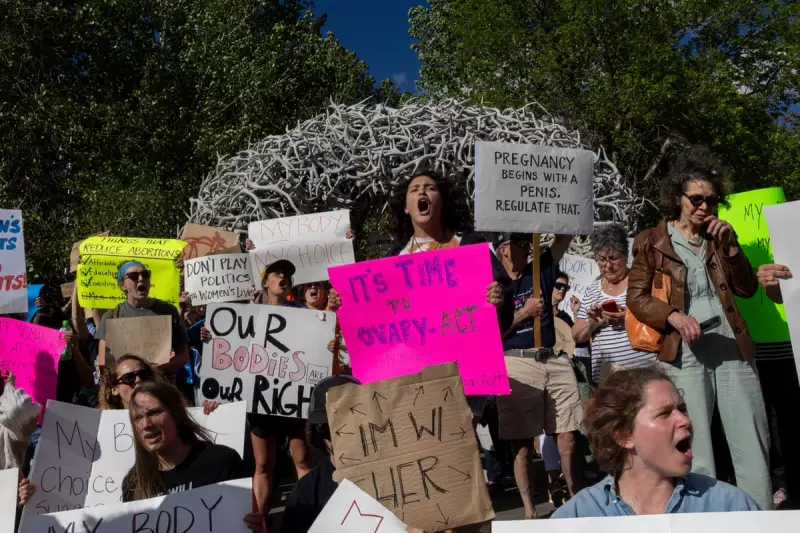
In a significant victory for reproductive rights advocates, the Wyoming Supreme Court has decisively struck down two near-total abortion bans, ensuring the procedure remains legal in the deeply conservative state.
A Constitutional Victory for Healthcare Autonomy
In a 4-1 decision delivered on Tuesday, the justices found that the contested laws violated a 2012 amendment to the Wyoming constitution. This amendment, originally a response to the federal Affordable Care Act, explicitly protects competent adults' right to make their own healthcare decisions.
"Today, the Wyoming Supreme Court affirmed what we’ve always known to be true: abortion is essential health care, and the government should not interfere in personal decisions about our health," said Julie Burkhart, president of the state's sole abortion clinic, Wellspring Health Access.

The court rejected the state's argument that abortion does not constitute healthcare. In a pointed footnote in the majority opinion, the justices wrote that it was beyond their power to exclude abortion from the constitutional amendment's protections, suggesting the legislature could propose a clearer amendment to the people.
The Scope of the Overturned Bans
The first law would have prohibited abortion except in cases of rape, incest, or to protect the pregnant woman's life. The second was even more sweeping, aiming to make Wyoming the first and only state to explicitly ban abortion pills.
This pill ban was particularly notable as, in the four years since the US Supreme Court overturned Roe v. Wade, medication abortion has become increasingly crucial. Providers often mail the pills into states with procedure bans, offering a critical lifeline.
The lawsuit was brought by Wellspring Health Access, the advocacy group Chelsea’s Fund, and four women, including two obstetricians. The bans had been blocked since 2022 by Teton County District Judge Melissa Owens, who later ruled them unconstitutional in 2024.
Political Fallout and Future Battles
The ruling was swiftly condemned by Wyoming's Republican Governor, Mark Gordon, who labelled it "profoundly unfortunate." He urged state legislators to draft a constitutional amendment for voters to consider in the November elections, stating such an amendment "would trump any and all judicial decisions."
Wyoming is not alone in this constitutional battleground. Similar efforts to amend state constitutions regarding abortion are underway or planned in several states, including Idaho, Montana, and Missouri, setting the stage for a major national focus on ballot measures.
While the core bans are void, other restrictions passed last year—such as requiring clinics to be licensed surgical centres and mandating ultrasounds before medication abortions—could still take effect. These are currently blocked by a separate lawsuit.
This landmark decision underscores the ongoing, state-by-state struggle over abortion access in a post-Roe America, with Wyoming's constitutional interpretation providing a temporary shield for reproductive rights within its borders.