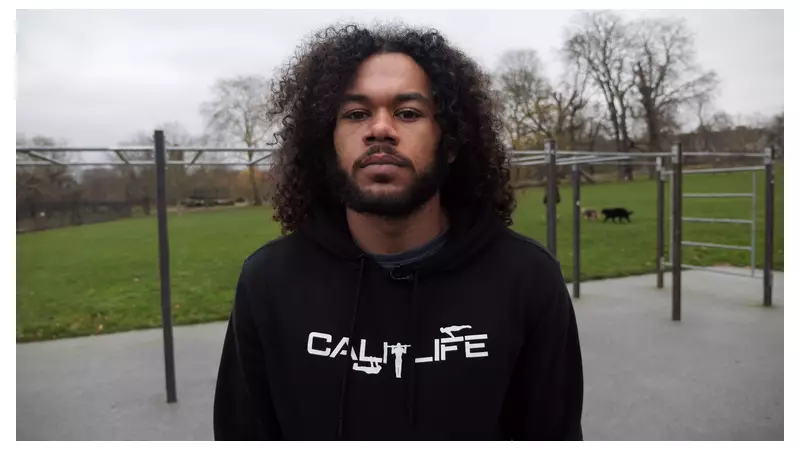
A pioneering project that places youth workers in London's hospital trauma centres has been credited with saving the life of a young man caught in a cycle of violence and homelessness.
From Trauma to Turning Point
Corrie was just 13 years old the first time someone threatened him with a knife. The experience left deep psychological scars. "Even the sound of cutlery gets me," he reveals. "So if we're in a kitchen and there's cutlery shaking, my eyes are alert and I'm not cooling down. That's the PTSD I still hold today."
After a childhood marked by difficulty, followed by alcohol dependency and two years of sleeping rough, Corrie's life changed when he met youth worker Bradley Stephenson at King's College Hospital. Bradley works for the charity Redthread, which is funded by London's Violence Reduction Unit (VRU) to station specialists in A&Es and Major Trauma Centres to support young victims of violence.

Corrie had been admitted for mental health issues, and the call came in at the very end of Bradley's shift. Nevertheless, Bradley agreed to meet him that night. "Corrie didn't have money to find accommodation, so the only way he could make money would then be to commit crime," Bradley explains. "So my main support aim at first was finding him accommodation."
The VRU's Public Health Strategy
Established by the London mayor's office in 2019, the VRU adopts a 'public health' approach to violence, treating it as a preventable disease. Director Lib Peck points to progress: "Homicides are down by a third since we were set up. There are 14,000 fewer incidents of violence with injury and we know there's been a 43% reduction in young people admitted to hospital as a result of knife assault."
While the data shows a complex picture, with knife crime still more common than two years ago, the VRU points to specific successes. Their custody intervention scheme, for instance, sees youth workers meet arrested teenagers in cells in places like Brixton. Youth engagement coordinator Ian Patnelli says the aim is to "divert the pathway that they may be heading down" by offering support with education, training, or employment. A recent study found 80% of under-18s helped by the VRU did not reoffend within the next year.
Criticism and the Fight Continues
Despite these efforts, some argue the most at-risk young people remain beyond the reach of official programmes. Mark Rodney, who runs Project Lifeline in Croydon, works to relocate children deeply entrenched in violence. "These are children killing children," he stresses, describing a recent case where he moved a boy who feared he would be "next" after a local killing.
"Why wouldn't he pick up a knife and protect himself?" Rodney asks. "It's a chain reaction and these children are stuck in a vicious circle with no exits."
Lib Peck acknowledges the ongoing challenge, stating the VRU is not complacent. "We know that for many people who've been affected by violence or indeed horrifically by murder, these [statistics] are going to be of small comfort to them," she admits.
For Corrie, the intervention was a lifeline. Today, he has turned his life around and is committed to helping others, reflecting on how he too could have caused harm. His story stands as a testament to the critical importance of early, targeted support in the ongoing battle against youth violence in the capital.