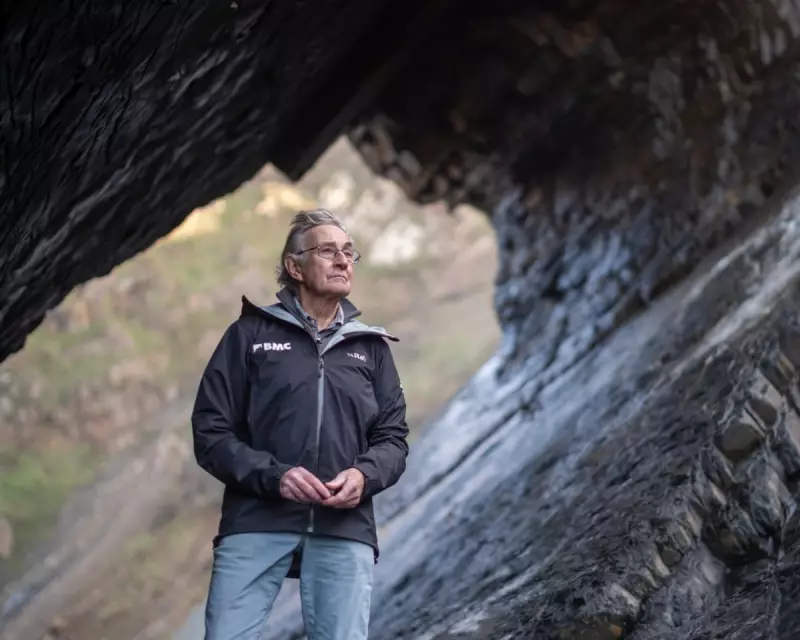
A 77-year-old award-winning writer has revealed how a lifetime of climbing and mountaineering became his lifeline, helping him manage the trauma of childhood sexual abuse he kept secret for more than five decades.
A childhood stolen by a trusted teacher
Iain Peters was between the ages of nine and 13 when he was sexually assaulted weekly by his geography teacher, John Earle. The abuse took place at Upcott House, a now-closed preparatory boarding school in Okehampton, Devon, where Earle was also deputy head.
After the school shut down, Earle embarked on a career in children's television, presenting shows like Treasure House and Tom Tom, and famously serving as a storyteller for the BBC's flagship series, Jackanory.

Breaking a 50-year silence
Peters finally broke his silence in 2015, reporting the historic abuse to police in Exeter by handing over a written account at the station counter. This led to the prosecution of John Earle, who was 87 years old at the time. In 2017, Earle admitted six counts of indecently assaulting a boy and was sentenced to four years in prison.
Peters, who has waived his right to anonymity, explained that for over 50 years, he was effectively suffering from undiagnosed post-traumatic stress disorder (PTSD). "In some ways, climbing, it saved my life. It saved my sanity," he stated.
The vertical path to healing
Introduced to the outdoors by his grandfather at age three, climbing became Peters's crucial survival technique. The pursuit took him across the globe, from the Alps to the Himalayas and the Cordillera Darwin in South America.
He described how the intense focus required on a vertical rock face offered a form of therapeutic disassociation. "When you're concentrating on staying alive halfway up a vertical rock face you can't then think 'Oh God, poor me, I was assaulted when I was nine years old,'" Peters said.
He believes the dangerous nature of the activity, where he often "pushed the envelope of survival," was a direct response to the trauma he endured.
The lifelong shadow of abuse
The trauma profoundly impacted his life choices. He turned down a scholarship to Cambridge University and, at one point, worked in a strip club run by the notorious Kray twins. Peters explained that the abuse distorted his relationship with power and success.
"I was always frightened. I always rejected success because success led to power, and power led to being like a rapist," he reflected. Despite this, he built a life, with a first marriage lasting 28 years until his wife died of cancer, and a subsequent remarriage six years ago.
The stark contrast of his recovery is highlighted by the fate of his best friend, who was also abused by Earle but did not have climbing as an outlet. "He never recovered. He lost his mind," Peters said, recounting how his friend once tried to stab him, explaining, "Because you survived."
A beacon for other survivors
Peters has channelled his experiences into a memoir titled The Corridor, which in November won the prestigious Boardman Tasker Award for Mountain Literature. He now hopes his story and his book can serve as a beacon, encouraging other survivors of sexual abuse to come forward without shame.
"We have to create a social culture that will make people feel that they shouldn't have shame, they shouldn't have guilt, that they can go for help," he urged. "More people, particularly young people, should have that opportunity."
Now in his late 70s and still a climber living on the North Devon coast, Peters views his outdoor passion as the force that enabled him to reach his age with sanity and purpose, ultimately transforming a mechanism for survival into a celebrated literary achievement.