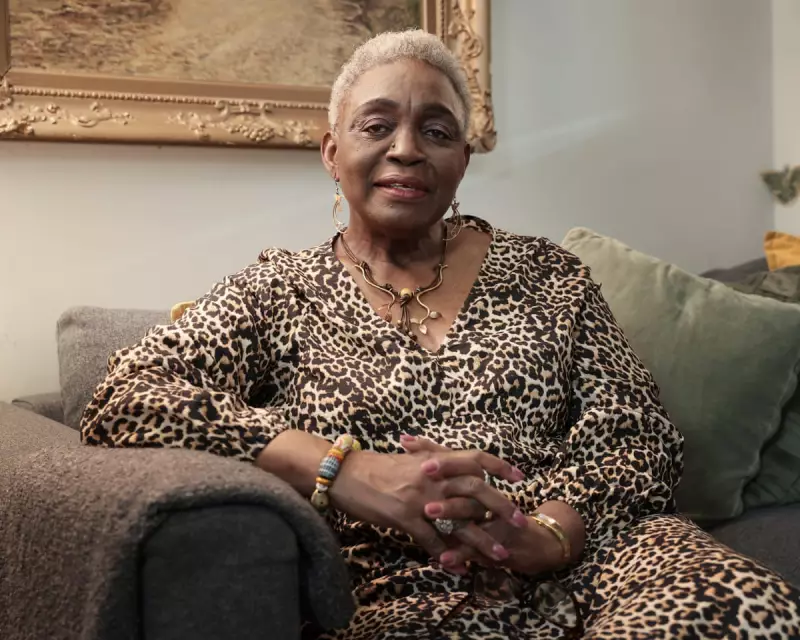
Senior figures within the National Health Service are issuing a stark warning: the institution would fail within hours if its Black, Asian, and Minority Ethnic (BAME) and internationally trained staff were to walk away. This alarming statement comes as long-serving healthcare professionals speak out about enduring decades of racism, with many fearing the situation has deteriorated rather than improved.
A Legacy of Service and Prejudice
Allyson Williams, who dedicated 40 years to the NHS as a nurse, midwife, manager, and clinical leader, arrived in the UK from Trinidad in 1969. She recalls a baptism of fire on the wards, facing regular racial abuse from patients. "I was called the 'N' word. I was told I was nasty. It was quite disturbing," she said. A pivotal moment came when she defiantly told her abusers: "I know I am Black. I was born Black. And I love being Black. So tell me something I don’t know."
Her experience is echoed by Deloris James, 71, a British citizen born in St Kitts and Nevis who worked as a nurse and midwife. Following in the footsteps of her midwife mother and 12 other relatives in the NHS, James observes that "things have got worse" since her time in the service. "I’m not saying there wasn't racism, but it seems so much more prevalent," she stated.

The Data Behind the Crisis
Official figures paint a concerning picture of a system in peril. The number of overseas nurses and midwives joining the UK register has plummeted, with only 6,321 registrations between April and September this year, compared to 12,534 in the same period in 2024. Simultaneously, reports of racist incidents at work by nurses have surged by 55% over three years.
The exodus is not limited to nursing. The General Medical Council reports a record number of overseas-trained doctors are leaving the UK, with 4,880 departing in 2024—a 26% increase on the previous year. Professor Jeanette Dickson, chair of the Academy of Medical Royal Colleges, has explicitly linked this trend to the UK being perceived as an "unwelcoming, racist" country.
An Institutional Problem
The NHS's own Workforce Race Equality Standard report reveals deep-seated disparities. It found that BME women (15.6%) were the most likely to experience discrimination from colleagues. Furthermore, at the majority of NHS trusts, BME staff are significantly more likely to face formal disciplinary processes, and white applicants are far more likely to be appointed from a shortlist than their BME counterparts.
Alison Hewitt, a radiographer with 35 years of service, represents the second generation of her family in the NHS. She contrasts the experience of the Windrush generation, who often "kept their mouth shut," with the constant battles staff now face with HR departments. She emphasises the critical role of diverse staff: "If the Black staff, the Asian staff and the foreign-born staff all went home, the NHS would collapse within hours."
Despite the discrimination, BME staff make up 28.6% of the NHS workforce, with about 20% being non-UK nationals. For some, like Dr. Saada Maida, a gynaecologist from Syria, the UK remains one of the "least racist nations," and he attributes staff departures largely to financial incentives offered abroad. However, the overarching sentiment from veterans like Allyson Williams is one of profound disappointment. "It’s been over 50 years and nobody has learned any lessons," she lamented, reflecting on the immense contribution of multi-ethnic staff who came to rebuild the country, only to face enduring hostility.