In a seismic shift for American public health, the Trump administration has dramatically scaled back official recommendations for childhood vaccinations, a move experts warn leaves the United States lagging dangerously behind peer nations like the United Kingdom.
A Radical Departure from Global Norms
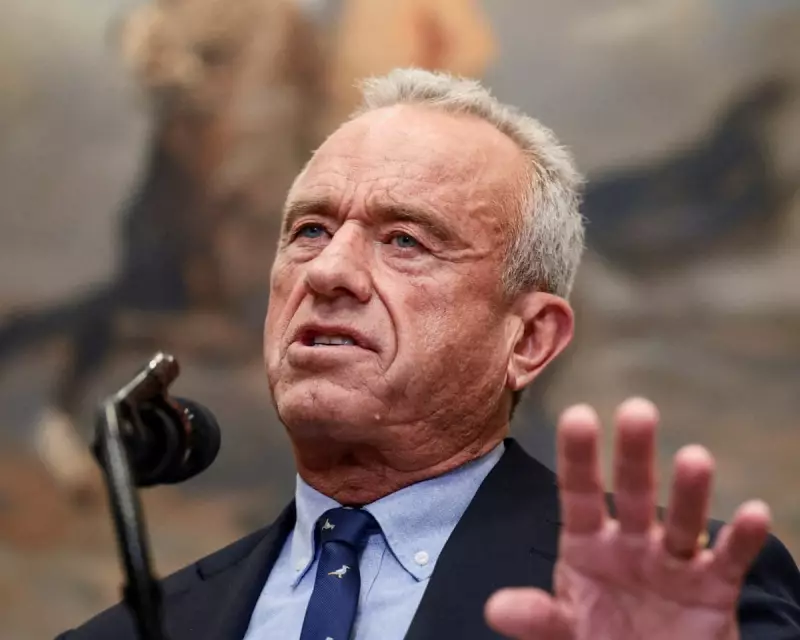
The new policy, spearheaded by Health Secretary Robert F Kennedy Jr, a longtime vaccine sceptic, no longer fully recommends roughly a third of vaccines previously on the childhood schedule. This represents the largest change to the US immunisation programme in modern history, according to Dr Jake Scott, an infectious diseases specialist at Stanford University.
Daniel Jernigan, former director of the National Center for Emerging Zoonotic Infectious Diseases, labelled the decision "astounding," noting it was made without scientific evidence or public consultation. He accused officials of inflating vaccine risks, burying their benefits, and "sowing confusion" for parents and doctors.

Under the revised guidelines, shots for hepatitis A, RSV, hepatitis B, and certain meningitis strains are now only for "high-risk" groups. Vaccines for influenza, rotavirus, and others are relegated to "shared clinical decision-making," a rare designation requiring a doctor's specific recommendation. The CDC will also recommend just one dose of the HPV vaccine instead of two.
The US Falls Behind the UK and Other Developed Nations
Officials claimed the change aligns the US with "peer, developed countries," following an instruction from former President Donald Trump in December. However, this assertion is starkly at odds with reality.
Most other high-income nations maintain far more comprehensive childhood vaccine schedules, closely resembling America's now-abandoned recommendations. The UK, Canada, Australia, Japan, and most European countries universally recommend vaccines for influenza, rotavirus, and hepatitis B for all children.
Nearly all except Japan routinely recommend meningococcal disease vaccines for children. Canada, Japan, and most of Europe recommend the RSV shot for all newborns, while Australia recommends it for all pregnant people. The UK currently recommends RSV vaccination only for high-risk groups.
"The US policies used to be considered leadership in the public health policy space," said Jernigan. Many nations have expanded their schedules based on evidence of safety and efficacy accumulated by the US, such as Japan adding the rotavirus shot in 2020 and the UK recently moving to recommend the chickenpox vaccine for all children.
Flawed Process and Dire Consequences Predicted
Experts slammed the administration for bypassing established scientific processes. There was no public comment, no discussion by the independent Advisory Committee on Immunization Practices (ACIP), and no feedback from bodies like the American Academy of Pediatrics.
Instead, the policy hinges on a 33-page report authored by two individuals: Tracy Beth Høeg, a frequent vaccine sceptic now leading drug regulation at the FDA, and biostatistician Martin Kulldorff. Jernigan criticised this as an "opinion piece" forming the basis for sweeping change.
The consequences, experts warn, will be severe. They predict increased disease outbreaks, exacerbated by America's unique vulnerabilities: a vast population of 330 million, a fragmented health system, profound health disparities, and no universal healthcare or national paid sick leave.
"Disease moves differently in the US," explained Dr Scott, citing dense urban centres, remote rural areas with poor access, and high levels of travel. Jernigan highlighted the risk for young people moving from small towns to large universities, potentially exposing them to new threats like meningitis.
Both experts urged parents and healthcare providers to continue seeking and recommending vaccines despite the government's new stance. "The science hasn't changed," stated Dr Scott. "The only thing that's changed is who's making the decisions and what conclusions they want to reach."