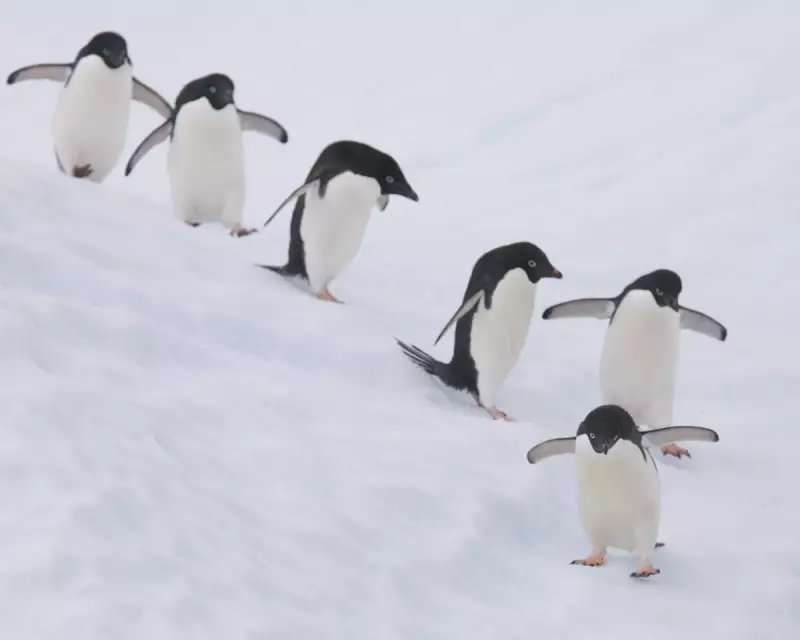
As winter tightens its grip, a surge in outdoor slips and falls is prompting health experts to issue an unusual but effective piece of advice: walk like a penguin. With shorter days and hazardous conditions underfoot, adopting the stance of the Antarctic bird could be the key to avoiding a painful and potentially serious injury.
The Hidden Dangers of Winter Walkways
While the chillier months encourage outdoor activity for wellbeing, they also bring a peak in accidents. Ice is the most visible threat, but compacted or refrozen snow poses a significant risk. Perhaps the most surprising and common hazard, however, comes from fallen leaves. When dry, they are harmless, but once crushed underfoot they release a mixture of natural waxes, oils, and plant materials. Combined with rainwater, this creates a slimy, low-friction gel that can be as treacherous as black ice.
The problem is compounded by reduced daylight, with more people walking in partial or full darkness, making it harder to spot these slippery patches before it's too late.

The Penguin Stance: A Simple Survival Technique
Vigilance and suitable footwear are the first lines of defence. However, if you encounter a slippery surface, the NHS recommends a specific technique. "Walk like a penguin" by taking small, shuffling steps, pointing your feet slightly outwards, bending your knees, and keeping your centre of gravity directly over your feet. This posture increases stability and reduces the risk of a backward fall.
"If you find yourself out and about in icy conditions, adopting the penguin stance is a really effective way to move without falling," says Linda de Caestecker, a former director of public health at NHS Greater Glasgow and Clyde. The method slows your pace and encourages a more balanced, flat-footed gait.
Staying Upright Through the Season
Beyond the penguin walk, planning is crucial for winter safety. Key preventative measures include:
- Choosing routes that are well-lit and likely to have been gritted.
- Wearing shoes or boots with a good grip and non-slip soles.
- Keeping your hands out of pockets to help with balance if you slip.
- Using handrails where available, especially on steps and slopes.
By changing the way we navigate winter's challenges, we can all enjoy the mental and physical benefits of getting outside while minimising the seasonal toll of slips and falls. This winter, remember: a little waddle can prevent a lot of trouble.