

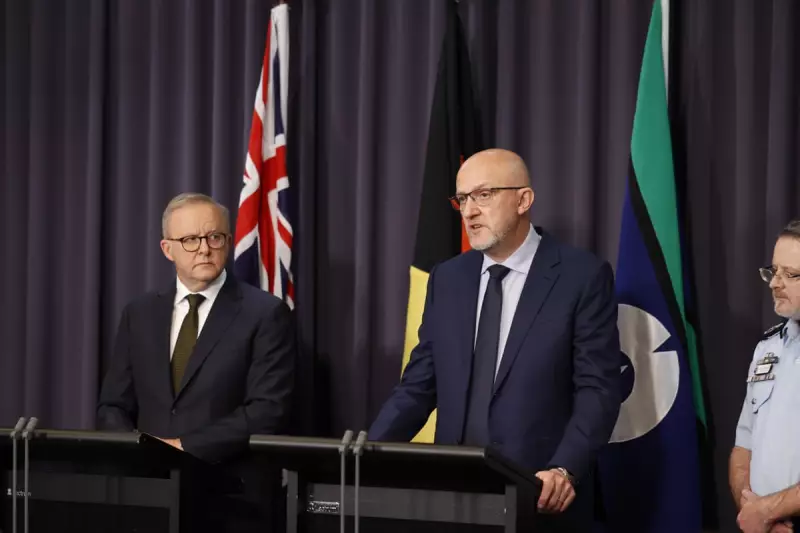
One week after Australia's deadliest mass shooting since the Port Arthur tragedy, critical questions continue to swirl around how the alleged perpetrators, a father and son, managed to evade the scrutiny of the nation's intelligence services.
The 2019 Assessment and Lingering Doubts
Prime Minister Anthony Albanese has publicly acknowledged that systems require examination, pointing specifically to events in 2019. It was then that the younger alleged attacker, 24-year-old Naveed Akram, first appeared on the radar of the Australian Security Intelligence Organisation (ASIO).
The agency investigated Akram over a six-month period for alleged links to individuals connected to a reported Islamic State cell. However, ASIO concluded he did not pose a continuing threat and the matter was closed.

This assessment has come under intense scrutiny following the horrific attack at the Chanukah by the Sea event in Bondi, which claimed 15 lives. The revelation that Naveed and his 50-year-old father, Sajid Akram, travelled to the Philippines' Mindanao region in November 2023 has further fuelled demands for answers.
A Complex and Overstretched Security Landscape
Experts caution against simplistic judgements of intelligence work. Professor Michele Grossman, a founder of the Avert research network, emphasised that agencies must prioritise among thousands of potential subjects. "They cannot surveil them all continuously over a long period," she stated.
The security environment facing ASIO has grown increasingly complex. In his annual threat assessments, Director-General Mike Burgess has consistently highlighted the dual challenges of persistent counter-terrorism threats and the rapid rise of espionage and foreign interference.
This broadening remit, which now includes monitoring the rise of extreme right-wing and ideologically motivated groups, inevitably forces difficult resource trade-offs. National security expert Rory Medcalf noted that "whenever a new threat arises, it's not as if the old ones go away."
Calls for Inquiry and 'Deep Introspection'
Home Affairs Minister Tony Burke has expressed "full confidence" in ASIO's past decisions regarding Naveed Akram. Nevertheless, Medcalf predicts the incident will prompt "very deep introspection" within security agencies.
There is a growing consensus among analysts for a swift, focused inquiry. Such a review would examine not only the specific operational decisions but also the broader context and constraints within which intelligence and law enforcement operate.
Professor Grossman outlined several factors that may have helped the duo avoid detection, including the rarity of a father-son terrorist cell reducing typical "leakage," the legal acquisition of firearms, and apparent deception of their own family about their activities.
While the ultimate goal is to learn every possible lesson to prevent future atrocities, Grossman tempered expectations, stating it is not a "realistic expectation" to believe every attack can be stopped. For now, the public and the political establishment await a clearer picture, hoping an official inquiry will provide the answers a grieving nation seeks.






