

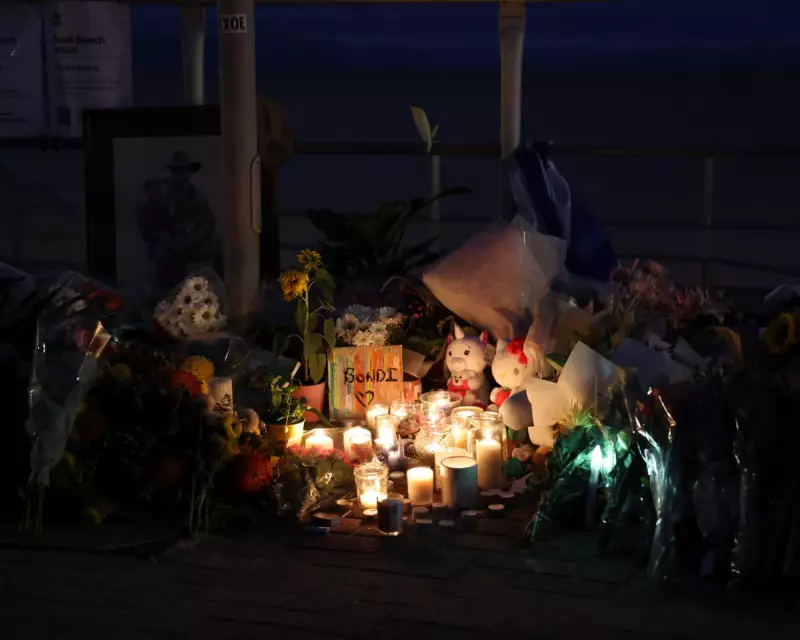
The first funerals for victims of the devastating Bondi Beach terror attack will take place on Wednesday, as new details emerge about the alleged gunman's background and life in India. The attack, which targeted a Hanukah event on Sunday, left fifteen people dead and is being treated as an act of terrorism against the Jewish community.
Victims Honoured as Community Mourns
Wednesday's services will include funerals for Rabbi Eli Schlanger and Rabbi Yaakov Levitan. Rabbi Schlanger worked at the Chabad of Bondi, the centre which hosted the 'Chanukah by the Sea' event that came under attack. His funeral will be held just one kilometre from the site of the shooting.
Among the other victims remembered at a beachside vigil on Tuesday was ten-year-old Matilda, the youngest killed. Her parents, immigrants from Ukraine, broke down as they addressed the crowd. "I couldn't imagine I would lose my daughter here," her mother Valentyna said.

The attack also claimed the lives of Holocaust survivor Alexander Kleytman, 87, and dedicated community volunteer Marika Pogany, 82, who died "on her favourite Bondi beach". Three individuals who bravely tried to intervene—Boris Gurman, 69, his wife Sofia Gurman, 61, and Reuven Morrison—were also killed.
Twenty-two people wounded remain in Sydney hospitals, with three in a critical condition and five critical but stable.
Alleged Gunman's Background and 'Radicalisation'
Indian police in the state of Telangana have provided a detailed statement on Sajid Akram, the 50-year-old alleged gunman shot dead by police. According to officials, Akram attained a commerce degree in Hyderabad before moving to Australia in November 1998 to find work.
He married a woman described as being of European origin, and the couple had a son and a daughter. Akram returned to India six times for family and property matters but did not return for his father's funeral.
Critically, the police statement said Akram's family in India seemed unaware of any alleged "radical mindset" or activities. Local authorities had no adverse record of him prior to his departure in 1998. The statement emphasised that the factors leading to his apparent radicalisation "appear to have no connection with India or any local influence in Telangana".
Ongoing Investigation and Second Suspect
Australian police have confirmed that Akram and his 24-year-old son Naveed, identified as an alleged accomplice, travelled to the Philippines last month. The father travelled on an Indian passport and the son on an Australian one. The purpose of the trip is under investigation, with officials stating it is not yet conclusive whether they were linked to a terrorist group or received training there.
Meanwhile, the second alleged gunman, Naveed Akram, has awoken from a coma after being shot by police and may face charges as early as today, according to local media reports. He remains in a critical condition in hospital.
This attack stands as Australia's worst mass shooting in nearly three decades, sending shockwaves through the nation and its Jewish community. As the first victims are laid to rest, the focus remains on supporting the bereaved, the injured, and understanding the full circumstances of this tragedy.






