

The recent revelation that the alleged perpetrators of the Bondi Junction mass shooting spent a month in the southern Philippine city of Davao has unearthed painful memories for its residents, particularly those who survived a deadly Islamic State-linked bombing there nearly a decade ago.
A City Haunted by a Past Attack
For Gerry Pendon, a massage therapist at Davao's bustling Roxas Night Market, the news from Sydney brought back the "scariest moment of his life." In September 2016, he was just five metres away from an explosion that ripped through the market, an attack claimed by ISIS which killed 15 people, including his brother-in-law. The atrocity was followed by a brutal five-month military battle against jihadist groups in nearby Marawi City.
Now, nine years later, the extended stay of alleged gunmen Sajid Akram and his son Naveed in Davao has cast an unwelcome international spotlight on the city, raising questions about their activities during their four-week visit. Despite this, Pendon and other locals express a determined resilience. "It won't happen again in Davao," Pendon asserts, a sentiment echoed by many who believe the city's security landscape has fundamentally changed.

Tourism or Terrorism? An Ongoing Investigation
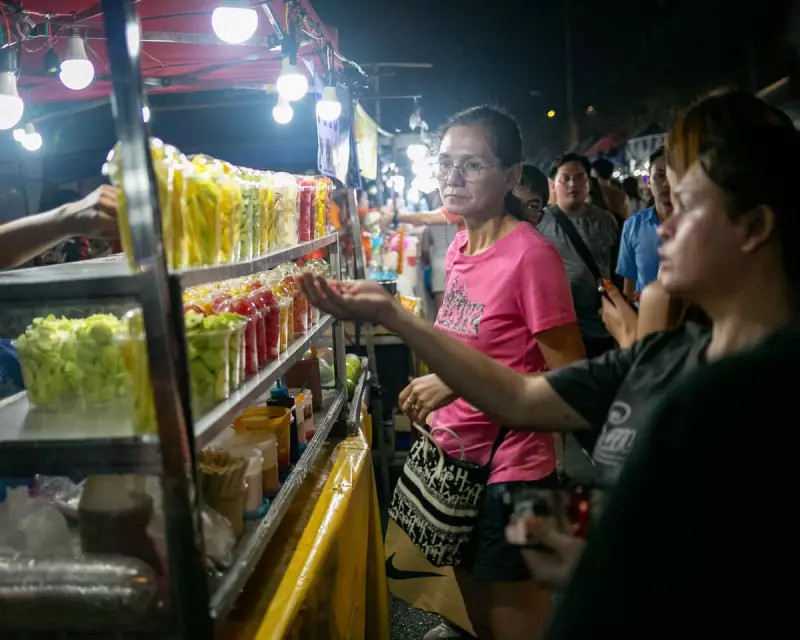
At the night market, a remembrance marker for the 2016 victims stands in quiet contrast to the vibrant evening crowds seeking food, massages, and souvenirs. Emelyn Lorenzo, another market therapist, echoed a common local belief about the Akrams: "I was surprised to see them in the news. But they were here for tourism, not terrorism."
Philippine authorities, however, are treating the investigation with utmost seriousness. National Security Adviser Eduardo Año has stated that while the pair never left Davao City nor received military-style training in the country, their precise motives remain unclear. Police are "not taking lightly" their presence, meticulously reviewing CCTV footage and tracing taxi journeys to piece together their movements during their stay at the GV Hotel, where they rarely ventured out except to a nearby Jollibee restaurant.
A Legacy of Hardline Security and Lasting Concerns
Many residents credit the enduring influence of former mayor and president Rodrigo Duterte and his family's hardline anti-crime policies for making Davao feel secure. Visible security, like bag inspections at the night market entrance, is a testament to this legacy. The national government has also forcefully pushed back against suggestions the Philippines served as a terrorist training ground for the accused.
Yet, peace-building experts urge caution. Karlos Manlupig of Balay Mindanao noted that while community efforts have improved security, "this doesn't mean that extremism magically vanished." He emphasised the need to address the underlying socioeconomic and political drivers of violence while promoting tolerance.
In Marawi, the city devastated by the 2017 siege, there is palpable concern that renewed terrorist labels could fuel prejudice against Muslims. Tirmizy Abdullah of Mindanao State University called for a thorough and transparent investigation: "The intel should provide clear and truthful answers without turning uncertainty into blame against Mindanao or its people." As the Philippines enters its festive Christmas season, the shadow of past and present tragedies serves as a sobering reminder of the complex challenges that persist.






